
Facial Aesthetics
A balanced, natural expression
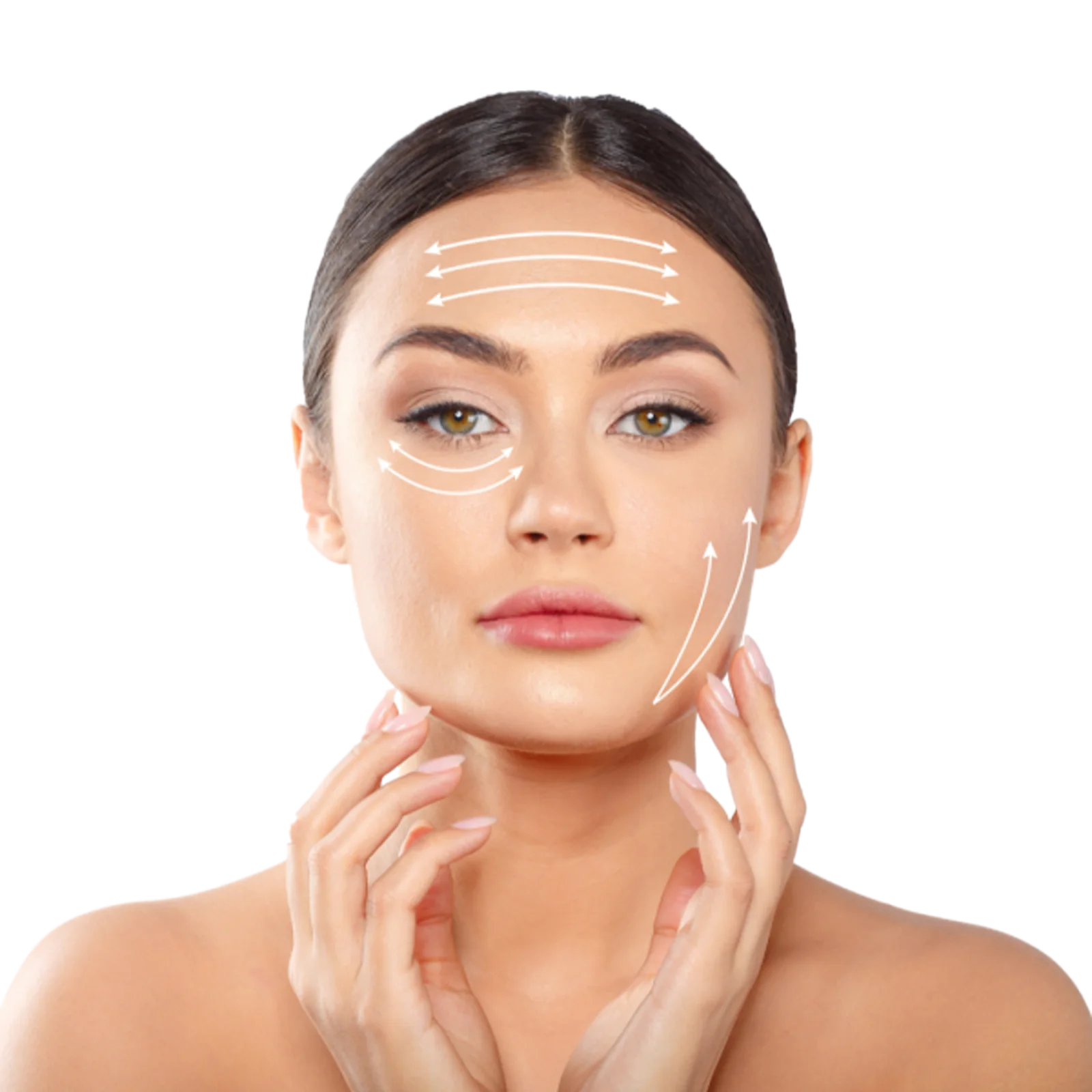
Facial Aesthetics is a treatment considered in line with the person's needs and expectations. At Kaya Clinique it is assessed with an understanding of balance and natural expression in the facial features, and with individual planning.
Arrange a Specialist ConsultationFacial aesthetics is not the name of one operation but a family of procedures, each looking at a different part of the face. This page maps that family and then covers the procedure asked about most: the facelift itself, what it addresses, how long it lasts and what the recovery actually involves.
What does facial aesthetics cover?
The changes that appear in the face with age do not collect in a single area. For one person the most noticeable finding is around the eyes, for another it is the mid-face, for another the jawline. No single operation answers all of those questions, and which one applies is established by examination.
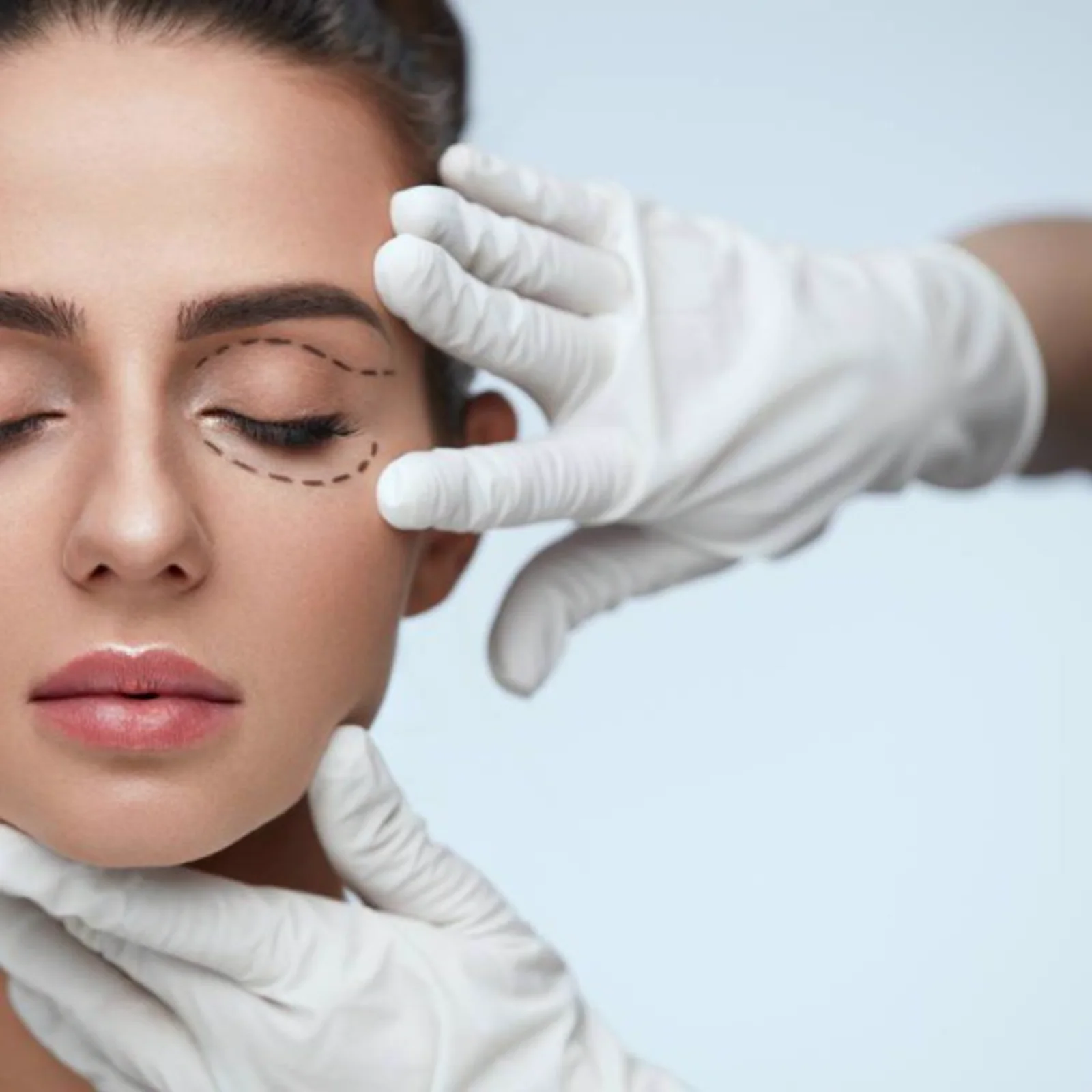
Surgical facelift is the operation in which loose skin and the deeper tissue layer beneath it are repositioned. Alongside it sit procedures focused on specific regions: the eye area under eyelid aesthetics, the mid-face under mid-face lift, the temple and brow region under temple lift and brow lift, and the structure of the nose under rhinoplasty. In some plans several of these are considered together.
The distinction matters in practice. Planning a comprehensive lift for someone whose complaint originates in the mid-face is as unhelpful as trying to address advanced laxity with a procedure limited to one region. The first task of the consultation is to identify which area is responsible.
What does a facelift actually address?
Rhytidectomy, the surgical facelift, does not work on skin alone. While excess skin is removed, the deeper tissue layer beneath it is also repositioned; that layer carries the structure of the face, and it is where descent originates.
This distinction has a direct effect on how natural the result looks. An approach based only on tightening skin can leave a face that is taut but unfamiliar to its own lines. Repositioning the deeper layer rebuilds the distribution of volume while preserving the architecture of the face.
The finding described most often is a jawline losing its definition. Over the years tissue from the mid-face settles downwards and a line that was once sharp becomes softer, sometimes accompanied by looseness in the neck and deepening around the nose and mouth.
There is also an area the operation does not reach: the quality of the skin surface itself. Pigmentation, fine lines and surface texture are not changed by repositioning tissue, and they belong to a separate plan discussed on their own terms.
Device treatments or surgery?
This comparison is among the most frequently raised and the answer depends on the degree of laxity. The two approaches are not competitors; they answer different findings.
- Excess skin is limited and the contour is not markedly disrupted.
- The expectation is a gradual and limited change.
- Device-based treatments are considered here.
- Surgery is not the priority option at this stage.
- There is a clear skin excess and displacement of deeper tissue.
- The correction required exceeds what devices can reach.
- Surgical facelift is the option discussed.
- Scope and technique are determined by examination.
At what age is a facelift considered?
There is no numerical answer to this and giving one would be misleading. The decision rests on examination findings rather than on calendar age.
Ageing does not progress at the same pace in everyone. Genetics, cumulative sun exposure, smoking, weight changes and the characteristics of the skin all influence the rate, which is why findings can differ markedly between two people of the same age.
What is assessed is the level of skin excess, how far the deeper tissue has moved, the capacity of the skin to retract and whether the discomfort described matches those findings. No recommendation on timing is made until those four are clear.
Skin excess and displacement of deeper tissue are the starting point of the decision.
Elasticity and the capacity to retract influence planning directly.
Because this is surgery, the general health picture is decisive.
What the person describes is compared against what the examination shows.
The examination answers one further question: whether the findings can be met by a single procedure, or whether more than one region needs addressing separately. That distinction determines both the scope of the operation and the recovery, so it is discussed in detail at the decision stage. Where the width of the lower face comes from muscle bulk, the subject is not surgical at all; the heading discussed there is masseter treatment.
How long do facelift results last?
Results are long lasting and expressed in years. That is not the same as the process stopping: ageing continues after surgery.
The accurate framing is this. The operation turns the clock back; it does not stop the clock. Ageing carries on afterwards, and the difference is that the process resumes from an earlier point.
This operation does not cancel ageing. What it does is move the point the process starts from, and that is a more useful promise than the one usually made.
Several factors influence how long the result holds: the characteristics of the skin, habits around sun protection, smoking, weight change and general lifestyle. For that reason no undertaking is given that the result will not change or that descent will not recur.
Answering the question of how many years younger someone will look with a number is equally inappropriate. Such a figure cannot be measured at examination and has no meaning afterwards, which is why it is not used in consultation. Where the concern is the quality of the skin rather than looseness of tissue, surgery is not the answer either; skin booster and comparable approaches are assessed separately.
What is an endoscopic approach, and what about scars?
An endoscopic approach describes carrying out the procedure with the assistance of an imaging system placed through small incisions, with the surgeon working from the image rather than through a widely opened field.
Incisions in this approach are more limited. What matters alongside that is a boundary: not every finding can be addressed with this technique. Its scope depends on the degree of laxity and the size of the correction planned, and that decision is made according to the surgeon's plan.
On scars the position needs to be clear. Where an incision is made a scar follows; where incisions are more limited the scar is more limited too, but it does not cease to exist. In the classical technique incisions are generally placed along lines of low visibility such as the hairline and around the ear.
The possibility of a change in the hairline forms part of this subject and is discussed before surgery, with the position of each incision explained individually.
What is the recovery timeline after a facelift?
Recovery varies markedly with technique and scope; the sequence below is a general framework and the individual timeline is set according to the surgeon's plan.
First days
Swelling and bruising are the prominent findings. The head is kept elevated and the prescribed routine followed.
2 to 4 weeks
Social visibility generally arises within this range; how swelling and bruising resolve varies between people.
Following months
The settling of the final result and the maturation of scars take a period measured in months.
Follow-up period
Tissue position and scar behaviour are assessed together across review appointments.
When is going back to work realistic?
The timetable depends both on the scope of the procedure and on the nature of the work. Because swelling and bruising resolve differently in different people, no fixed date is given; the plan is made at consultation with the person's own calendar taken into account.
Why is smoking a separate heading?
Smoking reduces the blood reaching tissue, which in facial surgery bears directly on wound healing. The likelihood of healing problems along the incision lines and of a less favourable scar increases, which is why surgeons ask for it to be stopped for a period around the operation.
What are the risks of a facelift?
A facelift is a substantial surgical procedure and the risk assessment reflects that.
The recognised headings are collection of blood beneath the skin, involvement of nerve structures, scarring, changes at the hairline and asymmetry between the two sides. Involvement of nerve structures is known to be temporary in most cases, but the possibility is discussed beforehand. To these are added the bleeding, infection and anaesthesia-related considerations present in any operation.
Preparation reviews the general health picture, regularly used medications, previous procedures and any conditions that could affect bleeding. Where the physician considers investigations necessary, their results can influence the plan directly.
At the decision stage the subject is whether expectation matches reality. Whether the person knows which region will be addressed, which finding this operation does not reach, where the scars will fall and how the recovery will affect daily life is established before a plan is made.
All of this is recorded in a written informed consent document covering the planned technique, the incision lines, the known risks, the recovery timeline and the limits of the result. The operation is planned and carried out by the physician responsible, in a facility equipped to the standards it requires; our involvement covers assessment, information and the appointments that follow.
This content is provided for general information only and does not constitute medical advice. Surgical facelift is a substantial procedure and carries risks including collection of blood beneath the skin, involvement of nerve structures, scarring, changes at the hairline and asymmetry; involvement of nerve structures is temporary in most cases. Bleeding, infection and anaesthesia-related risks apply as in any operation. Recovery varies markedly with technique and scope; social visibility generally arises within two to four weeks, while the settling of the final result and the maturation of scars take months, and the timeline is set according to the surgeon's plan. Results are long lasting but ageing continues after surgery; no undertaking is given that the result will not change or that descent will not recur. No figure is given in this content for how many years younger someone will look. Device-based treatments are considered in mild to moderate laxity and surgery in advanced laxity. The decision to operate is made together with the physician after a detailed examination and a written informed consent process.
Content overseen by Aysun Kaya, Founder · Kaya Clinique · on Bağdat Avenue since 2019. Our publishing standards are set out in our editorial principles.
From consultation to care, the process

Beklentilerinizi dinleyerek, kişiye özel bir yol haritası oluşturuyoruz.

Modern, hijyenik ve mahremiyeti önceleyen bir klinik ortamı.

Konforunuz gözetilerek, ölçülü ve kontrollü bir yaklaşım.

Süreç sonrası bilgilendirme ve takip ile yanınızdayız.
Frequently asked questions
How are Facial Aesthetics prices determined in 2026?
There is no price list for Facial Aesthetics here; the regulation governing the promotion of health services does not allow fees to be shared.
We can still explain how the decision on Facial Aesthetics is built. These are the headings that shape the plan:
- Which region is addressed and whether the plan stays with a single area
- The extent of the technique chosen and the operating time that follows
- The type of anaesthesia and the setting in which the procedure takes place
- The number of follow-up examinations during recovery
Because these items differ between individuals, no single figure for Facial Aesthetics would reflect reality. The plan specific to you is shared at the consultation after examination.
Treatments considered alongside this one
Eyelid Aesthetics
A rested look
More Details →
Mid-Face Lift
Freshness in the mid-face
More Details →
Temple Lift and Brow Lift
Vitality and balance in the gaze
More Details →Whether they can be planned together is decided at examination; this is not a recommendation list.
