
Abdominoplasty
Balance across the abdomen
Abdominoplasty is a treatment considered in line with the person's needs and expectations. At Kaya Clinique it is assessed with an understanding of comfort and balance in body proportions, and with individual planning.
Arrange a Specialist ConsultationAbdominoplasty is requested more often than almost any other body procedure and misunderstood almost as frequently. The most common error is treating it as a shortcut to weight loss, which it is not. What it addresses is excess skin and, where present, separated abdominal muscles. The sections below cover the recovery honestly, including the parts people find hardest.
What does abdominoplasty involve?
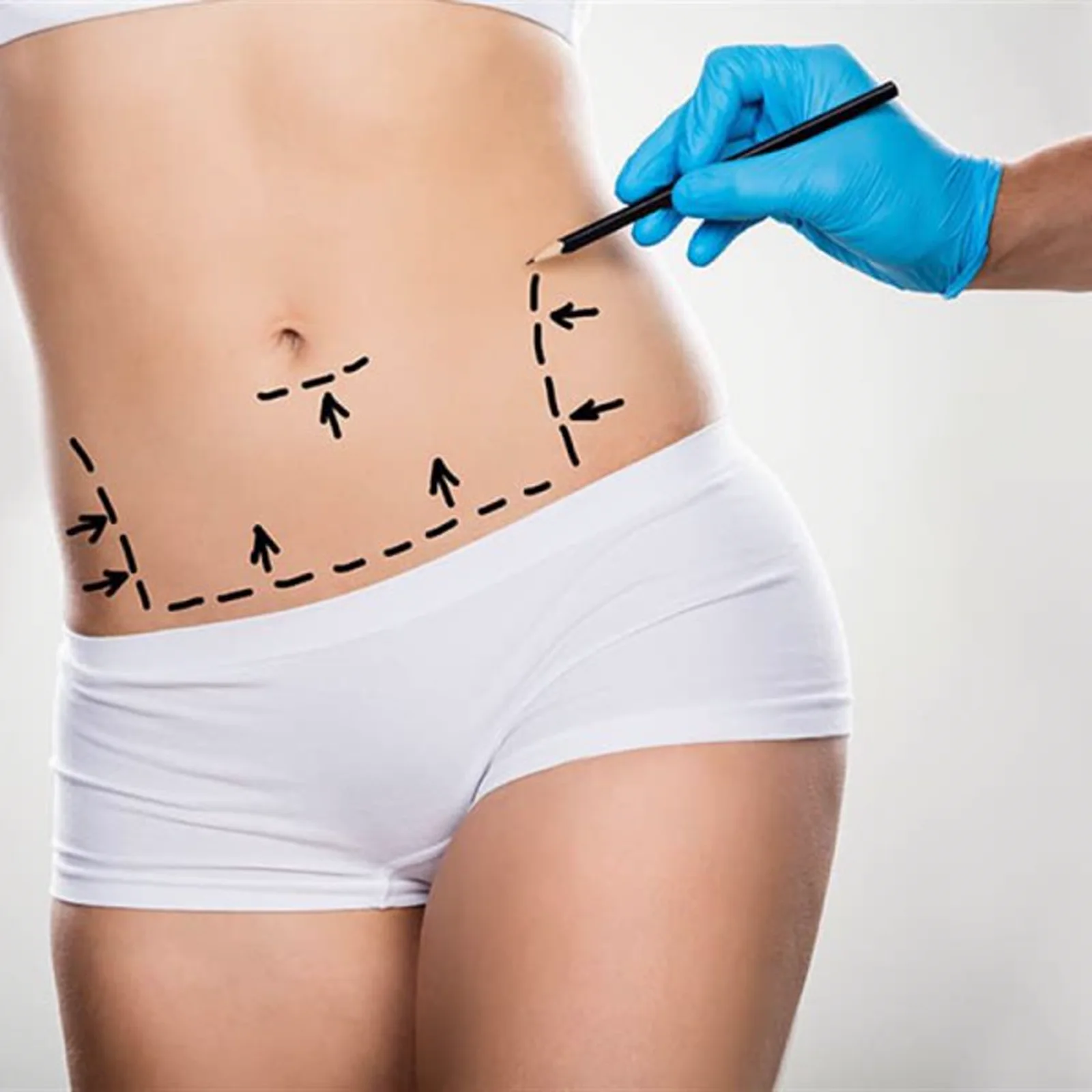
The operation removes excess skin and fat tissue from the abdominal area. Where the abdominal muscles have separated, a condition known as diastasis, they are repaired during the same procedure.
Those two elements are worth separating in the mind. Removing a skin excess changes the surface; repairing separated muscles addresses the abdominal wall beneath it, and not everyone needs both.
Which elements apply is established by examination. What is felt and measured on the abdominal wall determines the plan, not the appearance in a photograph.
Is a tummy tuck a weight loss operation?
No, and this needs stating without softening, because the misunderstanding leads people towards an operation that will not meet their expectation.
Abdominoplasty is not weight loss surgery. The ideal candidate is someone whose weight is stable, whose general health is suitable for surgery, who does not smoke or is able to stop, and who is not planning a further pregnancy.
That last condition is worth reading carefully. Pregnancy after this operation can change the result, which is why timing relative to family plans is part of the discussion rather than an afterthought.
This operation follows weight loss; it does not replace it. Getting that order right is the difference between a good decision and a disappointing one.
Tummy tuck or liposuction?
These are compared constantly and they address different layers, which is why the comparison so often produces the wrong choice.
- Skin hangs or folds and does not retract.
- The abdominal wall may also have separated muscles.
- Removing fat alone would not change the surface.
- Abdominoplasty is the procedure discussed.
- Skin tone is preserved with no significant excess.
- The complaint is localised volume rather than loose skin.
- No repair of the abdominal wall is required.
- Fat-directed options are considered instead.
Does it repair separated abdominal muscles?
Where separation is present, yes. This is one of the elements that distinguishes the operation from anything working on fat alone.
Separation of the abdominal muscles is common after pregnancy and can persist regardless of exercise, because the issue is the position of the muscles rather than their strength. Repair during abdominoplasty brings them back together.
Whether repair is needed is determined at examination rather than assumed. Not every abdomen with a visible bulge has muscle separation, and not every separation requires surgical repair; establishing which applies is part of the assessment.
What is the recovery timeline after a tummy tuck?
The recovery here is more demanding than for most aesthetic procedures, and describing it accurately matters more than making it sound easy.
First 1 to 2 weeks
This is the most demanding period. Movement is limited and support garments are used.
7 to 14 days
Drains are generally removed within this range, although they can stay in longer.
Around 2 weeks onwards
Return to light work is considered from about this point, and can extend to six weeks.
6 to 8 weeks
Strenuous exercise is generally resumed after this period, on the surgeon's guidance.
Up to 6 months
Full recovery can extend to around six months as swelling resolves and tissue settles.
Why are drains used?
Drains are placed to remove fluid collecting in the operated area, and they are one of the aspects of this recovery people are least prepared for. They are generally removed within seven to fourteen days, though they can remain longer depending on how much fluid is draining. Their removal is decided on the findings rather than by the calendar.
When can I return to work and exercise?
Both answers are ranges rather than dates, and anyone quoting a single figure is overstating the certainty.
Light work is generally considered from around two weeks, though this can extend to six weeks depending on the individual and on what the work involves. Physically demanding work sits at the later end of that range rather than the earlier one.
Strenuous exercise is generally resumed after six to eight weeks. Full recovery, meaning the point at which swelling has resolved and the tissue has settled, can extend to around six months.
Within all of this, early movement matters. Walking gently in the first days is encouraged rather than discouraged, for reasons explained in the risk section below.
What does the scar look like?
There is a long scar across the lower abdomen. This is the aspect of the operation that requires the most honest description.
The scar fades and flattens over a period ranging from three months to two years, and at the end of that process it remains present. It does not disappear, and no promise about it being invisible under particular clothing is made here.
Where the scar sits is planned before surgery and discussed individually, since placement varies with the anatomy and the amount of skin being removed. That conversation happens before the operation rather than after it. What determines how a scar matures is set out under scar revision.
A stable weight before surgery supports both the plan and the result.
A future pregnancy can change the result, so timing is discussed openly.
Smoking affects wound healing and stopping around surgery is requested.
Work, childcare and support at home all affect how the recovery is planned.
Is a mini tummy tuck different?
Yes, in scope. A more limited procedure addresses a smaller area and a smaller skin excess, and it does not deliver what a full procedure does. It is also not a version without a scar; any procedure involving an incision leaves one. Where excess skin is present elsewhere on the torso the plan may widen: arm lift and breast lift are discussed as separate headings, and breast reduction is assessed on its own indication. Where the concern is localised volume without a skin excess, the subject moves outside surgery: buttock aesthetics addresses volume and Zionic sits on a non-surgical axis. Which scope is appropriate is determined by the examination rather than chosen from a menu.
What are the risks of abdominoplasty?
Abdominoplasty is a substantial operation and the risk assessment reflects that.
The recognised considerations are bleeding, infection, problems with wound healing, seroma meaning a collection of fluid, changes in sensation across the abdominal skin, and thromboembolism. Anaesthesia-related risks apply as in any operation.
Thromboembolism deserves its own mention. It is uncommon but it is important, and it is the reason early mobilisation is recommended after this operation. Getting up and moving gently in the early period is part of the medical plan rather than a matter of comfort, and the instructions given on this point are worth following precisely.
Smoking is relevant throughout, since it reduces blood supply to tissue and affects wound healing directly. This is why the ideal candidate is described as someone who does not smoke or is able to stop, and why the request is made for a defined period around surgery.
Everything discussed is recorded in a written informed consent document covering the planned technique, where the scar will sit, the recovery timeline including drains, the known risks and the limits of the result. Planning and performing the operation is the responsibility of the treating physician, working in a healthcare facility that meets the required standards; the clinic's role covers assessment, information and the follow-up period.
This content is provided for general information only and does not constitute medical advice. Abdominoplasty removes excess skin and fat tissue from the abdominal area and, where present, repairs separated abdominal muscles. It is not weight loss surgery; the ideal candidate has a stable weight, general health suitable for surgery, does not smoke or is able to stop, and is not planning a further pregnancy. It carries risks including bleeding, infection, problems with wound healing, seroma, changes in sensation and thromboembolism, alongside anaesthesia-related risks; thromboembolism is uncommon but important and early mobilisation is recommended for this reason. The first one to two weeks are the most demanding period; drains are generally removed within seven to fourteen days and can stay longer; return to light work is considered from around two weeks and can extend to six weeks; strenuous exercise is generally resumed after six to eight weeks; and full recovery can extend to around six months. A long scar remains across the lower abdomen; it fades and flattens over a period ranging from three months to two years but does not disappear, and no promise is made about it being invisible under particular clothing. Results are long lasting, but significant weight change and pregnancy can alter them. Liposuction does not remove excess skin, and any decision to combine procedures rests with the surgeon following examination. The decision to operate is made together with the physician after a detailed examination and a written informed consent process.
Content overseen by Aysun Kaya, Founder · Kaya Clinique · on Bağdat Avenue since 2019. Our publishing standards are set out in our editorial principles.
From consultation to care, the process

Beklentilerinizi dinleyerek, kişiye özel bir yol haritası oluşturuyoruz.

Modern, hijyenik ve mahremiyeti önceleyen bir klinik ortamı.

Konforunuz gözetilerek, ölçülü ve kontrollü bir yaklaşım.

Süreç sonrası bilgilendirme ve takip ile yanınızdayız.
Related technology

Cryolipolysis
Cryolipolysis is a treatment considered in line with the person's needs and expectations. At Kaya Clinique it is assessed with an understanding of…
Explore the Technology →
Zionic
Zionic is a treatment considered in line with the person's needs and expectations. At Kaya Clinique it is assessed with an understanding of…
Explore the Technology →Frequently asked questions
How are Abdominoplasty prices determined in 2026?
There is no price list for Abdominoplasty here; the regulation governing the promotion of health services does not allow fees to be shared.
We can still explain how the decision on Abdominoplasty is built. These are the headings that shape the plan:
- Whether the scope is limited or full
- Whether repair of the abdominal wall forms part of the plan
- Operating time, anaesthesia and the use of drains
- Follow-up examinations planned through recovery
Because these items differ between individuals, no single figure for Abdominoplasty would reflect reality. The plan specific to you is shared at the consultation after examination.
Treatments considered alongside this one

Breast Lift
A balanced, lifted appearance
More Details →
Breast Reduction
Comfort and balance
More Details →Whether they can be planned together is decided at examination; this is not a recommendation list.
Further reading on this topic
Cryolipolysis or Liposuction? A Guide to Deciding
Cryolipolysis is a non-surgical option for stubborn regional fat; liposuction is surgery for larger volume. Compare mechanism, expected change and the limits.
Read the articleMommy Makeover Guide: Which Change, Which Approach?
Change after childbirth is not handled by one procedure. Which complaint is matched to which approach, when the process begins and how the order is built.
Read the article