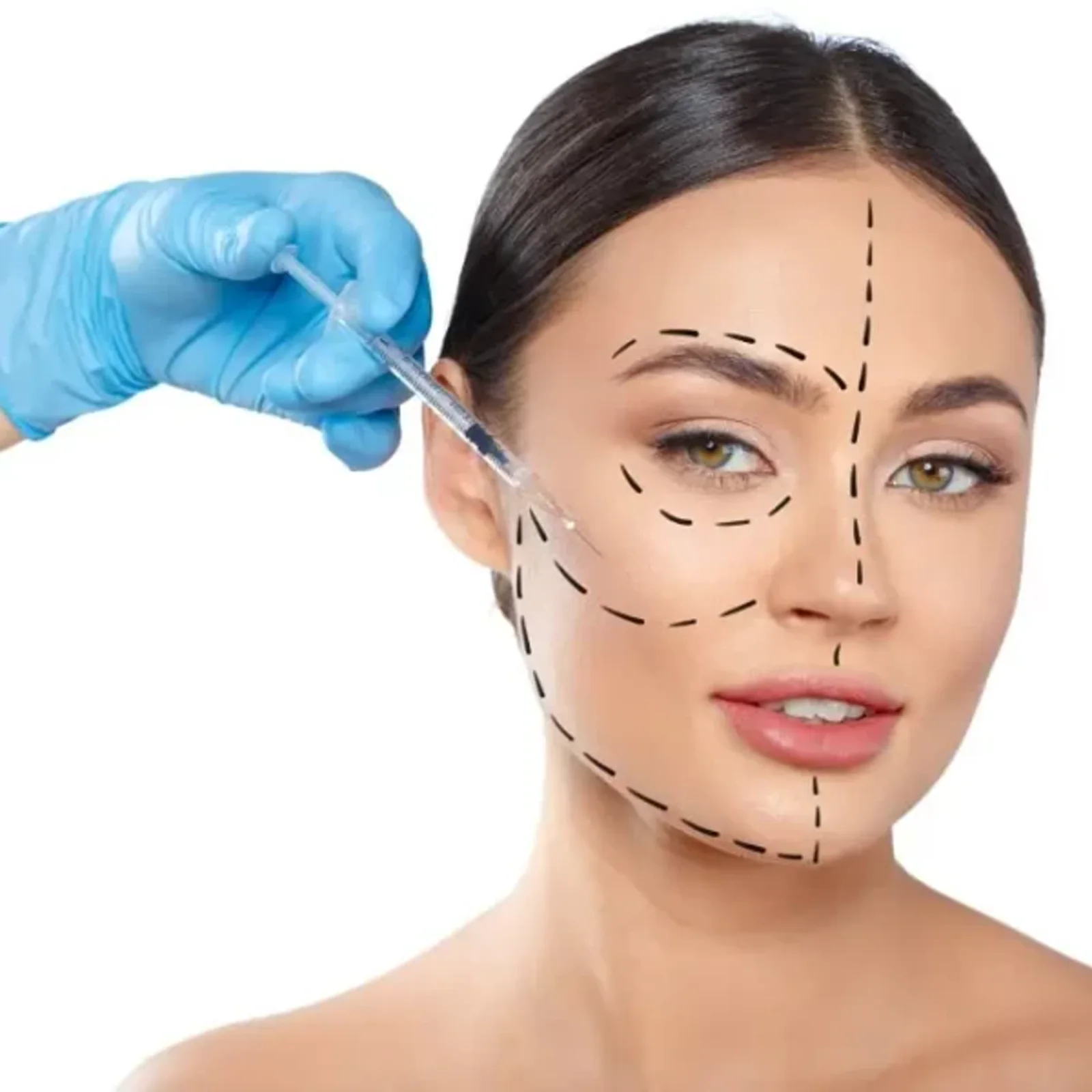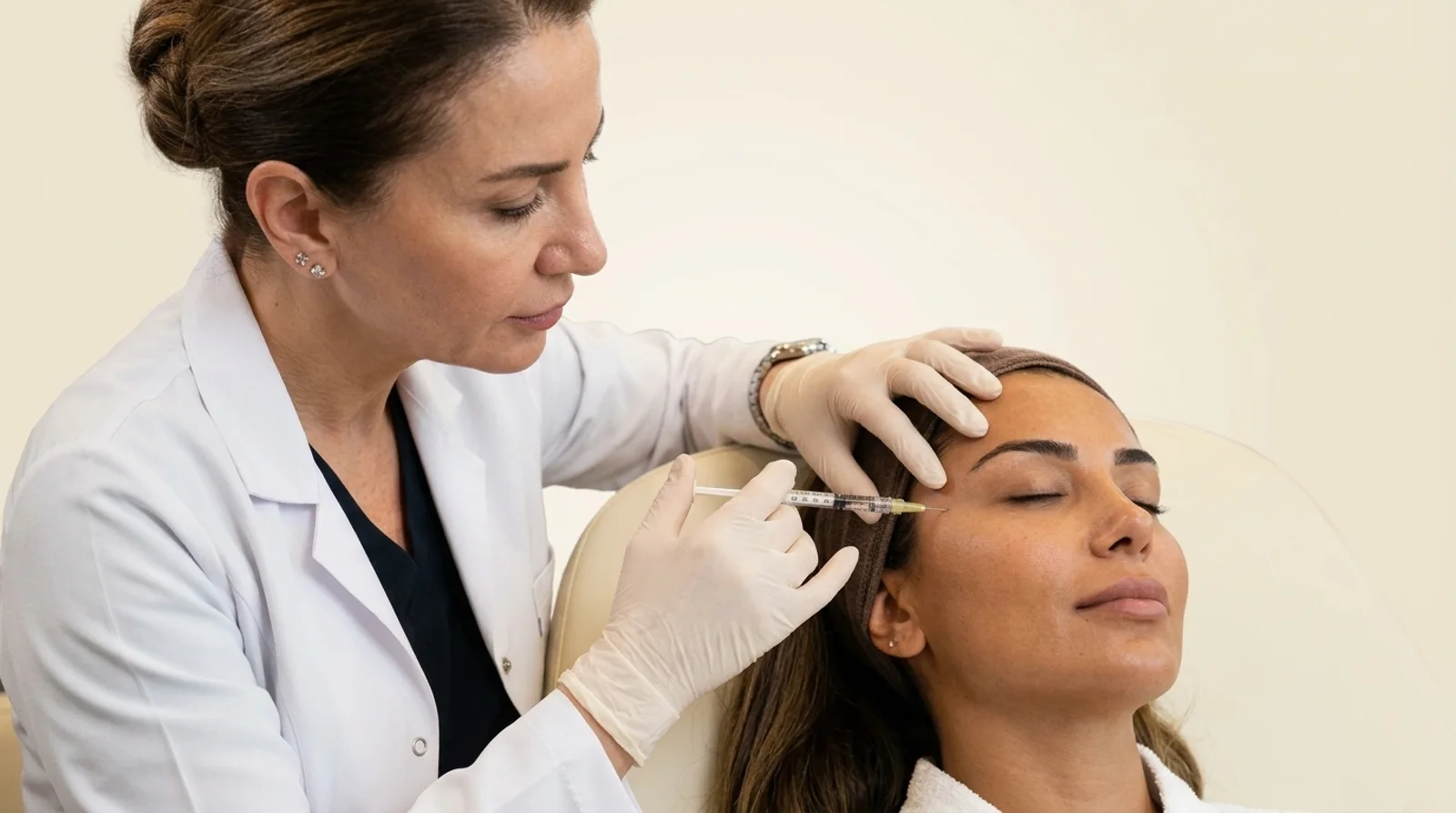
Cheek Filler
Measured volume
Cheek Filler is a treatment considered in line with the person's needs and expectations. At Kaya Clinique it is assessed with an understanding of a measured, natural look in facial expression, and with individual planning.
Arrange a Specialist ConsultationCheek filler is usually requested less to add volume than to restore it. Most people arriving to discuss it are not asking for a fuller face; they are asking for the face they had. The sections below explain why this region changes, how long the treatment lasts and how it separates from the options it is most often confused with.
What does cheek filler aim to do?
Hyaluronic acid based products are used in this region as elsewhere. Hyaluronic acid is a substance the body already contains; in filler form it is a cross-linked gel placed beneath the skin to provide volume.
The aim in the cheek differs from the lip. It is not to define a contour but to replace volume that has reduced, which is why treatments here are planned as restoration: what is being sought is the support that was previously present.
The region also has a structural role. The cheek is one of the support points of the mid-face, and the volume held here influences how the rest of the face sits. Planning therefore takes account of the general balance of the mid-face rather than the cheek alone. Neighbouring regions enter the same frame: hollowing at the temple is addressed under temple filler, and shadowing beneath the eye under under-eye filler.
Why does volume reduce in the cheek?
This change does not have a single cause; several processes run alongside one another.
Both the amount and the distribution of fat in the region alter over the years.
The structures holding tissue in place loosen, contributing to volume settling lower.
Reduced elasticity in the skin directly affects how the region looks.
Marked weight loss can affect facial volume before other areas.
These four carry different weight in different people. Two people of the same age can present very differently, which is why the plan is built on the examination finding rather than on age.
One further distinction is needed: has volume reduced, or has it moved? Where tissue is largely in place but reduced, adding volume answers the finding. Where tissue has descended noticeably, the subject moves to a different heading and the mid-face lift discussion begins.
The useful question in this region is not how much fullness is wanted. It is whether the volume has genuinely gone or simply moved.
Timing plays a part as well. Because volume loss progresses slowly, people rarely notice the individual changes; the complaint is voiced once a threshold is crossed. Part of the examination is understanding which finding produced that threshold and setting the expectation against it.
How long does cheek filler last?
In relatively immobile regions such as the cheek, duration is reported on average in the range of twelve to eighteen months and above. The range varies with product, individual and technique.
The reason for the longer duration relates to movement. In regions that move constantly through the day the product is metabolised more quickly; the cheek is a calmer area in that sense and the product placed there remains longer.
A boundary is still worth drawing: these are average figures and they vary with individual metabolism. The product also recedes gradually rather than abruptly; the region does not revert on a particular day but changes slowly over time.
When is a repeat treatment considered?
When the product begins to recede, the timing of a further treatment is determined by the condition of the region rather than by a calendar. An early repeat can produce unwanted accumulation, while leaving it too long means returning to the starting point. The decision is made at examination with the person's own observation taken into account.
Cheek filler or cheekbone filler?
These two look at neighbouring regions and are frequently confused. The distinction is built on what is being sought. Where the complaint is the width of the lower face rather than mid-face volume, neither heading applies; if that width comes from the bulk of the chewing muscle, the treatment discussed is masseter treatment.
- Replacing volume that has reduced is the objective.
- The support point of the mid-face is strengthened.
- What is expected is fullness rather than a defined edge.
- Cheek filler is the option discussed here.
- A defined line in the upper part of the face is sought.
- The product is placed in a deeper plane.
- What is expected is definition rather than volume.
- Cheekbone filler is the option discussed.
The plan follows from that distinction as well. Which layer is worked in, at which points and in what form differs according to the function of the region; the same quantity of product placed by two different plans produces markedly different results, which is why the decision is made together with the appearance being targeted rather than by region name alone.
Cheek filler or fat transfer?
This comparison also arises frequently, and it starts with the difference in how the two work.
In hyaluronic acid filler a ready-made product is used; the treatment is carried out by injection and, where necessary, the product can be dissolved with hyaluronidase. That reversibility is a feature available both where an unexpected appearance results and in an emergency.
In fat transfer the person's own tissue is used. That requires the tissue to be taken from another area, which makes it a surgical procedure. Part of the transferred tissue is absorbed by the body over time, and there is no equivalent option of dissolving it with an enzyme.
What the two share is this: in neither case is the durability of the result unlimited, and the region continues to change over time. The comparison is therefore less about which lasts longer and more about which route the person prefers.
Selection is not a ranking. The size of the change expected, the person's suitability for a surgical procedure, the importance placed on reversibility and the tissue available are assessed together, and which method fits is determined at examination. Where what is described is not volume but dullness, dryness or loss of firmness, the answer lies elsewhere: skin booster and hydration booster address skin quality rather than shape, and neither substitutes for the other.
What happens after treatment?
In this region the period after treatment does not markedly disrupt daily routine for most people; the findings that can occur are nonetheless worth knowing in advance.
First hours
Mild fullness and tenderness in the region are usual. This appearance does not yet reflect the result.
First days
Swelling and bruising can be seen; both are recognised side effects and are expected to settle.
Up to 2 weeks
Resolution of these findings is generally complete within this period.
Assessment
The result is assessed once the findings have resolved and the product has settled.
When is the result assessed?
The fullness seen in the early period includes swelling as well as the product placed. An assessment made immediately after treatment is therefore misleading. How the region looks is judged once the findings have settled and the tissue has taken its position, and the plan is reviewed against that assessment if needed.
Which findings should prompt contact?
Swelling lasting longer than expected, a firmness that can be felt in the region, steadily increasing pain, a colour change in the skin or any change relating to vision should be reported without waiting for an appointment. That these situations are uncommon does not mean they should be unknown; reporting early is what makes timely intervention possible.
What are the risks and when is it not carried out?
The most common side effects are swelling and bruising, both settling within days to two weeks. Reported less often are nodules, migration of the product away from its original position and inflammatory reactions appearing at a later stage; that final group needs to be followed by a physician.
The uncommon but most serious complication is injection of the product into a blood vessel. This can compromise the blood supply to skin tissue and requires urgent intervention. The factors reducing that risk are familiarity with the vascular anatomy of the region, preferring a cannula where appropriate and working slowly at low pressure, with an emergency hyaluronidase protocol available should such a situation develop.
For those reasons the treatment needs to be carried out in a clinical setting by a physician able to manage this complication. An account that minimises the risk and one that makes the treatment sound more dangerous than it is are both inaccurate.
There are also situations in which treatment is not carried out or is deferred. It is not recommended during pregnancy or while breastfeeding, since safety data for those periods is not available. Where there is an active infection, an active lesion in the treatment area or a known allergy to the product, treatment is not performed.
At the decision stage the subjects are expectation and boundary. Whether the person understands that duration is limited, that the result is not assessed in the early period, which findings this treatment does not answer and when to contact the clinic is established before a treatment is planned. The treatment itself is carried out by the physician following a medical assessment.
This content is provided for general information only and does not constitute medical advice. The hyaluronic acid fillers used in cheek treatment are medical products; treatment is carried out by a physician in a clinical setting following a medical assessment, and this content is not a product promotion. Common side effects are swelling and bruising, settling within days to two weeks. Less frequently, nodule formation, product migration and delayed inflammatory reaction have been reported and require physician follow-up. The uncommon but most serious complication is injection of product into a blood vessel, which can compromise the blood supply to skin tissue and requires an emergency hyaluronidase protocol; risk is reduced by knowledge of the anatomy, use of a cannula where appropriate and slow injection at low pressure. In relatively immobile regions such as the cheek, duration is reported on average in the range of twelve to eighteen months and above, varying with product, individual and technique. Treatment is not recommended during pregnancy or breastfeeding, and is not carried out where there is an active infection, an active lesion in the treatment area or a known allergy.
Content overseen by Aysun Kaya, Founder · Kaya Clinique · on Bağdat Avenue since 2019. Our publishing standards are set out in our editorial principles.
From consultation to care, the process

Beklentilerinizi dinleyerek, kişiye özel bir yol haritası oluşturuyoruz.

Modern, hijyenik ve mahremiyeti önceleyen bir klinik ortamı.

Konforunuz gözetilerek, ölçülü ve kontrollü bir yaklaşım.

Süreç sonrası bilgilendirme ve takip ile yanınızdayız.
Frequently asked questions
How are Cheek Filler prices determined in 2026?
The absence of a figure for Cheek Filler prices on this page is not a choice but a legal boundary: announcing procedure fees and promoting on price is prohibited.
What we can share is what shapes the planning of Cheek Filler. The following items determine the process:
- The amount of product used in the region
- The degree of volume loss and the plane worked in
- Whether it is planned in one session or in stages
- The review planned to assess the result
For this reason we do not fix a figure for Cheek Filler in advance. Examination first, then the plan; pricing rests on that plan and is shared in consultation.
Treatments considered alongside this one

Hydration Booster
Moisture and vitality for the skin
More Details →
Skin Booster
Support for skin quality
More Details →Whether they can be planned together is decided at examination; this is not a recommendation list.