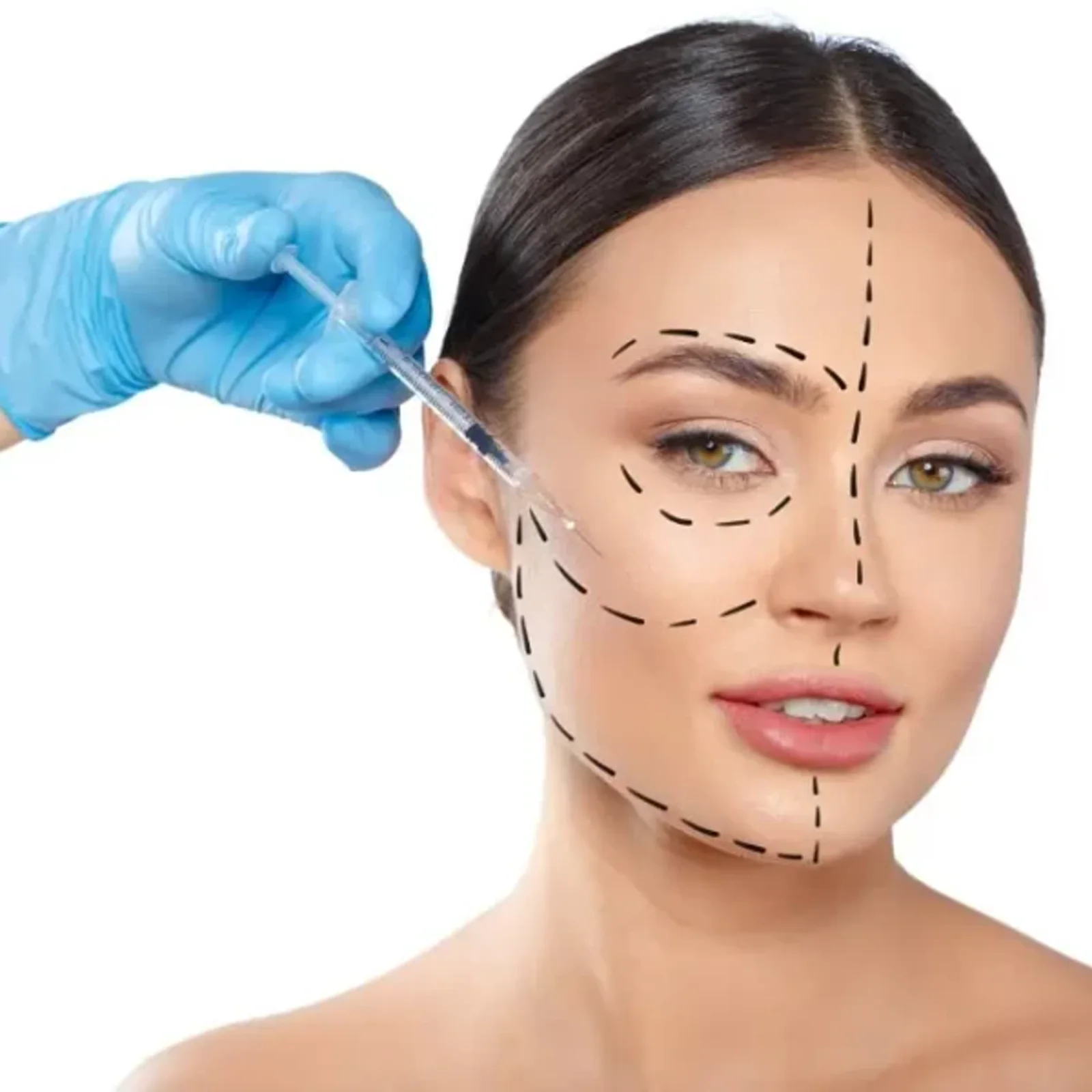
Under-Eye Filler
A more rested look
Under-Eye Filler is a treatment considered in line with the person's needs and expectations. At Kaya Clinique it is assessed with an understanding of a measured, natural look in facial expression, and with individual planning.
Arrange a Specialist ConsultationThe under-eye is one of the most requested areas in medical aesthetics and one of the least forgiving. The skin here is thinner than elsewhere on the face, the eye is close and the margin for error is narrow. This page starts by explaining what the popular names for this treatment actually refer to, then covers who it does not suit and why the region demands particular expertise.
What does under-eye filler actually mean?
The names in circulation, whether brightening filler or tear trough filler, are marketing terms rather than medical definitions. What the treatment is, in medical terms, is a hyaluronic acid filler applied to the under-eye region.
Hyaluronic acid is a substance already present in the body; in filler form it is a cross-linked gel, applied here with the aim of reducing the appearance of hollowing. The association with brightness comes from the reduction in shadowing that follows; the treatment itself is not an illuminating procedure.
Making that distinction is not pedantry. When a term drifts from its medical meaning the expectation drifts with it: not every form of darkness under the eye responds to this treatment, and the reason for that is the next section.
Part of why these names have spread is that they are comprehensible. Someone describing shadowing under the eye is not searching for a medical word; they are using language that matches what they see. The term itself is not the problem. The problem is that it obscures what the treatment does and does not do.
Why does darkness appear under the eye?
Darkness in this area cannot be explained by one mechanism. Different processes produce a similar appearance, and the right approach depends on which is dominant.
A depression created by volume loss reads as a shadow under light.
The skin here is thin, so the colour of the structures beneath shows through more readily.
In some people the darkness relates directly to the pigment in the skin.
Puffiness or tissue coming forward creates a shadow beneath it.
In most people these overlap, and the task of the examination is to identify which predominates. Shadow from volume loss and darkness from pigment are not addressed by the same method, and puffiness or protruding tissue belongs to another subject entirely.
In this region the more common problem is not the wrong treatment but the wrong reading. The same appearance can come from four different places.
Who is under-eye filler not suitable for?
The answer contains the most important distinction in this region: is there hollowing, or is there protruding tissue?
Where there is clear hollowing and the darkness comes largely from the shadow it casts, adding volume can improve the appearance. That is the situation in which the treatment is genuinely indicated.
Where tissue has come forward, in other words where there are bags, the position reverses. Adding volume in that situation can bring the area further forward and make the appearance heavier rather than better. The treatment is also not considered appropriate where swelling is prominent.
Where the darkness is mainly pigment related, the benefit of adding volume is limited, because what is being dealt with is colour rather than shadow. None of these distinctions can be made by looking at a photograph; they are made at examination. Where the concern is skin quality and moisture rather than shadow, different headings apply: hydration booster and skin booster address the tissue itself rather than adding volume.
There is a practical consequence to all of this: in some enquiries the correct answer is not to treat. Declining a treatment that is unlikely to meet the expectation produces a better outcome than one that later needs reversing, and that possibility is discussed openly.
Under-eye filler or mesotherapy?
The two have different targets. Filler addresses a deficit of volume in the region, while mesotherapy is an approach directed at the quality of the skin. The comparison is therefore not about which is better but about which picture applies. In some plans the two are considered as complementary rather than alternative.
Filler or eyelid surgery for under-eye bags?
These are the two most confused options in this region and the distinction needs to be drawn clearly.
- There is a depression in the region from volume loss.
- The darkness comes largely from shadowing.
- No tissue is protruding.
- Hyaluronic acid filler is considered.
- Tissue has come forward in the region.
- Adding volume can make the appearance heavier.
- Excess skin may accompany the picture.
- Eyelid surgery is the subject here.
Why does the under-eye require particular expertise?
This is among the areas demanding most experience in filler treatment, and the reasons are specific. Neighbouring regions are assessed alongside it: mid-face volume under cheek filler and definition of the upper mid-face under cheekbone filler.
The first is the thinness of the skin. Where product sits in a superficial plane in this region, a bluish tone can show through the skin; this is known as the Tyndall effect. It is a situation in which a technical error becomes directly visible.
The second is product selection. Special products of low viscosity, meaning a more fluid consistency, are preferred here. Applying a product suited to another region can produce unwanted consequences for both appearance and tissue.
The third is proximity to the eye. The vascular structure of the region and its closeness to the eye raise the importance of technique. Preferring a cannula where appropriate and injecting slowly at low pressure are therefore decisions about safety rather than comfort.
The fourth is the scale of the plan. Small differences read as large ones here; the amount of product and its distribution sit within a far narrower range than anywhere else on the face. What is done in this region takes its measure from restraint rather than confidence.
How long does it last and what happens afterwards?
In the under-eye region duration is reported on average in the range of nine to twelve months and above, varying with product, individual and technique. Where the tissue has clearly descended rather than diminished, the discussion moves away from filler altogether and towards mid-face lift.
First hours
Mild fullness and tenderness are expected; this appearance does not reflect the result.
First days
Swelling and bruising can occur. Bruising is more readily noticed in this region than elsewhere.
Up to 2 weeks
These findings usually finish resolving by around this point in the recovery.
Assessment
The result is assessed once swelling has settled and the product has taken its position.
Why is bruising more visible here?
The skin under the eye is thin and the vascular structure sits close to the surface, so even a small amount of bleeding is easily noticed from outside. Bruising is a recognised side effect and is expected to settle within days. Preferring a cannula where appropriate is one of the approaches that reduces the likelihood, though no method removes it entirely.
How is timing planned?
Because the findings in this region need time to resolve, booking treatment shortly before an important occasion is not a sound plan. Discussing the timetable in advance makes a practical difference by allowing the result to be waited for calmly.
What are the risks in the under-eye region?
Swelling and bruising are the findings seen most often, and both resolve somewhere between a few days and a fortnight. Reported less often are nodules, migration of the product and inflammatory reactions appearing at a later stage. Specific to this region, the bluish tone that can appear with superficial placement is also a recognised heading.
The uncommon but most serious complication is injection of product into a blood vessel. The area around the eye is particular in this respect: very rarely, consequences affecting vision have been reported. For that reason the treatment needs to be carried out in a clinical setting by a physician familiar with the vascular anatomy of the region and able to manage such a situation, with an emergency hyaluronidase protocol available.
The fact that hyaluronic acid fillers can be dissolved with an enzyme carries particular value here. It provides a route back both where an unexpected appearance results and in an emergency, and it is the property distinguishing this material from other filler substances.
Treatment is also not carried out, or is deferred, in defined situations. Pregnancy and the breastfeeding period are the first of these; no safety data exists for them, so treatment is not advised. It is likewise not performed if there is an infection under way, an unhealed lesion in the area, or a previously identified allergy to the product.
At the decision stage the main subject is suitability. Whether the person understands that their own picture is appropriate for this treatment, which finding it does not answer, that duration is limited and when to make contact is established before a treatment is planned. The procedure is then performed by the physician, once the medical assessment is complete.
This content is provided for general information only and does not constitute medical advice. The names in circulation for this treatment are marketing terms; in medical terms it is a hyaluronic acid filler applied to the under-eye region. Treatment is carried out by a physician in a clinical setting following a medical assessment, and this content is not a product promotion. The under-eye is among the areas requiring the greatest expertise; a bluish tone can show through the skin where the product is placed superficially, and special products of low viscosity are preferred for this region. Common side effects are swelling and bruising, settling within days to two weeks; nodules, product migration and delayed inflammatory reaction are reported less often. The uncommon but most serious complication is injection of product into a blood vessel; around the eye, very rarely, consequences affecting vision have been reported, and an emergency hyaluronidase protocol is required. Where there are bags or prominent swelling in the region this treatment is not considered appropriate. Duration is reported on average in the range of nine to twelve months and above. Treatment is not recommended during pregnancy or breastfeeding, and is not carried out where there is an active infection, an active lesion in the region or a known allergy.
Content overseen by Aysun Kaya, Founder · Kaya Clinique · on Bağdat Avenue since 2019. Our publishing standards are set out in our editorial principles.
From consultation to care, the process

Beklentilerinizi dinleyerek, kişiye özel bir yol haritası oluşturuyoruz.

Modern, hijyenik ve mahremiyeti önceleyen bir klinik ortamı.

Konforunuz gözetilerek, ölçülü ve kontrollü bir yaklaşım.

Süreç sonrası bilgilendirme ve takip ile yanınızdayız.
Frequently asked questions
How are Under-Eye Filler prices determined in 2026?
We cannot answer the question of Under-Eye Filler prices with a number here: health regulations expressly prohibit publishing procedure fees or making price announcements.
We can still explain how the decision on Under-Eye Filler is built. These are the headings that shape the plan:
- Whether the region is suitable at all — in some pictures the treatment is not carried out
- The specific product used and the quantity, which stays within a narrow range
- The choice of cannula and the preparation the technique requires
- Early review and, where needed, an enzyme plan
Because these headings change at once, no fixed amount forms for Under-Eye Filler. The picture becomes clear at examination, after which plan and process are discussed in detail.
Treatments considered alongside this one

Hydration Booster
Moisture and vitality for the skin
More Details →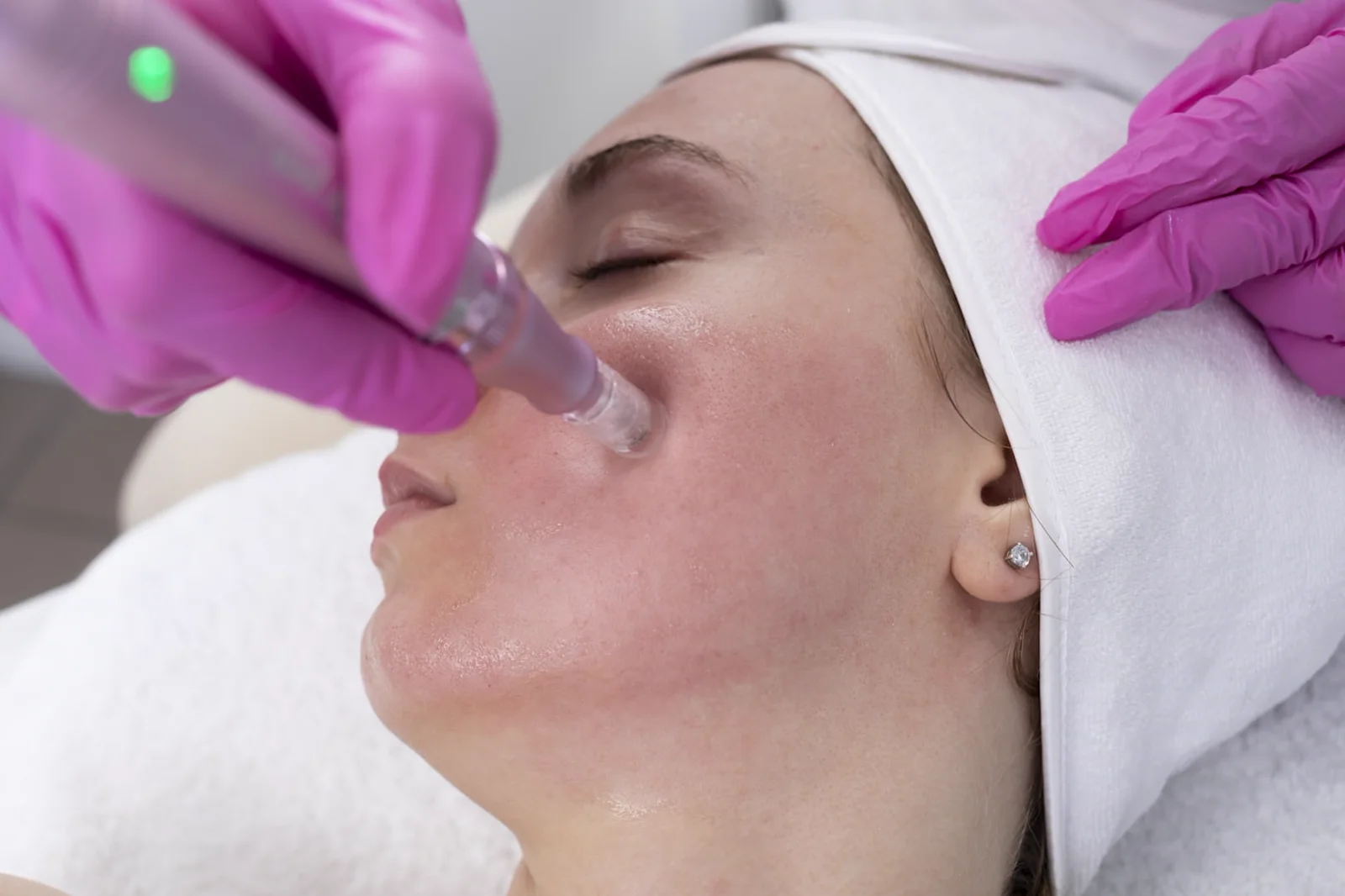
Mesotherapy
Localised skin care
More Details →
Skin Booster
Support for skin quality
More Details →Whether they can be planned together is decided at examination; this is not a recommendation list.