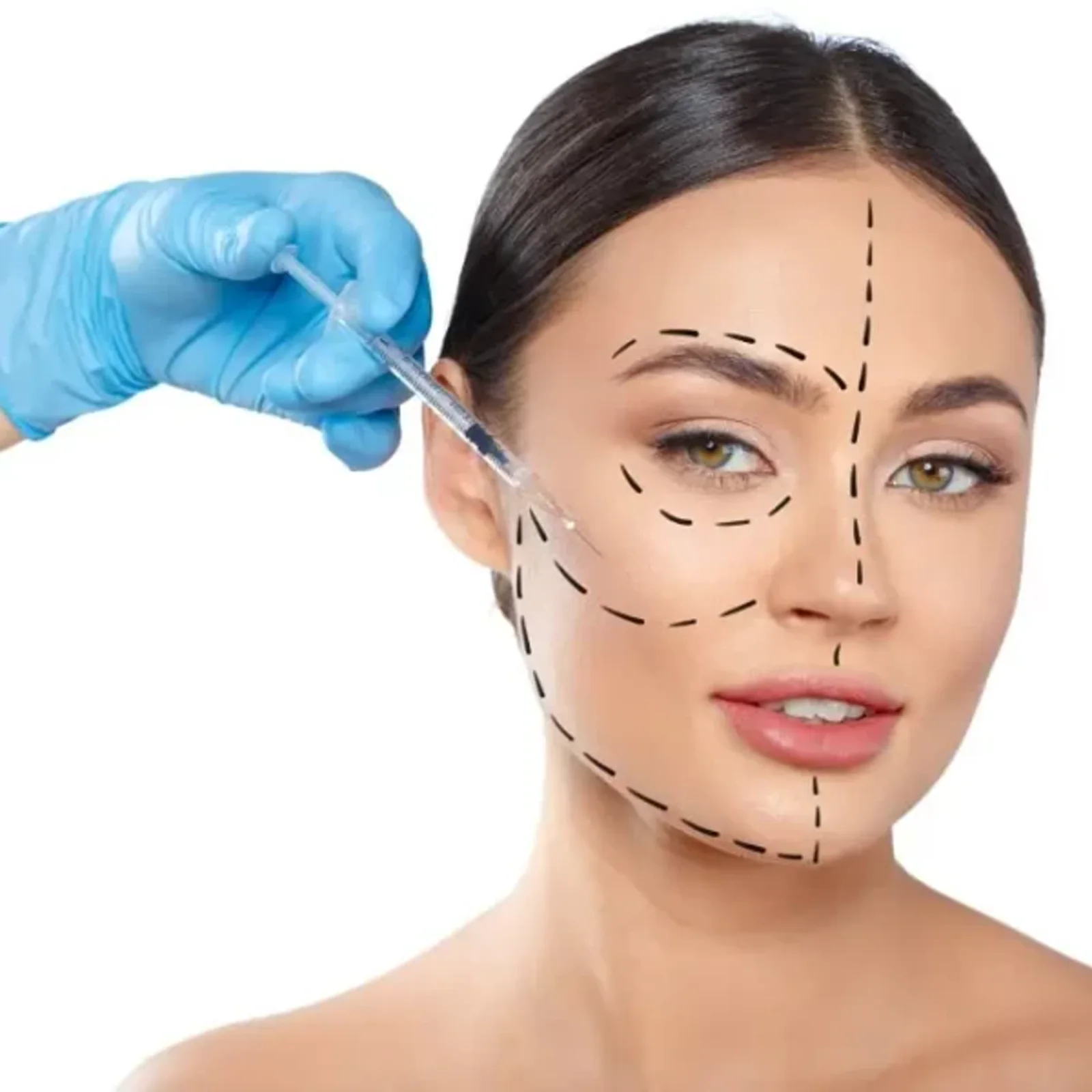
Temple Filler
A soft transition across the features
Temple Filler is a treatment considered in line with the person's needs and expectations. At Kaya Clinique it is assessed with an understanding of a measured, natural look in facial expression, and with individual planning.
Arrange a Specialist ConsultationThe temple is one of the first areas of the face to change and one of the last to be noticed. Most people cannot name what has altered here; they say only that their face looks narrower or more tired. This page explains what the region is, why it hollows, what a filler does and does not do here, and why it calls for experience.
What is temple hollowing?
The temple is the area between the outer corner of the eye and the hairline, rising from just above the brow. In a younger face it forms a gently full or flat surface; over time a hollowing can develop, curving inwards.
When that develops, the upper part of the face looks narrower. The transition between the forehead and the cheekbone becomes harder, the bony contours read more sharply, and shadowing at the outer corner of the eye increases. Both ends of that transition are separate headings: flattening on the forehead side is addressed under forehead filler, and shadowing beneath the eye under under-eye filler.
People describe this not through individual findings but as a general impression: looking tired, appearing to have lost weight, or the face having lost the fullness it once had. Behind that impression there is often volume loss in the temple.
The gradual reduction of tissue in the region is among the main causes of hollowing.
Marked weight loss can affect this area before other parts of the face.
In some people the region is naturally set further in from the outset.
The thinness and elasticity of the skin affect how visible the hollowing is.
Part of why this area goes unnoticed is where it sits. The temple is not somewhere people look at directly in the mirror; the change shows up more in photographs or in profile. The complaint is therefore often raised years later, during a consultation about another region — most often by people attending for cheek filler or masseter treatment, when the upper frame of the face comes up in conversation.
What does temple filler do?
A hyaluronic acid based product is used to reduce hollowing in the region. Hyaluronic acid is a substance the body already contains, applied in filler form as a cross-linked gel. Where the quality of the skin itself is also part of the concern, that is a separate heading: skin booster works with products that are not cross-linked and targets tissue quality rather than volume.
The work being done is replacing volume that has reduced. The aim is not to make the region look fuller than it should but to soften the transition between the forehead, the temple and the cheekbone. Measurement here is therefore taken from balance rather than from visibility.
The effect tends to be broader than the region itself. Because the temple forms the upper frame of the face, fullness here also affects the general proportion of the face and the way light falls across it.
What is done in this region is not a display of volume; it is making a transition between two areas invisible again.
Quantity is decided by the same balance. Too much volume brings the temple forward and makes the upper face look wider than it is; too little leaves the transition unresolved. The plan is therefore built on harmony with the neighbouring areas rather than on the largest achievable change.
What effect does temple filler have on the face?
Treatment directed at this region reaches beyond the area treated, and that has several concrete expressions.
- The inward hollowing is reduced.
- The prominence of the bony contours softens.
- The transition between forehead and cheekbone improves.
- Shadowing in the region decreases.
- The upper face gains a more balanced frame.
- The general proportion of the face changes.
- The impression of tiredness can lessen.
- This effect is indirect; it is not a lifting result.
Does adding volume here open up the eye area?
This question comes up often and the answer carries a boundary. Where volume is added to the region, the transition along the outer contour of the eye can soften and that can contribute to the overall appearance.
Adding volume does not, however, move tissue upwards. Where the outer end of the brow has descended noticeably, or where there is genuine laxity in the region, the correction expected falls outside the scope of this treatment. That situation is covered on the brow and temple lift page.
Both pictures can also be present together. Where that happens, which predominates and which heading will contribute more to the result is determined at examination, and in some plans a sequence is discussed.
Which situations are not suitable?
Where there is no marked hollowing in the region and the complaint relates more to the quality of the skin, the benefit of this treatment is limited. Equally, where the discomfort about the overall appearance of the face originates in another region, a plan directed at the temple does not meet the expectation.
Why does the temple require experience?
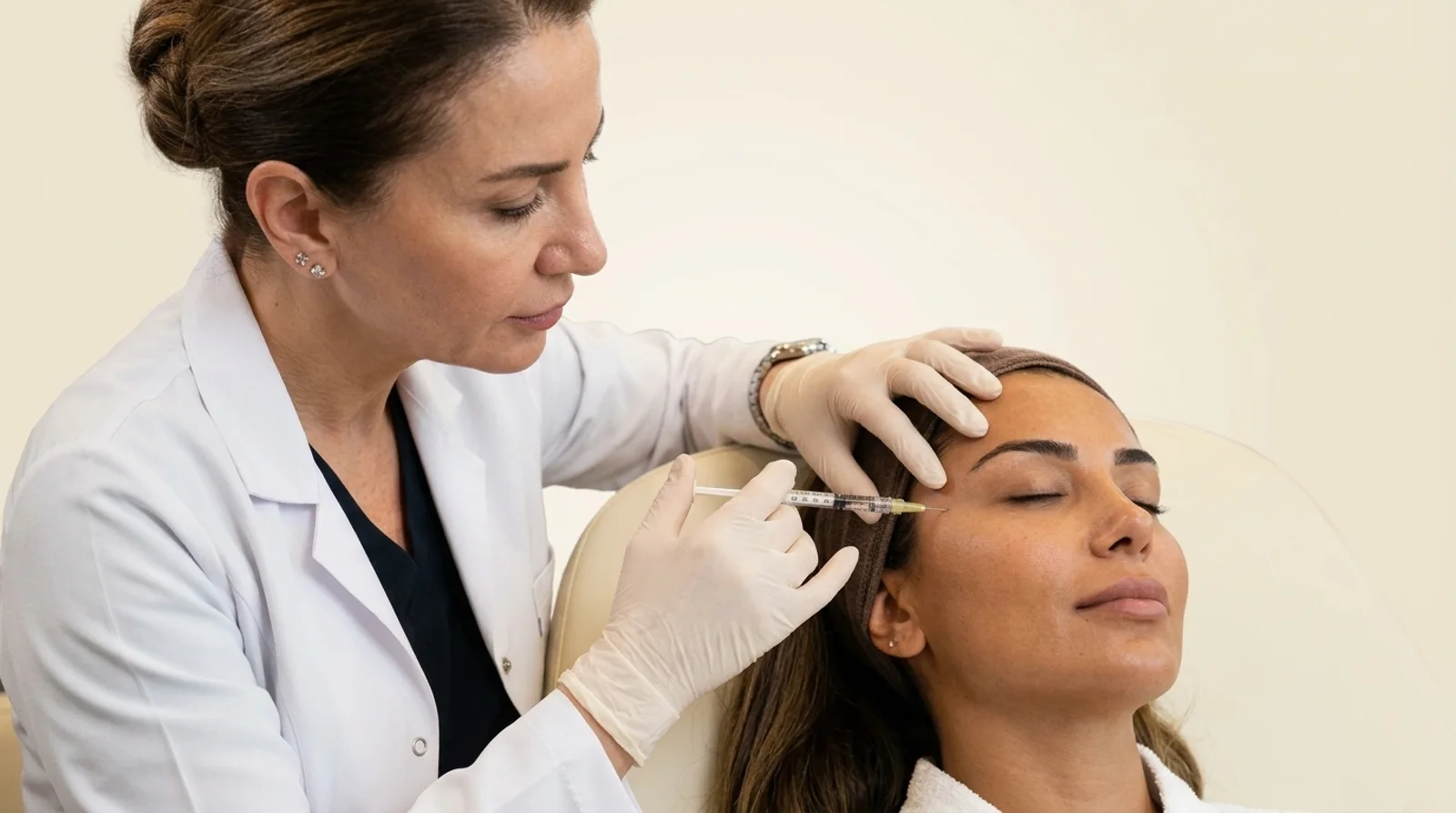
Treatment in this region requires particular care because of its proximity to vascular structures. The area may look plain from the surface; the structure beneath it is not.
For that reason the technique used here comes before the quantity of product. Familiarity with the anatomy of the region, preferring a cannula where appropriate and injecting slowly at low pressure are the fundamental safety approaches in this area.
Carrying out the treatment in a clinical setting, by a physician able to manage a possible complication, is necessary for the same reason. That the region has become a popular treatment area does not change the technical requirement.
This is not the same as making the region sound dangerous. The point is that the simplicity of the treatment is only apparent: a short procedure does not make the anatomical knowledge behind it unnecessary.
How is the product chosen here?
What is wanted in this region is not a defined projection but a soft transition. The structure of the product used can therefore differ from one expected to provide support over bone. The choice is made at examination according to the appearance being sought and the tissue quality of the region.
How is the treatment planned?
Planning is not done by looking at a single point. At examination the depth of the hollowing, the difference between the two sides, the thickness of the skin and the volume situation in neighbouring areas are assessed together. Which points are treated, and in what order, comes out of that assessment; two different plans using the same product in the same region give visibly different results.
How long does temple filler last?
In the temple region duration is reported on average in the range of nine to twelve months and above. The range varies with product, individual and technique, and the product recedes gradually rather than abruptly.
First hours
Tenderness in the region is usual. The appearance has not settled and is not ready for assessment.
First days
Swelling or bruising may be seen; both are recognised side effects and are expected to settle.
Up to 2 weeks
A marked reduction in these findings is generally complete within this period.
Assessment
How the transition has settled is looked at once swelling has resolved and the product has taken its place.
In this region the period after treatment does not markedly disrupt daily routine for most people. Knowing the findings in advance nonetheless prevents the early appearance from being misread, and knowing when to contact the clinic is part of the same information.
What are the risks in the temple region?
Here too the most common side effects are swelling and bruising, both receding within days to two weeks. Reported less often are nodules, movement of the product from its position and inflammatory reactions arising at a later stage; that final group needs physician follow-up.
The most serious complication arises where product enters a blood vessel, and it is uncommon. In that event the blood reaching skin tissue can be disrupted and treatment cannot wait. The vascular proximity of this region explains why the risk is discussed here in particular.
The approaches that reduce it are known: familiarity with the anatomy, use of a cannula where appropriate and working slowly at low pressure. Alongside these, the clinic must be ready to run the urgent hyaluronidase protocol if the situation calls for it. That hyaluronic acid can be dissolved with an enzyme provides a route back both where an unexpected appearance results and in an urgent situation.
In some circumstances treatment is not carried out or is deferred. Pregnancy and breastfeeding come first, as no safety data exists for those periods. Treatment is also not performed where an infection is under way, where there is an unhealed lesion in the region, or where an allergy to the product has previously been identified.
At the decision stage the subject is whether the finding in the region can be met by this method. Whether the person understands the difference between hollowing and laxity, that duration is limited and which findings should be reported promptly is established before a treatment is planned. Steadily increasing pain in the region, a colour change in the skin or any change relating to vision means contacting the clinic without waiting for the appointment.
This content is provided for general information only and does not constitute medical advice. The hyaluronic acid fillers used in temple treatment are medical products; treatment is carried out by a physician in a clinical setting following a medical assessment, and this content is not a product promotion. The temple is among the regions requiring experience because of its proximity to vascular structures. Common side effects are swelling and bruising, receding within days to two weeks; nodules, product migration and delayed inflammatory reaction are reported less often and require physician follow-up. The uncommon but most serious complication is entry of product into a blood vessel, which can disrupt the blood reaching skin tissue and requires an emergency hyaluronidase protocol. This treatment does not move tissue upwards; where the outer end of the brow has descended noticeably or there is genuine laxity in the region, the correction expected falls outside its scope. In the temple region duration is reported on average in the range of nine to twelve months and above. Treatment is not advised during pregnancy or breastfeeding, and is not performed where an infection is under way, where there is an unhealed lesion in the region or where an allergy to the product has been identified.
Content overseen by Aysun Kaya, Founder · Kaya Clinique · on Bağdat Avenue since 2019. Our publishing standards are set out in our editorial principles.
From consultation to care, the process

Beklentilerinizi dinleyerek, kişiye özel bir yol haritası oluşturuyoruz.

Modern, hijyenik ve mahremiyeti önceleyen bir klinik ortamı.

Konforunuz gözetilerek, ölçülü ve kontrollü bir yaklaşım.

Süreç sonrası bilgilendirme ve takip ile yanınızdayız.
Frequently asked questions
How are Temple Filler prices determined in 2026?
You will not find a figure for Temple Filler prices on our pages; health regulations do not permit healthcare institutions to share procedure fees or advertise on price.
What we can share is what shapes the planning of Temple Filler. The following items determine the process:
- The degree of hollowing and the amount of product used
- Whether a single session is sufficient
- Whether neighbouring regions are addressed in the same plan
- The consultation planned to assess the result
Once these variables come together, no figure for Temple Filler holds for everyone. The individual plan is explained at the consultation following examination.
Treatments considered alongside this one

Whether they can be planned together is decided at examination; this is not a recommendation list.