Zionic
Skin and contour technology
Zionic is a treatment considered in line with the person's needs and expectations. At Kaya Clinique it is assessed with an understanding of technology-supported improvement in body contours, and with individual planning.
Arrange a Specialist ConsultationZionic is less widely known than some body contouring devices, which makes it one of the treatments where an accurate description matters most. This page explains what the device actually combines, what a single published clinical study reported, and where the boundaries of the claim sit.
What is Zionic and how does it work?
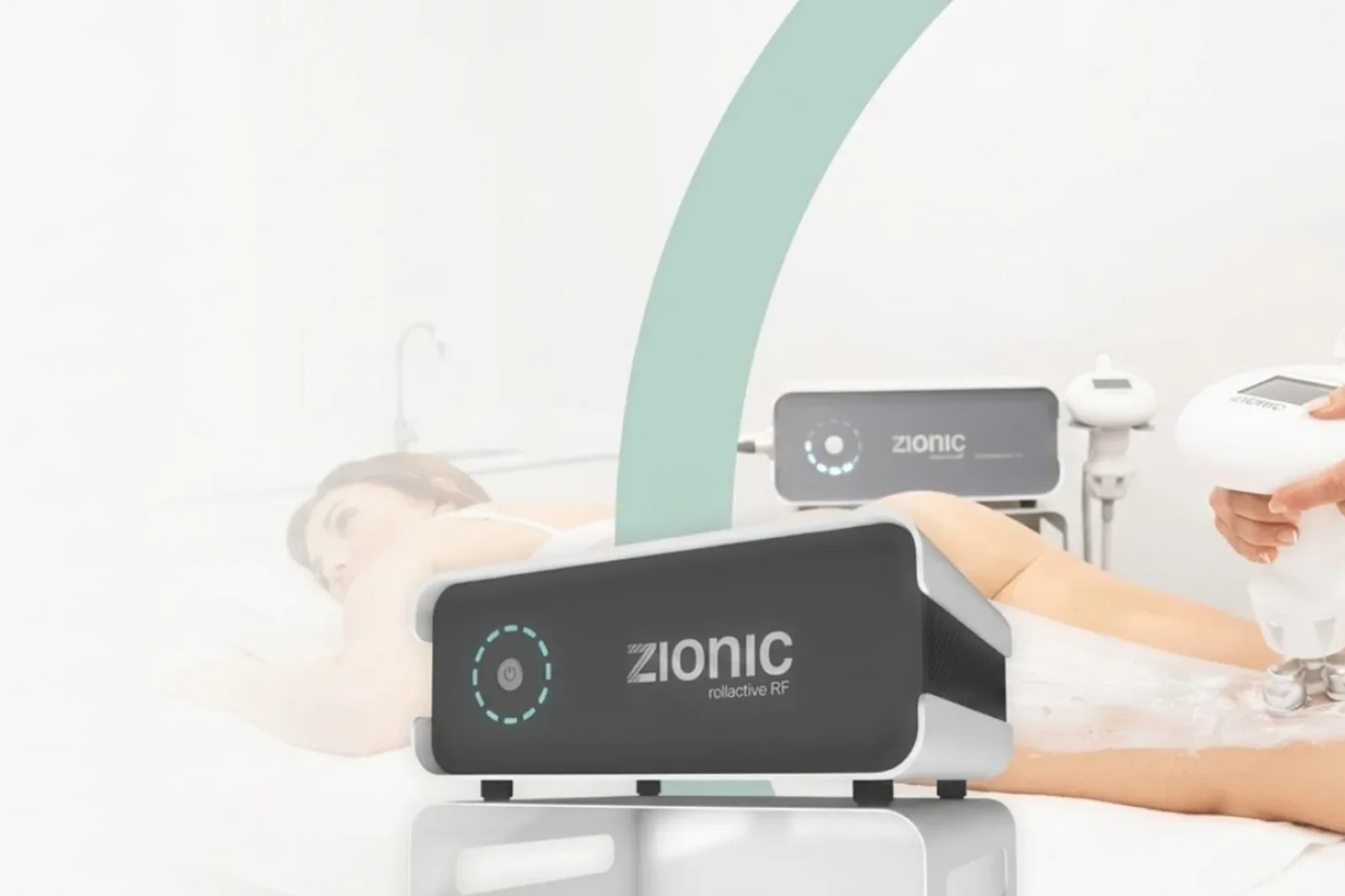
Zionic is a body contouring device that combines two mechanisms in a single session: resistive radiofrequency delivered at 200 watts, and deep rotational active massage.
The radiofrequency component raises the temperature of the tissue. The stated aim of that heating is to stimulate collagen and elastin production and to influence the metabolism of fat cells, while the mechanical component is intended to activate the lymphatic system.
Two things are worth noting about that description. It concerns the treated area rather than the body as a whole, and it involves no needles, no incisions and no anaesthesia. Daily life resumes immediately after a session.
It is equally worth stating what the device does not do. It does not work by contracting muscles, and no claim about muscle stimulation or an equivalent to exercise is made here, because the mechanism described above is not one that produces that effect.
What does the evidence say?
Being specific about the evidence base is more useful than general enthusiasm, particularly for a device that is not widely covered in the literature.
In a clinical study published in the Journal of Cosmetic Dermatology in 2024, a protocol of eight sessions of 40 to 50 minutes each, carried out at intervals of 72 to 96 hours, was reported to produce a reduction in fat tissue and an improvement in contour at the thighs, abdomen and flanks. The procedure was found to be safe and well tolerated.
That is one study, and describing it as more than that would be inaccurate. It is a peer-reviewed publication, which gives it weight, but a single study does not constitute the broad evidence base found behind longer-established treatments. Approaches working through components delivered into the skin, such as mesotherapy, form a separate heading and are not replaced by this device.
The honest position is therefore a measured one: the reported findings are encouraging and the device was well tolerated, and anyone considering it should know that the evidence supporting it is limited in volume.
A single published study is worth citing precisely. It is not worth dressing up as a body of literature, and the difference matters to anyone making a decision.
How many Zionic sessions are needed?
The protocol runs as a course rather than a single appointment, and the spacing between sessions is part of the design.
Assessment
Whether the finding matches what the device addresses is established before a course is planned.
2 sessions per week
The manufacturer's protocol generally runs at this frequency across the course.
6 to 10 sessions
A full course typically falls within this range, depending on the area and the assessment.
After each session
Daily life resumes immediately; there is no recovery period to plan around.
The published study used a slightly different structure, with eight sessions spaced 72 to 96 hours apart. Both are described here because the study protocol and the manufacturer's protocol are not identical, and being clear about which is which is part of describing the treatment accurately.
Is Zionic a slimming device?
No, and this distinction is the one most worth understanding before booking a course.
What is described in relation to this device is a change in the contour of a treated area. That is not the same as weight management, and the treatment is not presented here as a way to lose weight or as a substitute for anything that does.
Nor is any claim made about permanently eliminating fat. The reported findings concern the treated area over the course of a protocol; extending that into a broader promise about body weight would misstate both the study and the mechanism. Where excess skin is present the subject moves into surgery: the abdomen is addressed under abdominoplasty, and where added volume is wanted the heading is buttock aesthetics.
For anyone whose goal is weight loss, this is not the appropriate starting point, and an assessment that says so is more useful than a course that cannot deliver it.
Does it help the appearance of cellulite?
Cellulite is one of the most searched terms in this field and also one where overclaiming is most common, so the position here is deliberately narrow.
No claim of resolving cellulite is made on this page. The appearance of cellulite involves the structure of the skin and the connective tissue beneath it, and it is not a condition that a course of any device treatment removes.
What can be discussed is contour in a treated area, which is what the published study assessed. Whether that is relevant to a particular concern is decided at assessment rather than assumed, and where the expectation is the disappearance of cellulite, that expectation is corrected rather than accommodated.
What does a session feel like?
The experience is straightforward and predictable, which is one reason the treatment is tolerated well.
A sensation of warmth during the session is expected, since raising tissue temperature is part of how the device works. Temporary redness in the treated area can follow and settles on its own.
Sessions in the published protocol ran between 40 and 50 minutes each.
Warmth during treatment is expected and is part of the mechanism. Where hair removal in the same area is also planned, laser hair removal runs to its own schedule; where the concern is the skin surface of the face, Hydrafacial is discussed as a separate layer.
Temporary redness and a feeling of warmth can persist briefly and settle on their own.
There is no recovery period; normal routine continues after the appointment.
How is the result assessed?
Because the protocol runs over several weeks, the comparison that matters is made across the course rather than after a single session. What is assessed is the contour of the treated area, and whether a further course is worthwhile is decided on that basis rather than on an impression formed early on.
Which areas are treated, and what is not addressed?
Being clear about the limits of a device is as useful as describing what it targets.
- Contour in defined areas such as the thighs, abdomen and flanks.
- A course-based approach over several weeks.
- A non-invasive session with no recovery period.
- Assessment of the area before any course is planned.
- Weight management or weight loss.
- Excess skin, which no device treatment removes.
- The resolution of cellulite.
- Any structural change requiring surgery.
Who should not have this treatment?
Certain circumstances mean the treatment is not carried out, or requires a physician's approval before proceeding.
It is not performed during pregnancy. Because radiofrequency energy is involved, it is also not carried out in people with a pacemaker or with metal implants within the treatment field.
An active skin infection in the area means the session is deferred until it has resolved. A history of thrombosis in the area to be treated requires assessment before any course is planned, and this is asked rather than assumed.
What is reviewed before the first session?
General health, current medications, any implanted electronic or metal devices, previous treatments to the same area and the condition of the skin are all reviewed. The goal of the course is also discussed at this point, because a mismatch between expectation and mechanism is easier to address before a course begins than after it ends.
This content is provided for general information only and does not constitute medical advice. Zionic is a body contouring device combining resistive radiofrequency delivered at 200 watts with deep rotational active massage; the stated aim is to raise tissue temperature in order to stimulate collagen and elastin production, influence fat cell metabolism and activate the lymphatic system. It does not work by contracting muscles and no claim regarding muscle stimulation is made. In a clinical study published in the Journal of Cosmetic Dermatology in 2024, a protocol of eight sessions of 40 to 50 minutes at intervals of 72 to 96 hours was reported to produce a reduction in fat tissue and an improvement in contour at the thighs, abdomen and flanks, and the procedure was found to be safe and well tolerated; this is a single study and the evidence base for the device is limited in volume. The manufacturer's protocol generally runs at two sessions per week for a total of six to ten sessions, and daily life resumes immediately afterwards. Temporary redness and a sensation of warmth can occur. This treatment is not a method of weight management and no claim is made regarding the permanent elimination of fat or the resolution of cellulite. It is not carried out during pregnancy, in people with a pacemaker or metal implants within the treatment field, or where there is an active skin infection in the area; a history of thrombosis in the area requires assessment.
Content overseen by Aysun Kaya, Founder · Kaya Clinique · on Bağdat Avenue since 2019. Our publishing standards are set out in our editorial principles.
From consultation to care, the process

Beklentilerinizi dinleyerek, kişiye özel bir yol haritası oluşturuyoruz.

Modern, hijyenik ve mahremiyeti önceleyen bir klinik ortamı.

Konforunuz gözetilerek, ölçülü ve kontrollü bir yaklaşım.

Süreç sonrası bilgilendirme ve takip ile yanınızdayız.
Related technology

Cryolipolysis
Cryolipolysis is a treatment considered in line with the person's needs and expectations. At Kaya Clinique it is assessed with an understanding of…
Explore the Technology →
Velashape 3
Velashape 3 is a treatment considered in line with the person's needs and expectations. At Kaya Clinique it is assessed with an understanding of…
Explore the Technology →Frequently asked questions
How are Zionic prices determined in 2026?
Our pages carry no figure for Zionic prices, and that is a legal limit rather than an oversight: healthcare institutions may not announce procedure fees.
Although no figure is given, we can say plainly what varies in Zionic. The determining items are:
- The number of sessions in the protocol
- The region addressed and how many regions are included
- Maintaining the interval between sessions
- The assessment made at the end of the course
The weight of each item differs in every person, so no common amount can be quoted for Zionic. How the process will unfold is set out in detail after examination.
Treatments considered alongside this one
Whether they can be planned together is decided at examination; this is not a recommendation list.