Breast Lift
A balanced, lifted appearance
Breast Lift is a treatment considered in line with the person's needs and expectations. At Kaya Clinique it is assessed with an understanding of comfort and balance in body proportions, and with individual planning.
Arrange a Specialist ConsultationA breast lift is concerned with position rather than size, and almost every misunderstanding about it comes from missing that distinction. Most people asking about it do not want their breasts to be larger or smaller; they want them to sit where they used to. The sections below cover what that involves, where the scars go and what a lift does not do.
What does a breast lift do?
Also known as mastopexy, this operation reshapes descended breast tissue and moves the nipple areola complex to a higher position.
Both parts of that description matter. The tissue is rearranged, and the nipple and areola are relocated; a procedure doing only the first would not address what most people are describing.
The underlying issue is distribution rather than volume. As the skin envelope loosens and the supporting tissue loses elasticity, breast tissue settles downwards and the nipple can come to sit lower with it. A lift repositions what is already there within a tighter envelope rather than adding or removing tissue.
The factors behind that change are familiar: pregnancy and breastfeeding, significant weight gain and loss, gravity, and the natural reduction in skin elasticity with age. None of these are defects; they are consequences of the breast being a tissue that changes over time.
How is descent assessed?
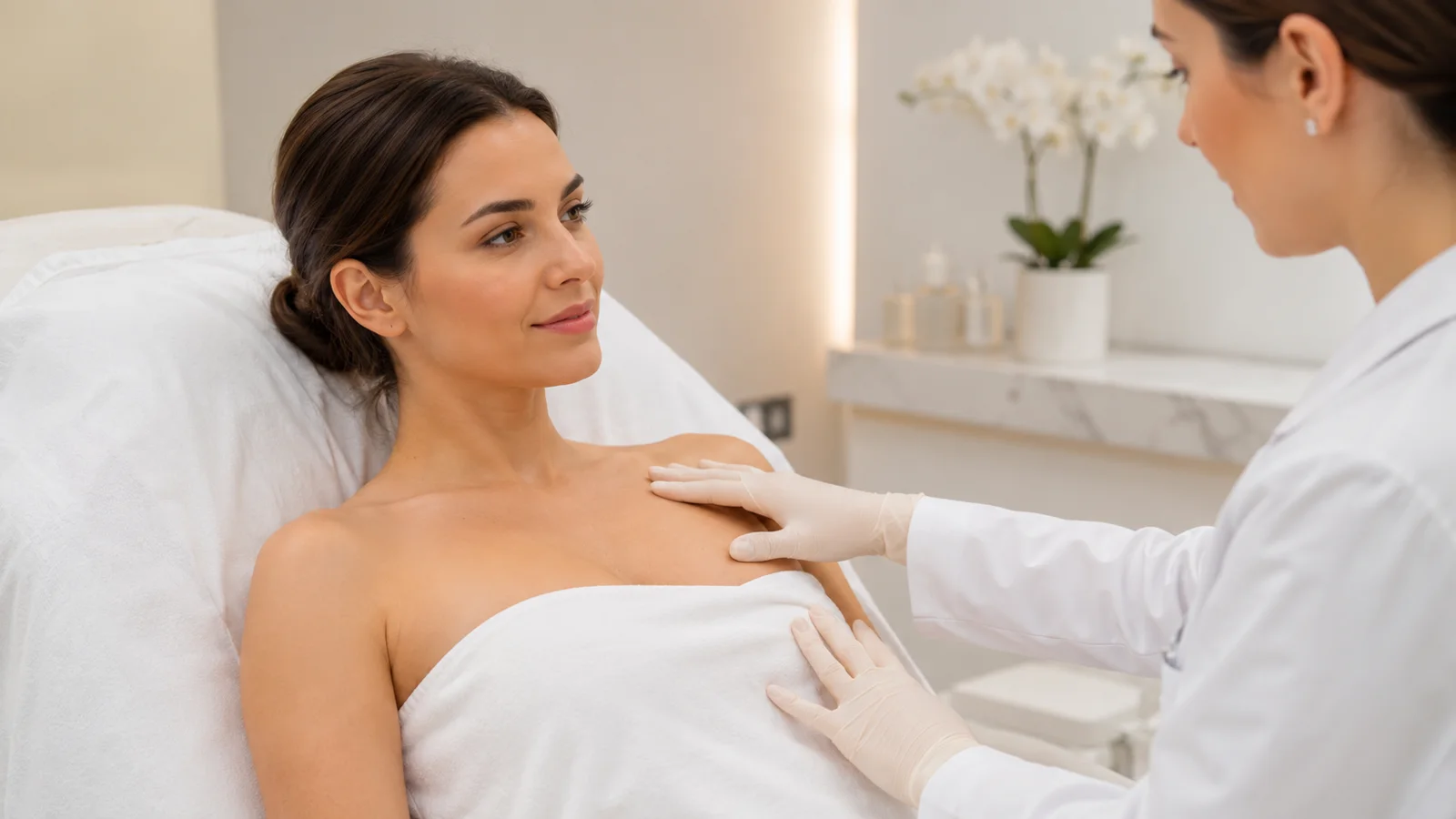
The anatomical reference used is where the nipple sits relative to the fold beneath the breast. Whether it lies above that fold, level with it, or below it directly influences the plan.
To this are added the diameter of the areola, how much excess there is in the skin envelope and how well the tissue holds together. The assessment is not reduced to a single measurement, and there is a reason for that.
Two people with apparently similar descent are not planned the same way if their skin quality and tissue density differ. What the examination looks at is the picture these variables create together.
The useful question in this area is not how much volume is wanted. It is whether the volume has reduced or simply moved.
Which incision patterns are used?
The incision pattern determines where the scars will sit, which makes it one of the most concrete subjects in the consultation. Two patterns are referred to frequently and both take their names from the shape of the line.
The lollipop pattern describes an incision beginning around the areola and running vertically downwards. The anchor pattern, also called an inverted T, adds a horizontal line along the fold beneath the breast. In some cases a pattern limited to the circumference of the areola may also be considered.
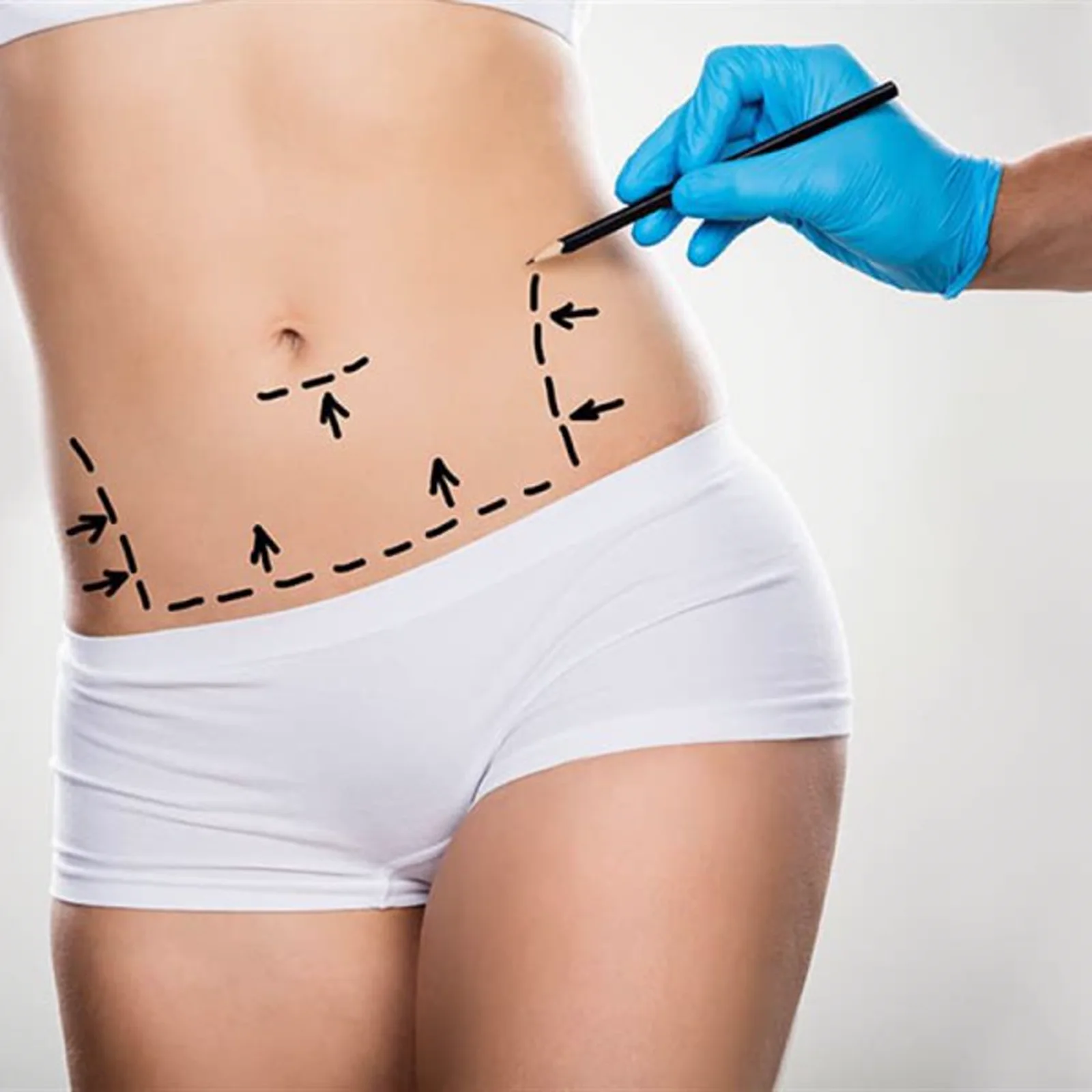
Which is selected is a clinical decision rather than an aesthetic preference. Where there is more excess skin and a greater change in position required, the plan may need a longer line. This is discussed before surgery, and where each line will fall is explained individually.
Where it sits relative to the fold is the first input into the incision decision.
A widened areola can be resized within the same operation.
The amount of excess and the elasticity of the skin determine the scope of the plan.
Whether volume is to be kept, reduced or increased changes the plan entirely.
Will there be scars after a breast lift?
Yes, and the honest answer is that they are permanent. An incision is unavoidable here; reshaping the tissue and moving the nipple cannot be done any other way, and a lift without scarring does not exist. Which factors decide whether that line settles quietly or stays raised is covered under scar revision.
The expectation is set as follows. Scars are more noticeable in the early period, fade over months, and can take up to a year to mature fully. Even then they do not become invisible; a matured scar remains as a fine, pale line.
Several factors influence how a scar behaves: where the incision sits, how the individual's skin heals, sun exposure and adherence to the aftercare described by the surgeon. Anyone with a personal or family history of keloid or hypertrophic scarring should say so, since healing is assessed differently in that situation.
Does a breast lift increase volume?
No, and this is the distinction most worth being clear about before deciding.
A lift adds no new tissue. What exists is rearranged and positioned higher, which can make the breast appear fuller and more collected. That change in appearance is not the same thing as an increase in volume.
This is where expectations diverge. Where noticeable fullness is wanted, particularly in the upper pole, meeting that expectation requires adding volume, and an implant enters the plan. Where no change in volume is wanted, a lift without an implant may be sufficient. The decision is made once what the person actually expects has been established.
A limit also applies to how long the result lasts. A lift produces a long lasting change, but the breast continues to be a tissue that changes; gravity, weight change, pregnancy and ageing can affect the appearance again over time. For that reason no promise is made that descent will never occur again.
Breast lift or implants?
These two are frequently confused because both are described as producing a fuller looking breast. The question each answers is different.
- The nipple sits lower than desired.
- Volume is considered adequate; its distribution is the issue.
- The skin envelope has loosened and the tissue is not collected.
- A lift is the procedure discussed.
- The position of the nipple is not the concern.
- What is wanted is an increase in volume.
- Fullness in the upper pole is the stated expectation.
- Breast augmentation is the procedure discussed.
One question usually settles the conversation: if the breast sat higher, would the current size be acceptable? A yes points to position, a no points to volume.
What is the recovery timeline after a breast lift?
The period after surgery is built around protecting the suture lines and the new position.
First days
Swelling and a feeling of tightness are expected. Arm movement is kept limited and the support garment is worn continuously.
1 to 2 weeks
Returning to daily life is discussed in this range; a desk-based routine is usually possible.
4 to 6 weeks
Gradual return to exercise is assessed here, with impact and chest-loading movements left until last.
Up to 1 year
Scar maturation can extend to this point; final assessment follows the resolution of swelling.
What does the support garment do?
Its purpose is to reduce the effect of gravity on newly repositioned tissue and to lower the tension across the suture lines. When to move to a wired garment is decided by the surgeon. Support during exercise is a separate consideration and is discussed alongside the decision to resume sport.
Are breastfeeding and nipple sensation affected?
Both can be affected, and this depends on the technique and the individual. Anyone who may want to breastfeed in future should share that at the consultation, since it can influence technique selection. The possibility of a change in nipple sensation is another standard item discussed before surgery.
What are the risks of a breast lift?
Mastopexy is a surgical procedure performed under general anaesthesia and the risk profile is assessed on that basis. Bleeding, infection, problems with wound healing and anaesthesia-related risks are present here as in any operation. Where the concern relates to localised fat rather than tissue position, the subject moves outside surgery; cryolipolysis answers a different question and does not replace a lift.
Considerations specific to this procedure include asymmetry between the two sides, healing difficulties around the areola, changes in sensation at and around the nipple, and scars maturing more prominently than expected. Circulation to the nipple areola complex can also be affected; this is rarely seen but it is a known heading. Because smoking reduces the blood reaching tissue, it makes each of these risks more likely, and stopping is requested for that reason.
The decision stage is largely about measuring expectation. Whether the person wants volume or position, whether they know where the incision lines will fall, whether the recovery timeline fits their life; these are established before a plan is made. Where pregnancy or a significant weight change is planned in the near future, deferring surgery is one of the options discussed.
Everything discussed is recorded in a written informed consent document covering the incision pattern selected, where the scars will sit, how any volume expectation will be met, the possibilities regarding breastfeeding and sensation, and the known risks. The operation itself is planned and carried out by the physician responsible for the case, in a facility equipped to the standards the procedure requires. Our involvement covers the assessment, the information given beforehand and the appointments that follow.
This content is provided for general information only and does not constitute medical advice. A breast lift is a surgical procedure and carries risks including bleeding, infection, problems with wound healing, anaesthesia-related risks, asymmetry and changes in sensation at and around the nipple; problems relating to the blood supply of the nipple areola complex are uncommon but recognised. This operation leaves scars; they fade over months, maturation can take up to a year and they do not disappear. A lift performed without an implant does not increase breast volume. Breastfeeding and nipple sensation may be affected; this depends on the technique and the individual and should be discussed before surgery. Returning to daily life is discussed at one to two weeks and gradual return to exercise at four to six weeks. Results are long lasting but can change with gravity, weight change, pregnancy and ageing; no undertaking is given that descent will not occur again. The decision to operate is made together with the physician after a detailed examination and a written informed consent process.
Content overseen by Aysun Kaya, Founder · Kaya Clinique · on Bağdat Avenue since 2019. Our publishing standards are set out in our editorial principles.
From consultation to care, the process

Beklentilerinizi dinleyerek, kişiye özel bir yol haritası oluşturuyoruz.

Modern, hijyenik ve mahremiyeti önceleyen bir klinik ortamı.

Konforunuz gözetilerek, ölçülü ve kontrollü bir yaklaşım.

Süreç sonrası bilgilendirme ve takip ile yanınızdayız.
Frequently asked questions
How are Breast Lift prices determined in 2026?
Breast Lift prices are among the first things people ask about, yet we cannot publish the figure here; regulation does not grant healthcare institutions that permission.
What can be shared is how the plan for Breast Lift is formed. The decisive headings are:
- Which incision pattern is used
- Whether adding volume forms part of the plan
- The length of the operation and the anaesthesia choice
- Reviews planned while the scar matures
Even giving a range for Breast Lift would mislead, because the combination of items differs in everyone. The whole plan is set out at the consultation after examination.
Treatments considered alongside this one
Whether they can be planned together is decided at examination; this is not a recommendation list.