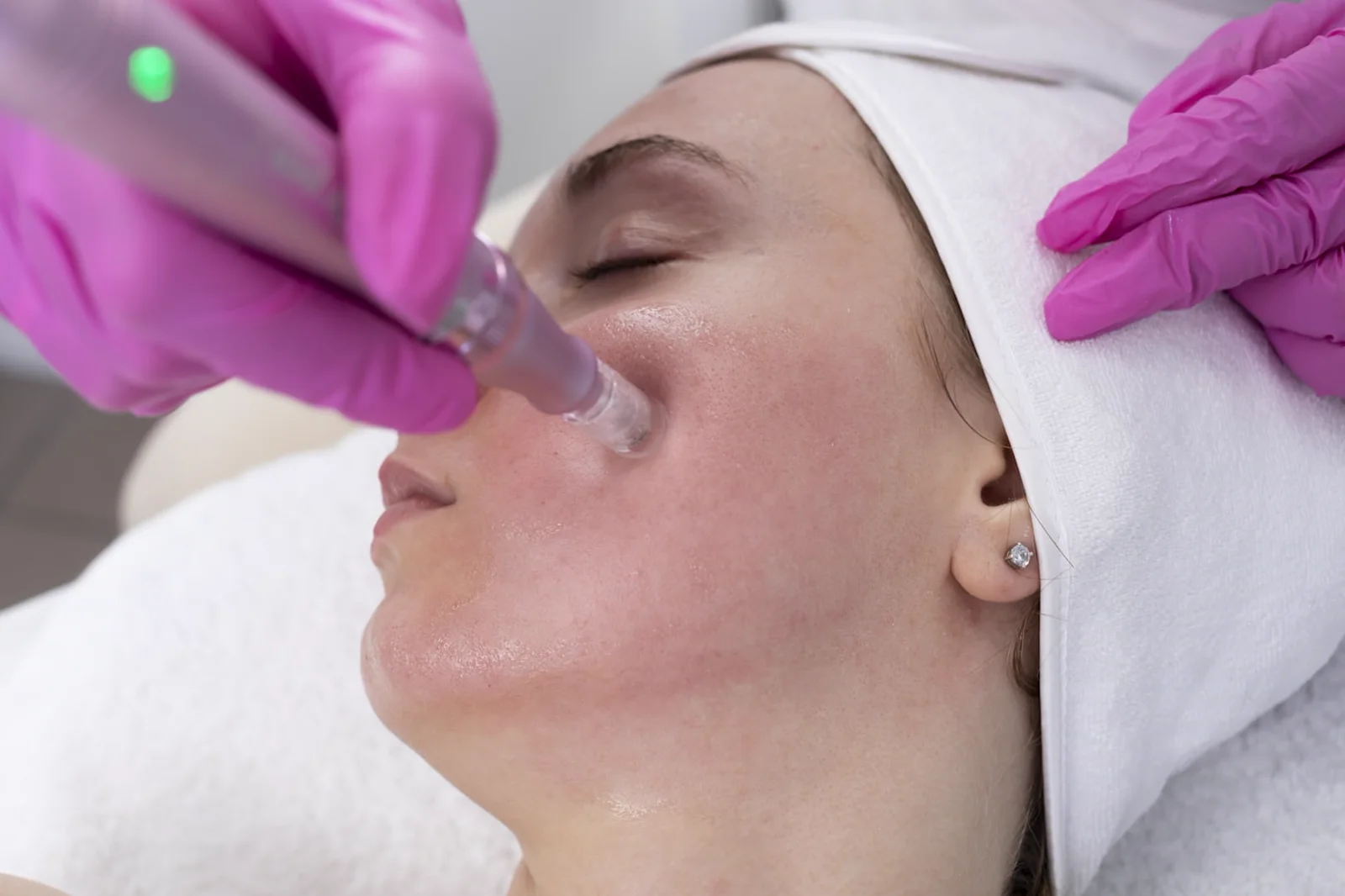
Skin Booster
Support for skin quality
Skin Booster is a treatment considered in line with the person's needs and expectations. At Kaya Clinique it is assessed with an understanding of vitality and renewal in skin quality, and with individual planning.
Arrange a Specialist ConsultationInjectable treatments aimed at skin quality are often grouped together under marketing names, which makes them difficult to compare. Skin booster is the term most people search for; the treatment behind it has a specific medical identity, injectable bio-remodelling, and what separates it from a filler is not the amount used but the goal itself.
What is a skin booster injection?
Skin booster is a commercial name rather than a medical one. The medical description is biostimulation, or bio-remodelling. The products used contain hyaluronic acid in a high concentration, stabilised but without cross-linking agents, and they are placed into the skin at defined points.
The absence of cross-linking is the technical detail that explains everything else. A cross-linked gel is designed to hold its shape and create volume; a product without it spreads within the tissue instead, which is why the target here is the condition of the skin rather than its contour.
What is being addressed, then, is skin quality: firmness, elasticity and hydration considered together rather than a single line or a single area. Assessment focuses on how the skin behaves rather than on what shape it holds.
Is a skin booster the same as a filler?
No, and this is the distinction worth being clear about before anything else, because the two are frequently confused.
A filler adds volume to a defined area and creates a change in shape. A skin booster does neither. It does not build volume, it does not project a contour, and it is not intended to alter the proportions of the face.
It is equally not a lifting procedure. The mechanism has nothing to do with repositioning tissue, so where the concern is loose skin that has descended, this treatment does not answer it. What can reasonably be expected is an improvement in how the skin itself looks and behaves.
A filler changes the shape of a face. This changes the quality of the skin covering it. Confusing the two is where the disappointment starts.
How many sessions are involved?
The protocol is short and well defined, which is one of the practical advantages of this treatment.
First session
The product is placed at defined points following assessment. There is no lengthy recovery period.
Around 4 weeks later
The second session of the standard protocol is carried out at approximately this interval.
4 to 8 weeks
Results become apparent gradually across this period rather than appearing suddenly.
4 to 6 weeks after the second session
The full result is generally assessed at this point, not before.
Every 6 months
A single maintenance session is generally suggested at this interval, depending on assessment.
The reason for waiting before judging the outcome is the mechanism. This is a stimulation process, so the change develops in the skin over weeks; an assessment made in the first days measures the injection points rather than the result.
When do results show and how long does a skin booster last?
Results become apparent within four to eight weeks, and the complete picture is generally evaluated four to six weeks after the second session.
The duration reported is around six months on average, and that word is doing real work. Some people find the effect holds for longer and others for a shorter period, influenced by skin type, age, sun exposure and daily habits.
The effect is not permanent, and this needs saying plainly. The skin continues to change afterwards, which is why maintenance is discussed as part of the plan from the outset rather than presented as an unexpected requirement later.
Timing relative to other treatments is also worth raising at assessment. Where several approaches to the skin are being considered in the same period, the order in which they are carried out and the interval between them is planned rather than left to chance, so that the skin is not asked to respond to everything at once.
What does the evidence show?
Being specific about evidence is more useful than making broad claims, so here is what has actually been reported.
At systematic review level, significant improvement in skin elasticity, firmness, hydration and overall skin quality has been reported in most of the people treated. That is a meaningful finding and it is also the limit of what can be claimed.
What it does not establish is a fixed outcome for any individual. Reported improvement across a group describes a tendency, not a promise, and the results in any one person depend on the starting condition of their skin and on factors outside the treatment itself.
The current state of the skin affects how much change is realistic.
Cumulative sun exposure influences skin quality regardless of any treatment.
Skincare and general habits carry the result between sessions, and cleansing at the surface is addressed under Hydrafacial as a separate layer.
The same protocol does not produce the same degree of change in everyone.
What happens after a skin booster session?
Recovery is short, and knowing what to expect prevents unnecessary concern in the first day or two. A collagen response driven by needling and energy is a different heading again, discussed under Vivace microneedling.
Temporary raised areas at the injection points are usual, along with redness and mild swelling or bruising. These generally settle within 24 to 48 hours. Where what is described is volume rather than skin quality, the discussion moves to cheek filler or, where shadowing beneath the eye is the concern, to under-eye filler. Where the finding is tissue looseness rather than skin condition, the assessment widens into facial aesthetics.
When can normal routine resume?
Daily life resumes straight away in most cases; this is not a treatment with a recovery period to plan around. What is worth planning is the timing relative to an important occasion, since the visible points settle over a day or two and the result itself develops over weeks. Booking a session immediately before an event therefore gives neither benefit.
Bruising is the one variable people ask about most, largely because it is visible. Its likelihood differs between individuals and is influenced by factors including medications and supplements that affect bleeding, which is why those are reviewed before the session rather than afterwards.
Who is this treatment not suitable for?
The treatment is not carried out during pregnancy or breastfeeding, because safety data for these periods is not available. This is a straightforward boundary rather than a matter of caution.
Where there is an active skin infection, the session is deferred until it has resolved. Any known allergy to the product used is also checked before the session, and these questions are asked at each appointment rather than only at the first.
Beyond the formal contraindications there is a question of fit. Where the concern is descended tissue or a change in facial proportion, this treatment does not address it, and saying so at assessment is more useful than proceeding and explaining afterwards.
Skin booster or hydration booster?
Both are injectable and both use hyaluronic acid, which is why they are so often confused. Their emphasis differs.
- The complaint is about elasticity and skin firmness.
- The aim is stimulation within the skin over weeks.
- The standard protocol is two sessions about four weeks apart.
- A skin booster, medically bio-remodelling, is the option considered here.
- The complaint is dryness, dullness and lack of moisture.
- The emphasis is more superficial and hydration led.
- The protocol runs over a different number of sessions.
- A hydration booster is discussed instead.
This content is provided for general information only and does not constitute medical advice. Skin booster is a commercial name for injectable bio-remodelling. The products used are medical products; the procedure is carried out by a physician in a clinical setting following a medical assessment, and this content is not a product promotion. The treatment does not create volume or reposition tissue and is not a lifting procedure. The standard protocol is two sessions approximately four weeks apart, with a single maintenance session generally suggested every six months. Results become apparent within four to eight weeks and the full result is generally assessed four to six weeks after the second session. The reported duration is around six months on average and varies between individuals; the effect is not permanent. At systematic review level, significant improvement in skin elasticity, firmness, hydration and overall skin quality has been reported in most people treated. Temporary raised areas at the injection points, redness, mild swelling or bruising may occur and generally settle within 24 to 48 hours. The treatment is not recommended during pregnancy or breastfeeding as safety data is not available, and it is deferred where there is an active skin infection.
Content overseen by Aysun Kaya, Founder · Kaya Clinique · on Bağdat Avenue since 2019. Our publishing standards are set out in our editorial principles.
From consultation to care, the process

Beklentilerinizi dinleyerek, kişiye özel bir yol haritası oluşturuyoruz.

Modern, hijyenik ve mahremiyeti önceleyen bir klinik ortamı.

Konforunuz gözetilerek, ölçülü ve kontrollü bir yaklaşım.

Süreç sonrası bilgilendirme ve takip ile yanınızdayız.
Related technology
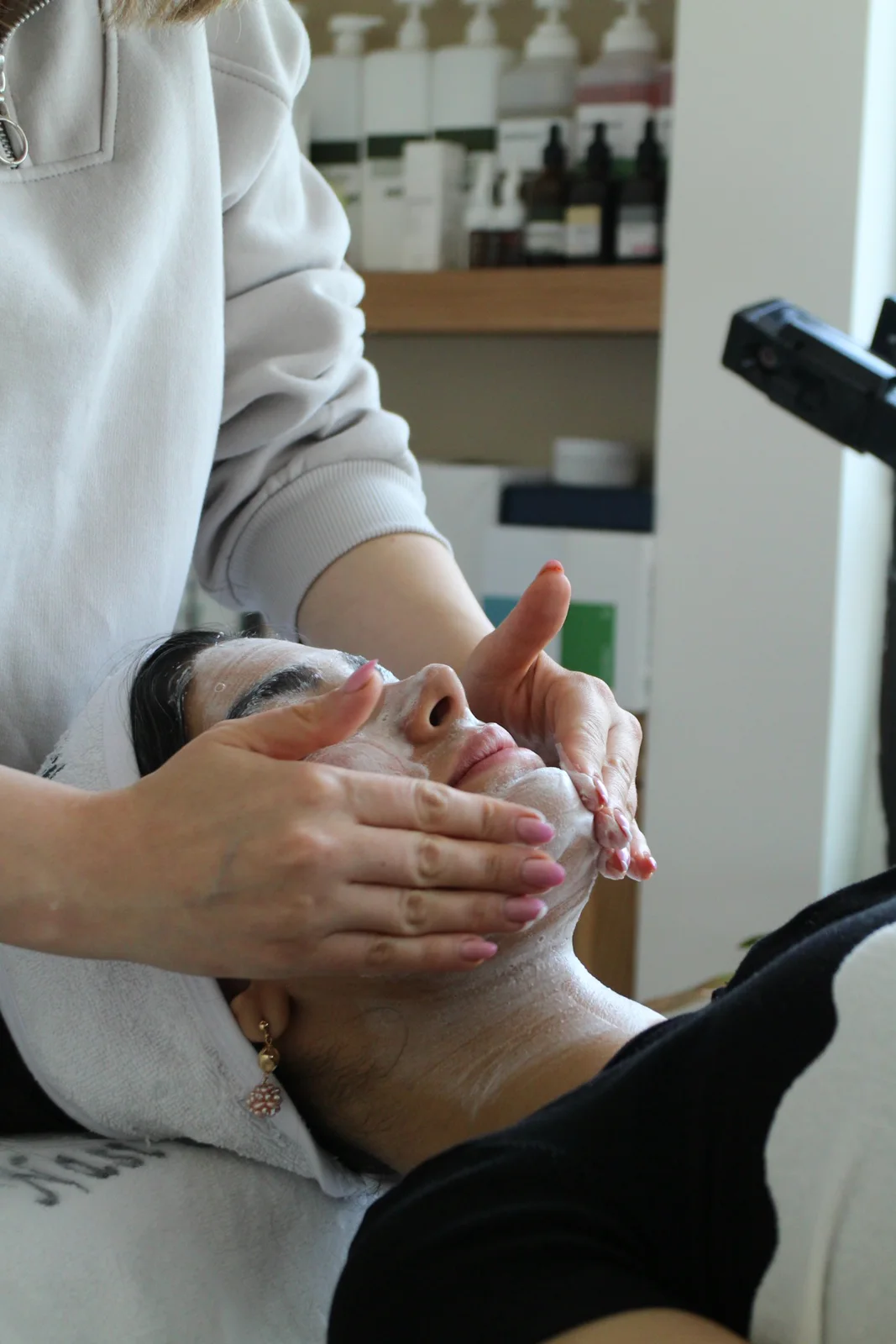
Hydrafacial
Hydrafacial is a treatment considered in line with the person's needs and expectations. At Kaya Clinique it is assessed with an understanding of vitality…
Explore the Technology →
Vivace / Microneedling
Vivace / Microneedling is a treatment considered in line with the person's needs and expectations. At Kaya Clinique it is assessed with an understanding…
Explore the Technology →Frequently asked questions
How are Skin Booster prices determined in 2026?
To be clear about Skin Booster prices: we do not publish a number, because regulation prohibits healthcare institutions from announcing fees or campaigns.
What can be shared is how the plan for Skin Booster is formed. The decisive headings are:
- Whether the standard two-session protocol is departed from
- The region addressed and how many regions are included
- Revision of the plan according to how the skin responds
- The interval at which a maintenance session arises
Skin Booster corresponds to different plans in two people, which is why one number would mislead. Assessment is made at examination and the plan shared in consultation.
Treatments considered alongside this one

Whether they can be planned together is decided at examination; this is not a recommendation list.