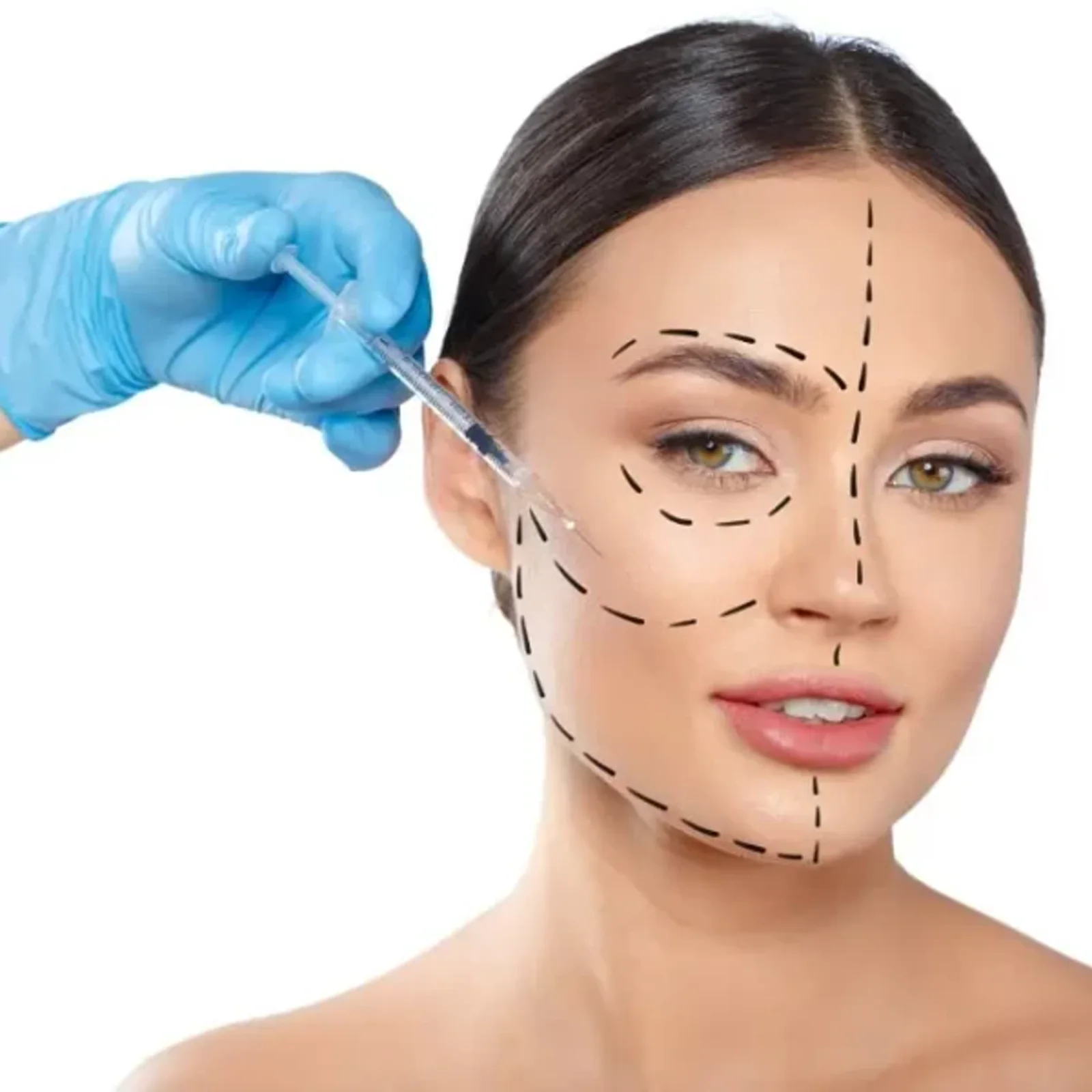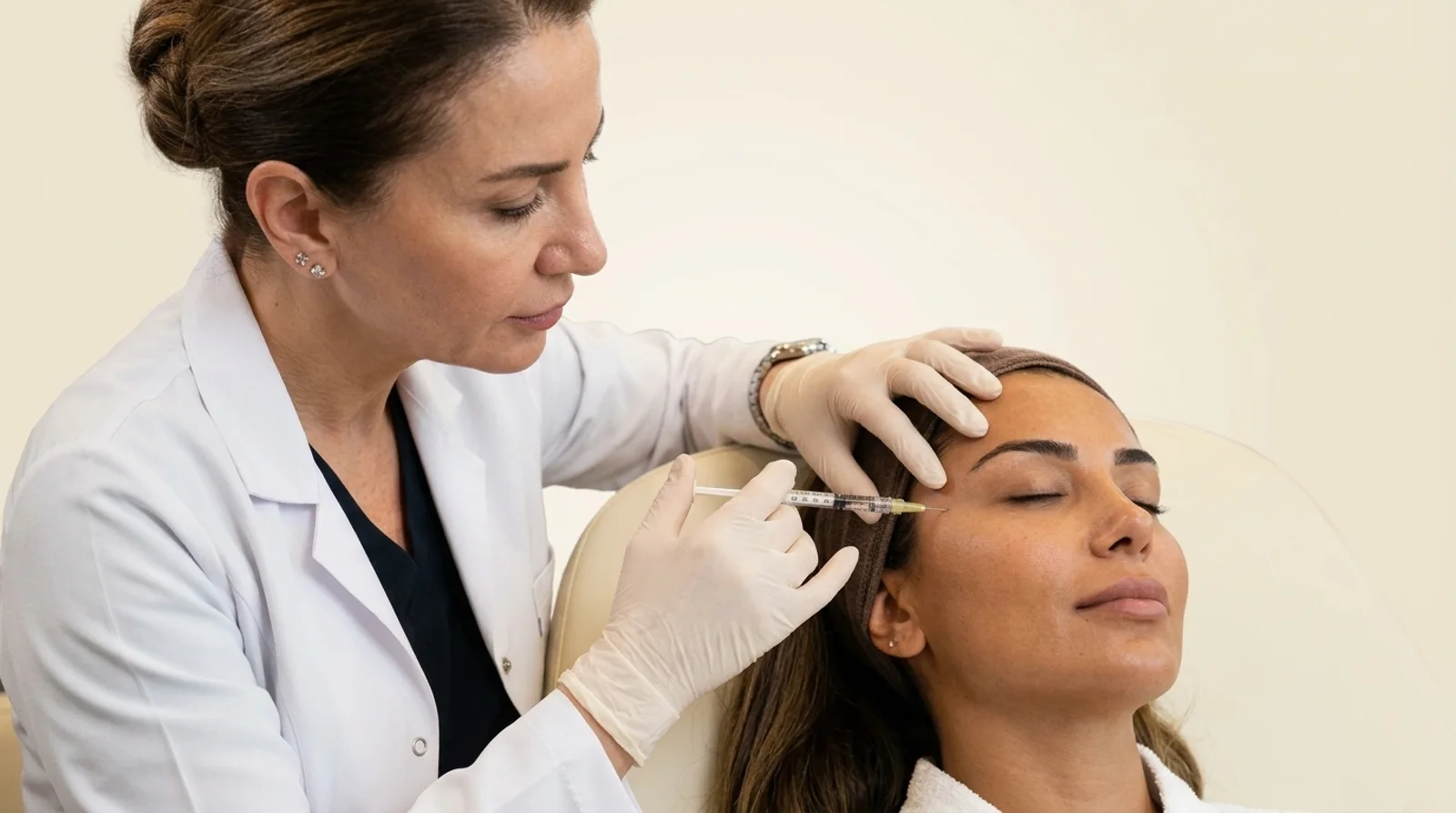
Non-Surgical Nose Reshaping
Contour without surgery
Non-Surgical Nose Reshaping is a treatment considered in line with the person's needs and expectations. At Kaya Clinique it is assessed with an understanding of a measured, natural look in facial expression, and with individual planning.
Arrange a Specialist ConsultationNon-surgical nose reshaping has a narrower job than its popular name suggests and demands more caution than almost any other filler treatment. This page exists to say two things plainly: what the treatment actually does, and why it is not an alternative to surgery. The scope, the boundaries and the reason this region calls for particular care all follow from those.
What does non-surgical nose reshaping do?
A hyaluronic acid based product is used to camouflage the appearance of certain irregularities on or around the bridge of the nose. The material is hyaluronic acid in its cross-linked gel form.
The essence of the work is contour camouflage. Volume placed above and below a prominence on the bridge, for example, can make the line read as straighter, and an irregularity around the tip can be softened. What is changed is the appearance rather than the structure.
That distinction needs to be exact: the treatment removes no tissue from the nose, does not touch cartilage or bone, and does not reduce the size of the nose. Because volume is added to the region, in some presentations the nose becomes slightly fuller overall. What is achieved is an improvement in the line as it is perceived.
This treatment does not change the nose; it changes how the nose is seen. The distance between those two sentences is the whole of this page.
Knowing that boundary prevents a good deal of later dissatisfaction. Someone expecting their nose to become smaller or its structure to change will find a camouflage result insufficient; the problem there lies not in the treatment but in how the goal was described at the start.
Why is the profile discussed as a whole?
Seen in profile, the nose forms a line together with the lips and the chin. The source of dissatisfaction attributed to the nose is therefore not always the nose itself; proportions in neighbouring regions affect that perception too. The profile is assessed as a whole at examination and, where relevant, other headings such as the lip region are discussed. That does not mean a comprehensive plan for every enquiry; it is an assessment made to identify the right region.
Is it an alternative to rhinoplasty?
No, and saying so clearly matters. The two methods do different work; one is not an easier version of the other.
- The appearance is camouflaged by adding volume alone.
- No intervention is made to structure, cartilage or bone.
- No reduction in size is achieved.
- The change achieved lasts a limited time.
- Work is carried out on the structure of the nose.
- Tissue can be removed or reshaped.
- Breathing can also enter the plan.
- Details are covered on the rhinoplasty page.
Who is it suitable for and who is it not?
Suitability here is decided within a narrower frame than in other regions.
A small prominence on the bridge or a mild deviation in the line can be assessed.
Where a change in the size or structure of the nose is expected, this method is not appropriate.
Where there is a problem with breathing, that is a separate heading and not the subject of a filler.
In people who have had nose surgery, assessment is carried out separately.
The last of those deserves particular emphasis. In a nose that has undergone rhinoplasty the vascular structure of the region may have changed, and that raises the risk profile of the treatment. Where such a history exists it must be shared at the consultation, and the assessment is made accordingly.
Does non-surgical nose reshaping last?
No; the change achieved lasts a limited time. In the nose region duration is reported on average in the range of nine to twelve months, varying with product, individual and technique. Where the dissatisfaction lies not in the nasal dorsum but in irregularity across the forehead, the heading discussed is forehead filler; where it concerns the texture of the skin, skin booster sits on a separate axis again.
Within the same profile, definition of the upper mid-face is discussed under cheekbone filler, mid-face volume under cheek filler, and the width of the lower face under masseter treatment. The product is metabolised by the body over time and the region returns gradually towards the appearance it had before treatment. That recession is not abrupt; there is no particular day on which the previous state resumes.
This also affects planning. The timing of repeat treatments is set by the condition of the region on the day rather than by a fixed calendar. In a narrow and sensitive area such as the nose, repeating too early can build up unwanted volume over time.
Why is the nose among the most demanding regions?
This is the most important information on the page and it should not be softened: the nose is among the regions where the risk of vascular complication in filler treatment is highest.
The reason lies in the vascular structure of the region and the connections those vessels have with the area around the eye. Where product is introduced into a vessel, a problem with the blood supply to the skin can arise; very rarely, consequences affecting vision have been reported.
In people who have previously had nose surgery this risk increases further, because an earlier procedure may have altered the vascular structure of the region. Assessment for that group is carried out separately.
For these reasons this treatment should be performed only by physicians experienced in the subject, in a clinical setting. Familiarity with the anatomy of the region, preferring a cannula where appropriate, working slowly at low pressure and having the urgent hyaluronidase protocol ready are the essential requirements here. The brevity of the procedure does not make the preparation behind it unnecessary.
What happens after nose filler treatment?
In this region the period afterwards generally passes with limited findings; there is nonetheless a course worth knowing and there are findings that call for attention.
First hours
Tenderness and a mild sense of fullness are usual; the appearance has not yet settled.
First days
The region may swell or show a bruise; both are known responses and settle on their own.
Up to 2 weeks
A marked reduction in these findings generally completes within this period.
Assessment
How the line looks is judged once swelling has resolved and the product has taken its place.
Which findings should be reported without waiting?
Pain increasing after treatment, blanching or a colour change towards purple in the skin of the nose or around it, a sensation of coldness in the region and any change relating to vision are findings to report without delay. That these situations are uncommon does not mean they should be unknown; reporting early is what makes timely intervention possible, and the appointment day is not waited for.
When can the line be seen properly?
The fullness seen in the early period includes swelling alongside the product placed, so a comment made in the first days usually shows more than is there. How the line actually reads is looked at once the findings have receded and the tissue has settled, and the plan is reviewed against that assessment if needed.
What are the risks and when is it not performed?
Swelling and bruising are the frequently seen side effects, receding within days to two weeks. Reported less often are nodule development, the product shifting from its position and delayed inflammatory responses; those three need to be followed by a physician.
The heading specific to this region is the vascular situation described above. That hyaluronic acid can be dissolved with hyaluronidase carries particular value here, providing a route back both where an unexpected appearance results and in an urgent situation; it is the safety property distinguishing this material from other filler substances.
Certain circumstances also keep treatment off the table. Pregnancy and the breastfeeding period head that list, since no safety data covers them. An infection running in the body, a lesion in the treatment area that has yet to heal, or an allergy to the product recorded previously each rule the procedure out as well.
What dominates the decision stage is how far the treatment reaches. Whether the person understands that it does not change the structure of the nose, does not reduce its size, that the change achieved lasts a limited time, what the risk profile of the region is and which findings to report promptly is established before a treatment is planned.
Where the expectation lies beyond these boundaries, the right thing to do is not to plan the treatment but to name the correct heading. A procedure carried out against an expectation known to be unmeetable leaves both the person's time and their trust unreturned. The procedure itself is performed by the physician once the medical assessment is complete.
This content is provided for general information only and does not constitute medical advice. The hyaluronic acid fillers used in this treatment are medical products; treatment is carried out by a physician in a clinical setting following a medical assessment, and this content is not a product promotion. Non-surgical nose reshaping is a contour camouflage procedure and is not an alternative to rhinoplasty; it does not intervene in the structure of the nose and does not reduce its size. The nose is among the regions where the risk of vascular complication in filler treatment is highest, and this risk increases further in people who have previously had nose surgery; for that reason the treatment should be performed only by physicians experienced in the subject. Where product is introduced into a vessel, a problem with the blood supply to the skin can arise and, very rarely around the eye, consequences affecting vision have been reported; this requires an urgent hyaluronidase protocol. Swelling and bruising are the frequently seen side effects, receding within days to two weeks; nodule development, product migration and delayed inflammatory response are reported less often. In the nose region duration is reported on average in the range of nine to twelve months. Treatment is not planned during pregnancy or breastfeeding, and is not carried out where an infection is under way, where there is an unhealed lesion in the treatment area or where an allergy to the product has been identified.
Content overseen by Aysun Kaya, Founder · Kaya Clinique · on Bağdat Avenue since 2019. Our publishing standards are set out in our editorial principles.
From consultation to care, the process

Beklentilerinizi dinleyerek, kişiye özel bir yol haritası oluşturuyoruz.

Modern, hijyenik ve mahremiyeti önceleyen bir klinik ortamı.

Konforunuz gözetilerek, ölçülü ve kontrollü bir yaklaşım.

Süreç sonrası bilgilendirme ve takip ile yanınızdayız.
Frequently asked questions
How are Non-Surgical Nose Reshaping prices determined in 2026?
No amount for Non-Surgical Nose Reshaping prices appears on this page. Sharing fees and announcing campaigns is restricted for healthcare institutions by regulation.
Although no figure is given, we can say plainly what varies in Non-Surgical Nose Reshaping. The determining items are:
- The amount of product determined by the structure of the region
- Whether there has been previous nasal surgery or treatment
- The preparation and technique required by the risk profile of the area
- Early review
Each item carries different weight in each person, so Non-Surgical Nose Reshaping does not fit a single price tag. What will be done and how it will proceed is shared item by item in consultation.
Treatments considered alongside this one

Whether they can be planned together is decided at examination; this is not a recommendation list.