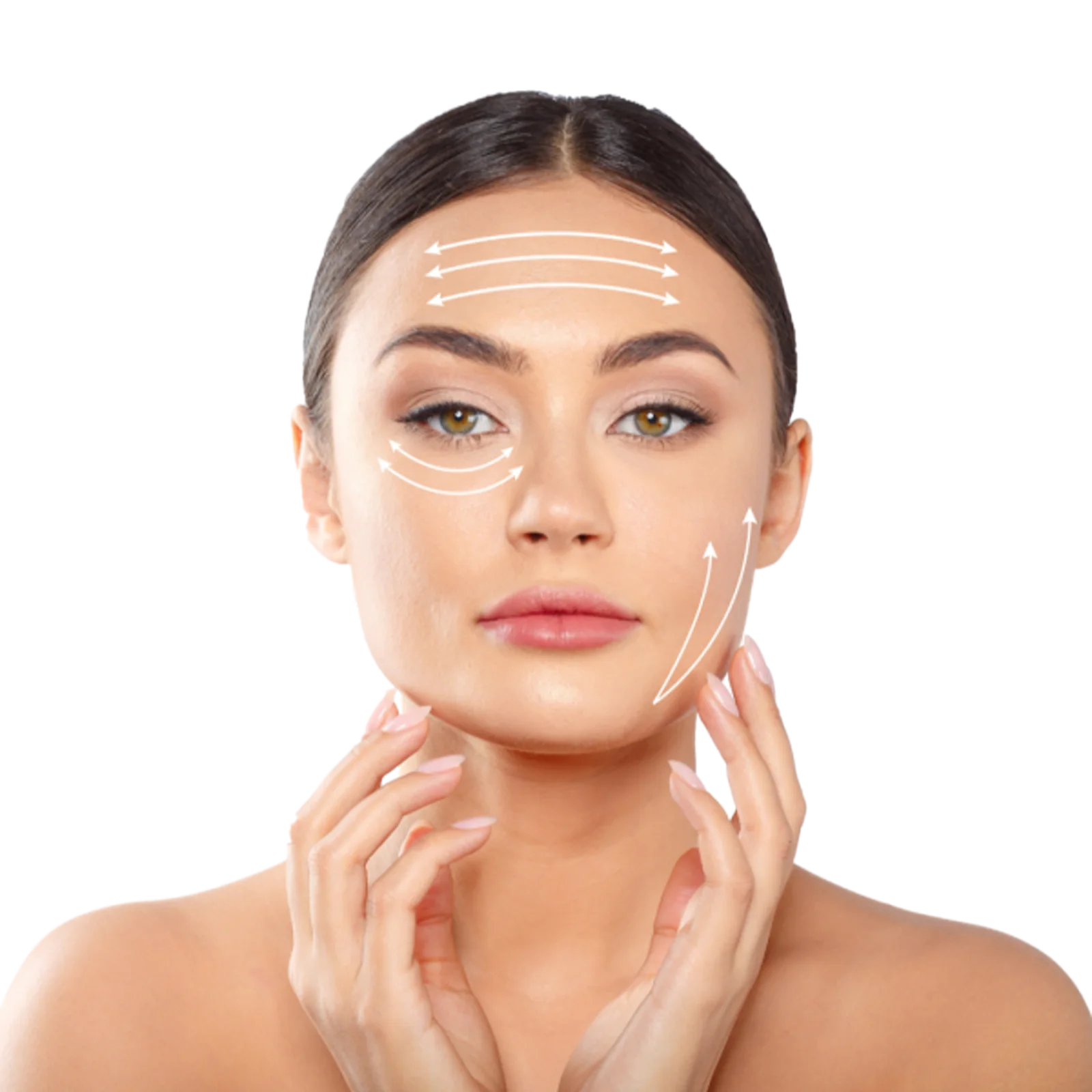
Eyelid Aesthetics
A rested look
Eyelid Aesthetics is a treatment considered in line with the person's needs and expectations. At Kaya Clinique it is assessed with an understanding of balance and natural expression in the facial features, and with individual planning.
Arrange a Specialist ConsultationEyelid surgery is the most frequently performed facial aesthetic operation, with more than 120,000 procedures recorded in the United States in 2024 according to professional body data. Its popularity makes one question more important rather than less: whether the eyelid is actually the structure responsible for the appearance being described.
What does blepharoplasty involve?
Blepharoplasty is surgery in which excess skin, fat tissue, or both, is addressed at the upper eyelid, the lower eyelid, or both.
The two areas are assessed separately because they present differently. At the upper lid the usual finding is skin that has become excessive and rests on the lid; at the lower lid the picture more often involves the position of fat tissue and the transition towards the cheek.
Whether one or both are addressed is a decision made at examination. Some people have a finding at only one lid, and treating both because they are adjacent is not a reason in itself.
Is the finding the eyelid, the brow or ptosis?
This is the most consequential distinction on the page, because eyelid surgery does not address all three.
Drooping of the eyelid itself, meaning ptosis, is a distinct condition. So is a descended brow, which can create the impression of heaviness at the upper lid while the lid itself is unchanged. Both can look similar from the outside and neither is corrected by removing skin from the lid.
What the examination establishes is which structure has actually descended. Where the brow is the source, the discussion moves to a different procedure and options such as a brow lift are considered instead; where ptosis is identified, that is its own surgical subject.
Three different findings can produce the same complaint. Removing skin from the lid answers only one of them, which is why the examination comes before the plan.
What is the recovery timeline?
Recovery follows a recognisable pattern, and knowing its shape is what makes the first fortnight manageable.
First 48 hours
Cold compresses are among the measures recommended during this period.
48 to 72 hours
Swelling and bruising reach their peak in this window rather than immediately after surgery.
2 weeks
Most of the bruising subsides by this point, although the pattern varies between people.
3 to 6 months
The final result becomes clear as the scars mature over this period.
The gap between the second and fourth rows is where expectations usually go wrong. The dramatic part of the recovery is over within a fortnight; the settling of the result takes months, and an assessment made at week three is premature.
When can I return to work?
Social visibility, meaning the point at which most people feel comfortable being seen, is generally in the range of 7 to 14 days.
That range is wide because bruising varies considerably between individuals. Some people are comfortable at the earlier end of it and others need the full fortnight, and neither is unusual.
Work is a separate question from appearance. Desk-based work is usually possible earlier than work requiring physical effort, and activities that raise blood pressure are reintroduced gradually rather than resumed at once. The specific timeline is set at follow-up appointments.
Will there be a scar?
Yes, and it is worth saying that plainly rather than leaving it implied. Where an incision is made, a scar follows.
What makes the difference is placement. At the upper lid the incision is placed within the natural crease of the eyelid, which is why it is not readily visible once healed.
The honest description of how it behaves is this: the scar fades over time, but it does not disappear completely. That is the accurate expectation, and any description promising an operation without a scar is inaccurate.
Does eyelid surgery improve vision?
This requires a carefully worded answer rather than an enthusiastic one. Where the source of the finding is tissue that has changed position in the mid-face, the discussion moves to mid-face lift; where findings are spread across the face, it widens into the facial aesthetics assessment.
Where there is advanced drooping, excess skin can narrow the field of vision, and correcting that excess skin can also address the obstruction. That is a conditional statement and it applies only to that specific situation.
Outside that situation, no claim about vision is appropriate. Where a person describes a visual symptom, that requires its own assessment; it is not something an aesthetic plan should be built around, and an ophthalmological opinion may be requested before any surgical decision.
What are the risks?
The risk profile is assessed on the basis that this is surgery around the eye, and serious complications are uncommon.
The recognised considerations include dry eye symptoms, which are usually temporary, temporary blurred vision, asymmetry between the two sides and the scar itself. Bleeding, infection and anaesthesia-related risks apply as they do in any operation. What determines whether a fine eyelid scar fades or stays visible is set out under scar revision, and the quality of the skin surface itself sits on a separate axis discussed under skin booster.
These can occur after surgery and are usually temporary.
Temporary blurring can occur in the early period and is a recognised finding.
A degree of difference between the two sides is possible and is discussed beforehand.
How a scar matures varies between individuals and takes months to complete.
What should prompt contact with the clinic?
Pain that increases rather than settling, a sudden change in vision, bleeding that does not stop or swelling that worsens after the first days should be reported without waiting for the scheduled appointment. The expected pattern is gradual improvement, and anything moving in the opposite direction is worth assessing promptly.
What is reviewed before surgery?
General health, medications in use including those affecting bleeding, any eye conditions and previous procedures around the eyes are all reviewed. A history of dry eye is specifically relevant here, since it influences both the plan and the postoperative advice.
Sleeping position also comes up frequently. Keeping the head elevated in the early period is commonly advised because it influences how quickly swelling settles, and the specific guidance is given after surgery rather than taken from a general rule.
How long do the results last?
Results are long lasting and measured in years rather than months. The skin removed does not return. Where a procedure on the structure of the nose is planned in the same session, the scope is recalculated, because rhinoplasty brings its own recovery timeline.
That is not the same as permanence, and the distinction is worth keeping. Ageing continues after surgery: the skin around the eyes carries on changing, and the appearance years later reflects that ongoing process rather than a failure of the operation.
- Excess skin at the lid is removed.
- Fat tissue is addressed where relevant.
- The change is long lasting and measured in years.
- The removed skin does not come back.
- Ageing of the skin around the eyes.
- Changes in skin quality and elasticity.
- The effect of sun exposure over time.
- Findings involving the brow or the cheek transition.
This content is provided for general information only and does not constitute medical advice. Blepharoplasty is surgery addressing excess skin and fat tissue at the upper eyelid, the lower eyelid or both. It carries risks including dry eye symptoms, which are usually temporary, temporary blurred vision, asymmetry and scarring, alongside bleeding, infection and anaesthesia-related risks; serious complications are uncommon. Drooping of the eyelid itself and a descended brow are distinct conditions that this operation does not correct, and the examination establishes which structure has descended. Swelling and bruising peak at 48 to 72 hours, cold compresses are among the measures recommended in the first 48 hours, most bruising subsides within two weeks, social visibility is generally reached at 7 to 14 days, and the final result becomes clear as the scars mature over three to six months. The incision at the upper lid is placed within the natural crease; the scar fades over time but does not disappear completely. Where there is advanced drooping, excess skin can narrow the field of vision and correcting it can also address that obstruction; outside this situation no claim regarding vision is made and visual symptoms require their own assessment. Results are long lasting and measured in years, but ageing continues after surgery. The decision to operate is made together with the physician after a detailed examination and a written informed consent process.
Content overseen by Aysun Kaya, Founder · Kaya Clinique · on Bağdat Avenue since 2019. Our publishing standards are set out in our editorial principles.
From consultation to care, the process

Beklentilerinizi dinleyerek, kişiye özel bir yol haritası oluşturuyoruz.

Modern, hijyenik ve mahremiyeti önceleyen bir klinik ortamı.

Konforunuz gözetilerek, ölçülü ve kontrollü bir yaklaşım.

Süreç sonrası bilgilendirme ve takip ile yanınızdayız.
Frequently asked questions
How are Eyelid Aesthetics prices determined in 2026?
You will not find a figure for Eyelid Aesthetics prices on our pages; health regulations do not permit healthcare institutions to share procedure fees or advertise on price.
What we can share is what shapes the planning of Eyelid Aesthetics. The following items determine the process:
- Whether the upper lid alone, the lower lid alone, or both are addressed
- Whether fat tissue is adjusted alongside the excess skin
- The anaesthesia choice and the length of the procedure
- Reviews planned for suture removal and scar monitoring
Once these variables come together, no figure for Eyelid Aesthetics holds for everyone. The individual plan is explained at the consultation following examination.
Treatments considered alongside this one

Whether they can be planned together is decided at examination; this is not a recommendation list.