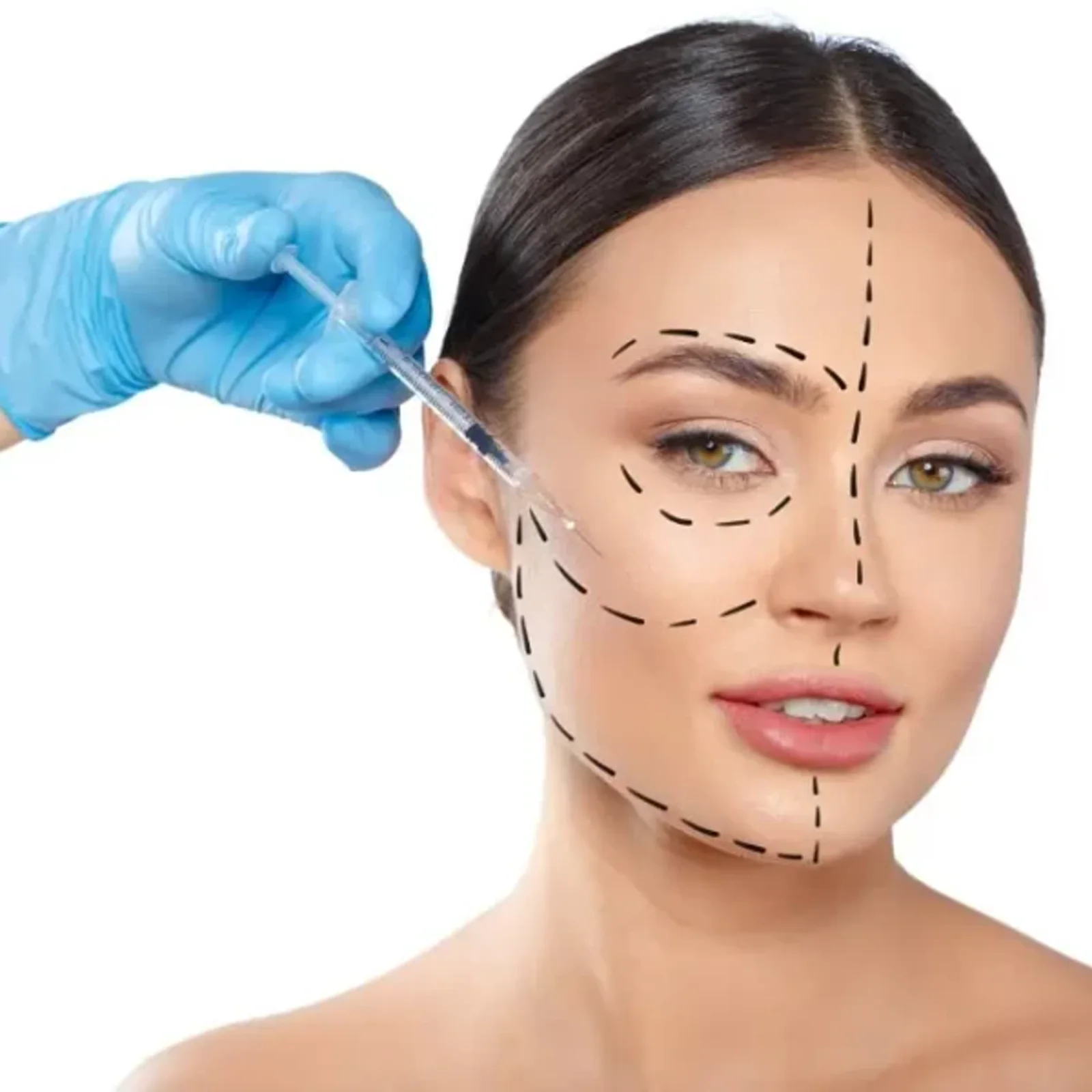
Masseter
Balance in the lower face
Masseter is a treatment considered in line with the person's needs and expectations. At Kaya Clinique it is assessed with an understanding of a measured, natural look in facial expression, and with individual planning.
Arrange a Specialist ConsultationTreatment of the masseter muscle is requested for two quite different reasons, and the distinction matters because the two follow different timelines. One is a functional complaint, teeth grinding; the other is the appearance of a wide lower face. This page separates them and sets out what a prescription medical product involves.
What is masseter botulinum toxin used for?
The masseter is the main chewing muscle, sitting at the angle of the jaw. Botulinum toxin applied to this muscle is used for two purposes.
The first is the reduction of symptoms associated with bruxism, meaning teeth grinding or clenching. The second is softening the appearance of a wide lower face where that width comes from the bulk of the muscle itself.
These two aims often overlap in the same person, but they are assessed separately. Someone whose main complaint is jaw pain on waking is describing something different from someone concerned with the shape of the jawline, and the assessment reflects that. Where the expectation concerns the balance of the face as a whole, the assessment widens into the facial aesthetics discussion.
Does masseter treatment help with teeth grinding?
It can reduce the symptoms associated with bruxism, and the wording there is intentional: symptoms rather than the condition.
Bruxism has causes that this treatment does not alter. What can change is the force the muscle is able to generate, which is why the associated discomfort may lessen while the underlying habit continues.
There is also a dental dimension to this subject, and leaving it out would give an incomplete picture. Assessment by a physician or dentist may identify other management options, a night guard among them, and these are planned alongside rather than instead of one another.
This treatment can quieten the symptom. It does not settle the argument about why the jaw is clenching in the first place.
Does masseter botulinum toxin slim the face?
Only in one specific situation, and being clear about which is the difference between a realistic expectation and a disappointed one.
Where the width of the lower face comes from the volume of the masseter muscle, reducing the activity of that muscle can soften the contour over time. Where the width comes from the underlying bone structure, this treatment has no effect on it. Where the concern is proportion rather than width alone, other headings enter the discussion: mid-face volume is addressed under cheek filler, definition of the upper mid-face under cheekbone filler, and lip proportion under lip filler.
Distinguishing between the two is a matter for examination rather than for a photograph. This is one of the main reasons an assessment precedes treatment, and it is also why the same request produces different answers in different people.
When does masseter treatment start working?
The two purposes described above become apparent on different timelines, and knowing which to expect prevents unnecessary concern in the early weeks.
Days 1 to 3
The effect can begin within the first few days, although it is usually subtle at this stage.
1 to 2 weeks
The effect reaches its maximum within this period.
2 to 3 weeks
Relief from bruxism-related discomfort is generally felt around this point.
8 to 12 weeks
The change in contour is most apparent here, since it depends on the muscle reducing in volume.
The gap between those last two rows explains most of the early questions. Functional relief arrives within weeks; a visible change in the jawline takes considerably longer, because it follows a change in the muscle itself rather than in its activity alone. The frame of the upper face contributes to the same impression: hollowing at the temple is discussed under temple filler, and the profile of the nasal dorsum under non-surgical nose reshaping.
How long does masseter treatment last?
The effect generally lasts three to four months. In some people, with regular repetition, a longer duration has been reported.
This is a temporary treatment and should be understood as such. When the effect subsides, the muscle returns to its previous activity, and any change in contour follows the same direction.
Timing of any repeat treatment is decided at assessment rather than by the calendar. What is looked at is how the muscle is behaving and what the person is experiencing, not simply how many months have passed.
The starting bulk of the muscle influences both the plan and what is realistic.
Whether the complaint is functional or aesthetic changes how the result is assessed.
Duration varies between people and between repeat treatments.
The amount used and the placement are clinical decisions made at examination.
Will chewing be affected after masseter treatment?
This is the question people most often hesitate to ask, and it deserves a direct answer.
A temporary reduction in chewing strength can occur, along with a change in chewing pattern. These are recognised effects and they resolve over months rather than persisting.
In clinical studies, low rates of side effects have been reported overall. Most people do not notice a difference in ordinary eating; where a difference is described, it is usually in relation to foods requiring prolonged or forceful chewing.
Can the two sides look different?
A degree of asymmetry between the two sides is present in most people before any treatment, and it can become more noticeable as the muscle changes. The amount used is therefore adjusted for each side rather than applied identically, and the balance is reviewed at the follow-up assessment.
Is the product prescription only?
Yes, and this has practical consequences rather than being a formality.
The botulinum toxin used in this treatment is a prescription medical product. It is administered only by a physician, following a medical assessment, and the amount used and the pattern of placement are clinical decisions rather than standard settings.
It also follows that this cannot be described as an entirely harmless procedure. That phrase appears frequently in relation to this treatment and it is inaccurate: a prescription medicine requires a medical indication, an assessment and a qualified practitioner.
For the same reason, this page does not name or promote any product. Which product is used and in what amount is a matter for the treating physician, not for a website.
Who should not have masseter treatment?
Certain circumstances rule the treatment out, and each of them is checked again before every appointment.
- In pregnancy and while breastfeeding.
- In neuromuscular conditions such as myasthenia gravis.
- Where there is an infection at the treatment site.
- Where there is a known allergy to the product.
- Where the facial width is bone related rather than muscle related.
- Where a dental assessment has not yet been carried out.
- Where medications may interact with the product.
- Where the expectation exceeds what the treatment addresses.
This content is provided for general information only and does not constitute medical advice. The botulinum toxin used in this treatment is a prescription medical product; it is administered only by a physician following a medical assessment, and this content is not a product promotion. The treatment is used to reduce symptoms associated with bruxism and to soften the appearance of a wide lower face where that width comes from the bulk of the masseter muscle; where the width comes from the underlying bone structure it has no effect, and this distinction is established by examination. Bruxism has causes that this treatment does not alter, and assessment by a physician or dentist may identify other management options such as a night guard, planned alongside rather than instead of one another. The effect can begin within the first one to three days, reaches its maximum within one to two weeks, relief from bruxism-related discomfort is generally felt at two to three weeks, and the change in contour is most apparent at eight to twelve weeks. The effect generally lasts three to four months and the treatment is temporary. A temporary reduction in chewing strength and a change in chewing pattern can occur and resolve over months; low rates of side effects have been reported in clinical studies. It is not carried out during pregnancy or breastfeeding, in neuromuscular conditions such as myasthenia gravis, where there is an infection at the treatment site, or where there is a known allergy to the product.
Content overseen by Aysun Kaya, Founder · Kaya Clinique · on Bağdat Avenue since 2019. Our publishing standards are set out in our editorial principles.
From consultation to care, the process

Beklentilerinizi dinleyerek, kişiye özel bir yol haritası oluşturuyoruz.

Modern, hijyenik ve mahremiyeti önceleyen bir klinik ortamı.

Konforunuz gözetilerek, ölçülü ve kontrollü bir yaklaşım.

Süreç sonrası bilgilendirme ve takip ile yanınızdayız.
Frequently asked questions
How are Masseter prices determined in 2026?
We cannot answer the question of Masseter prices with a number here: health regulations expressly prohibit publishing procedure fees or making price announcements.
We can still explain how the decision on Masseter is built. These are the headings that shape the plan:
- The number of units determined by the volume of the muscle
- How the difference between the two sides is reflected in the plan
- The inclusion of the second-week assessment in the process
- How the repeat interval is set as the effect recedes
Because these headings change at once, no fixed amount forms for Masseter. The picture becomes clear at examination, after which plan and process are discussed in detail.
Treatments considered alongside this one

Cheek Filler
Measured volume
More Details →
Lip Filler
Measured volume and a hydrated look
More Details →Whether they can be planned together is decided at examination; this is not a recommendation list.