Hydrafacial
Deep cleansing and hydration
Hydrafacial is a treatment considered in line with the person's needs and expectations. At Kaya Clinique it is assessed with an understanding of vitality and renewal in skin quality, and with individual planning.
Arrange a Specialist ConsultationHydraFacial sits in an unusual place: familiar enough that most people have heard of it, yet vague enough that few know what it actually does. It is a device-assisted, non-surgical skincare treatment, and the sections below set out what a session involves, how long the effect lasts, how often it is repeated and, importantly, who it is not suitable for.
What happens during a HydraFacial session?
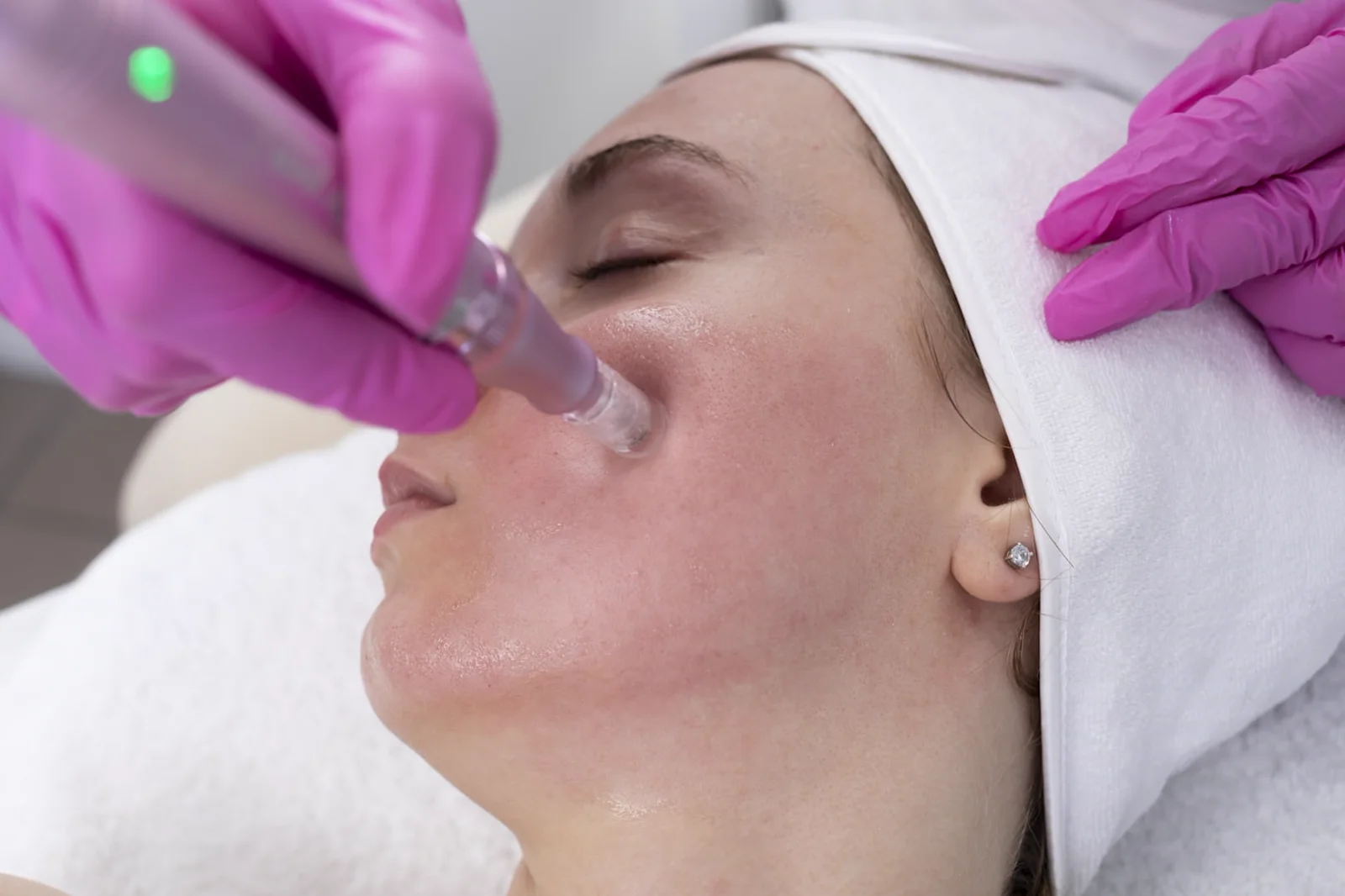
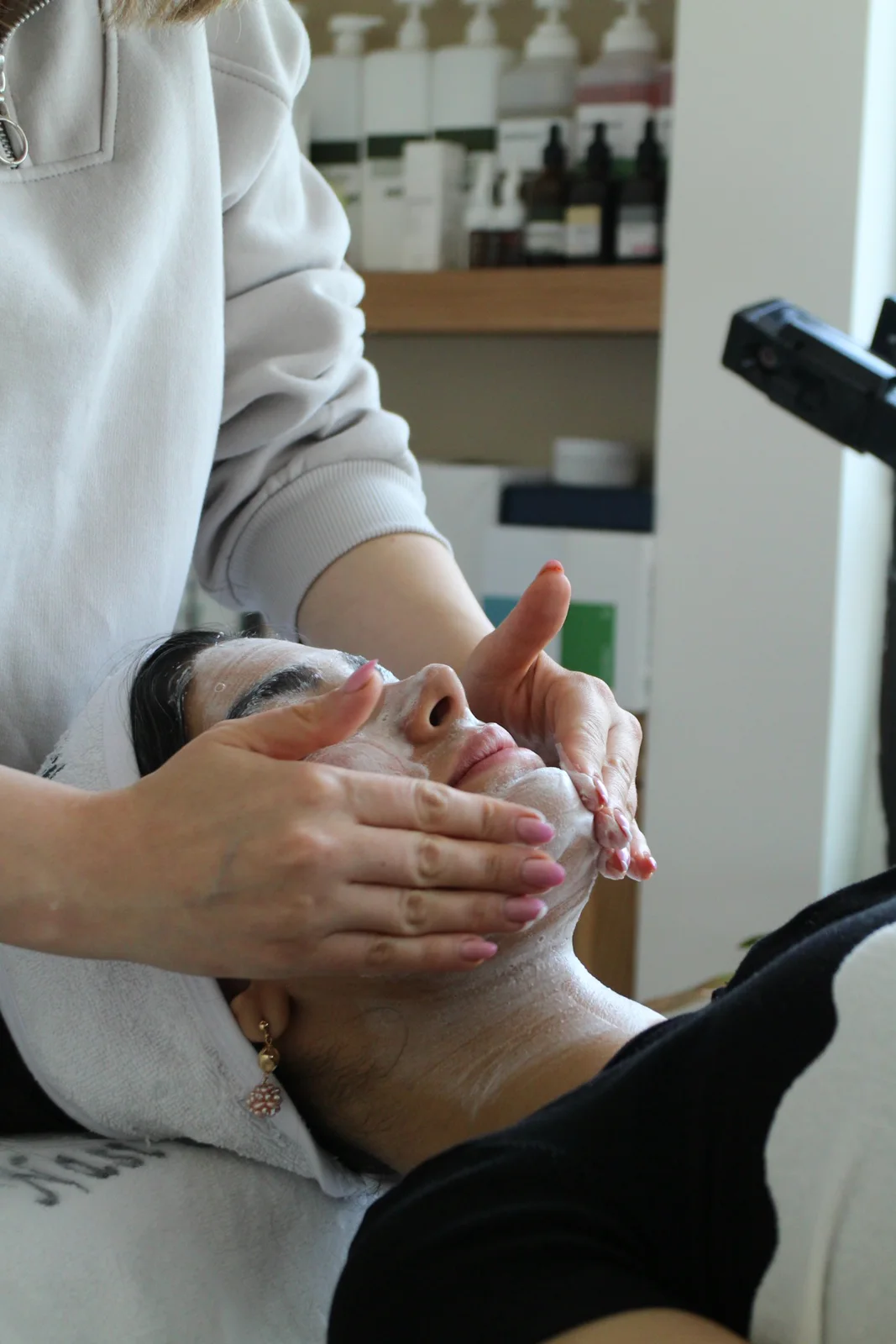
The treatment combines several steps that are usually carried out separately, bringing them together in a single session. Vortex technology is used to cleanse the skin, exfoliation follows, pores are cleared using automated suction, and serums are applied to hydrate the surface.
The exfoliation stage includes a mild chemical peel, which is one reason the session is described as device-assisted rather than purely mechanical. A session generally takes 30 to 60 minutes.
Which serums are used is not standard across everyone. The selection depends on skin type and is personalised following an assessment, because a formulation suited to oily, congested skin is not the same as one chosen for skin that is dry and sensitised.
There is no meaningful downtime. People return to daily life straight after the session, which is a large part of why the treatment is chosen before events and at short notice.
How soon do the results show and how long do they last?
The results, principally a brighter appearance and improved hydration, are usually noticeable immediately after the session. That immediacy is genuine and it is one of the treatment's defining features.
The second half of that sentence matters just as much: the effect is temporary. This is a skincare treatment supporting the condition of the skin, not a procedure producing a lasting structural change, and it should be understood on those terms.
How long the effect holds varies between people, influenced by skin type, daily skincare habits, sun exposure and general lifestyle. For this reason the treatment is usually discussed as part of a routine rather than as a one-off.
This is a treatment that supports the skin rather than changing it. Judged on that basis it delivers; judged as something more, it disappoints.
How often should a HydraFacial be repeated?
The interval follows the skin's own renewal cycle, which runs at roughly 28 to 40 days. In practice this means sessions are generally spaced around three to four weeks apart.
There is one variation worth noting. In acne-prone or oily skin the interval can be shortened to about three weeks, but only where a physician recommends it after assessment rather than by preference.
A fixed number of sessions is not quoted here, and that is deliberate. How the skin responds differs between people, so the plan is reviewed as it progresses rather than committed to in advance.
Is HydraFacial suitable for acne-prone skin?
It can be considered, and the boundary needs stating clearly: this is not a treatment for acne. Acne is a medical condition and its management is a separate clinical subject.
What the session can do is support the appearance of the skin through cleansing, exfoliation and pore clearing. In congested skin this may help the surface look clearer, and that is the honest description of the benefit.
There is also a situation in which it is not carried out at all. During a flare of severe active rosacea or cystic acne the treatment is postponed, because working on inflamed skin is not appropriate. That decision is made at examination.
Does HydraFacial clear blackheads permanently?
No, and expecting otherwise leads to disappointment. Pore clearing during the session reduces the visible congestion, but the process that produces it continues afterwards.
Sebum production, skin type and environmental factors all keep working after the session ends. What the treatment achieves is an improvement in the current appearance, not a change in the underlying tendency.
This is precisely why the treatment is discussed as maintenance. A single session addresses how the skin looks now; keeping that appearance is a matter of routine, both in the clinic and at home. Where the appearance of a scar is the concern, that is a different subject set out under scar revision, and mesotherapy may form part of that plan.
What should be considered after a session?
Aftercare here is short and simple, but a few points are worth knowing in advance.
Mild redness and a feeling of tightness can occur and usually settle within hours.
Protecting the skin from the sun is part of the advice given after any exfoliating step.
When to resume strong actives at home is confirmed with the practitioner.
How the skin responded is noted and taken into account when planning the next session.
Can you wear makeup afterwards?
Makeup is one of the most common questions, mainly because the treatment is often booked before an occasion. There is no lengthy recovery period to wait through here, but the skin has just been exfoliated and cleared, so the timing is confirmed at the end of the session according to how the skin has responded rather than by a fixed rule.
Can it be done in summer?
Yes, with sun protection treated as part of the plan rather than an afterthought. The session includes exfoliation, and freshly exfoliated skin needs consistent protection. Recently sunburnt skin is a different matter: in that case the treatment is postponed until the skin has recovered.
One further question comes up almost as often: whether the treatment can be combined with other appointments in the same period. Because there is no recovery phase to work around, the sequencing is usually straightforward, but it is still confirmed at assessment so that the skin is not asked to handle several exfoliating steps at once.
Who should not have a HydraFacial?
There is a defined list of situations in which the treatment is not carried out or is deferred, and this is checked before every session. Where hair in the same area is also a concern, that is a separate heading and laser hair removal runs to its own schedule; where the two coincide, the order is set by the physician.
It is not performed where there is an active cold sore, an open wound, an active bacterial or fungal infection, sunburn, or a flare of severe active rosacea or cystic acne. In each case the treatment is deferred until the skin has settled.
Pregnancy requires a separate note. Some of the serum ingredients used, salicylic acid among them, mean that physician approval is required before a session during pregnancy. This is not a formality; it determines whether the session goes ahead and with which formulation.
These questions are asked at every appointment rather than only at the first, because circumstances change between sessions.
How is this different from skincare at home?
The comparison comes up often, and the two are complementary rather than competing. Where the expectation goes beyond surface care the subject moves on: skin quality is addressed under skin booster, a collagen response under Vivace microneedling, and volume under cheek filler.
- Device-assisted cleansing and controlled exfoliation.
- Automated pore clearing during the session.
- Serum selection personalised after assessment.
- An immediate but temporary improvement in appearance.
- Consistency, which no single session can replace.
- Daily cleansing, hydration and sun protection.
- Products chosen to suit the skin rather than the trend.
- The continuity that carries the result between sessions.
This content is provided for general information only and does not constitute medical advice. HydraFacial is a non-surgical, device-assisted skincare treatment; it is not a treatment for medical conditions such as acne or pigmentation, and it may support the appearance of the skin rather than resolve the underlying condition. Results such as brightness and improved hydration are usually noticeable immediately after the session and are temporary. Sessions generally take 30 to 60 minutes and are typically spaced around three to four weeks apart, in line with the skin renewal cycle of 28 to 40 days; in acne-prone or oily skin this may be shortened to about three weeks on a physician's recommendation. Temporary redness and a feeling of tightness may occur and usually settle within hours. The treatment is not carried out and is deferred where there is an active cold sore, an open wound, an active bacterial or fungal infection, sunburn, or a flare of severe active rosacea or cystic acne. During pregnancy, physician approval is required because of certain serum ingredients such as salicylic acid. Serum selection is personalised following an assessment.
Content overseen by Aysun Kaya, Founder · Kaya Clinique · on Bağdat Avenue since 2019. Our publishing standards are set out in our editorial principles.
From consultation to care, the process

Beklentilerinizi dinleyerek, kişiye özel bir yol haritası oluşturuyoruz.

Modern, hijyenik ve mahremiyeti önceleyen bir klinik ortamı.

Konforunuz gözetilerek, ölçülü ve kontrollü bir yaklaşım.

Süreç sonrası bilgilendirme ve takip ile yanınızdayız.
Related technology

Vivace / Microneedling
Vivace / Microneedling is a treatment considered in line with the person's needs and expectations. At Kaya Clinique it is assessed with an understanding…
Explore the Technology →
HIFU Face Lifting
HIFU Face Lifting is a treatment considered in line with the person's needs and expectations. At Kaya Clinique it is assessed with an understanding of…
Explore the Technology →Frequently asked questions
How are Hydrafacial prices determined in 2026?
No amount for Hydrafacial prices appears on this page. Sharing fees and announcing campaigns is restricted for healthcare institutions by regulation.
Although no figure is given, we can say plainly what varies in Hydrafacial. The determining items are:
- Setting the maintenance interval by the skin's renewal cycle
- Adding the neck, décolleté or back alongside the face
- Adjusting the solutions used and the intensity of each step to the skin
- Whether a single session or an ongoing plan is on the agenda
Each item carries different weight in each person, so Hydrafacial does not fit a single price tag. What will be done and how it will proceed is shared item by item in consultation.
Treatments considered alongside this one

Hydration Booster
Moisture and vitality for the skin
More Details →
Skin Booster
Support for skin quality
More Details →Whether they can be planned together is decided at examination; this is not a recommendation list.
Further reading on this topic
Aesthetic Treatments During Pregnancy: What Waits, and Why
Most treatments are routinely deferred in pregnancy and breastfeeding. Which heading waits on what grounds, and which calls for a separate assessment.
Read the articlePre-Wedding Beauty Timeline: 12 Months to the Last Week
How far ahead is each treatment planned, what is kept out of the final month and which three rules set the timetable? A time axis built on each treatment.
Read the article