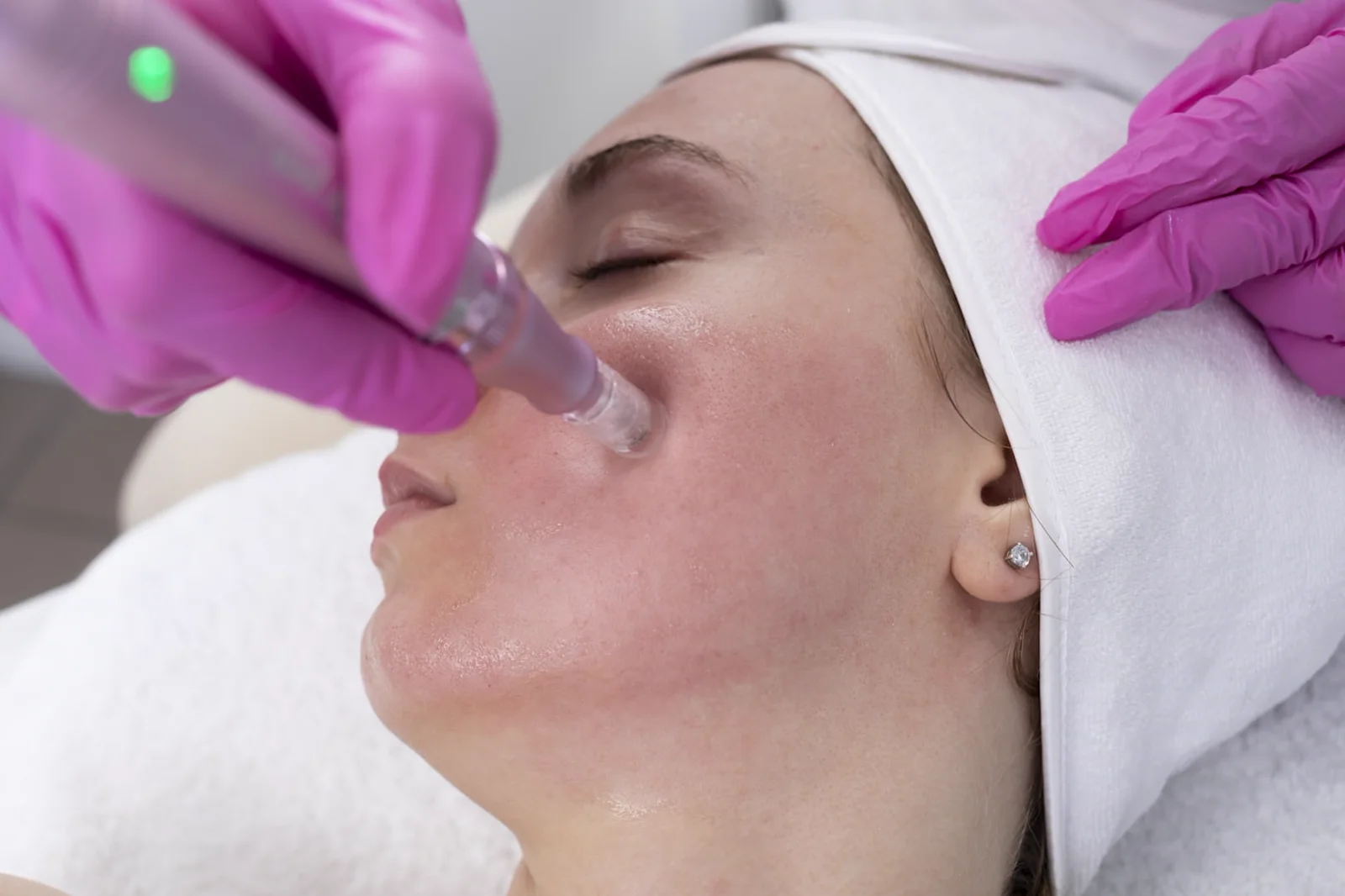
Vivace / Microneedling
Technology for skin renewal
Vivace / Microneedling is a treatment considered in line with the person's needs and expectations. At Kaya Clinique it is assessed with an understanding of vitality and renewal in skin quality, and with individual planning.
Arrange a Specialist ConsultationRadiofrequency microneedling combines two things that are often offered separately, which is both its appeal and the source of most of the confusion around it. The sections below explain what the device actually does in the skin, how the course is structured, what the recovery looks like and, just as importantly, where the limits of the treatment lie.
What is RF microneedling?
The technique uses gold-coated micro-needles to create controlled micro-channels in the skin. Radiofrequency energy is delivered from the tips of those needles at the same time.
The purpose of that combination is stimulation within the dermis, where collagen and elastin production is prompted to increase. This is why the treatment is described as working through the skin's own response rather than through anything added to it.
Several devices deliver this technology and one of the widely known examples carries its own brand name, but the treatment being described is the technique itself. Needle depth and energy settings are adjusted according to the skin, which is a clinical decision rather than a preset programme.
How many sessions are needed?
A course of three to four sessions is typical, generally spaced around four to six weeks apart. The exact number depends on what is being targeted in the skin.
The interval is not arbitrary. Because the mechanism relies on the skin's own remodelling response, time between sessions is part of how the treatment works rather than a scheduling convenience.
People often begin to notice a difference after the first or second session, with the effect building across the course. That pattern is worth knowing in advance, because it sets a realistic pace for the first appointment.
When do the results appear?
Results develop gradually, over weeks to months, and this follows directly from the mechanism.
Collagen renewal is not an immediate process. What changes in the days after a session is the surface response to the treatment; what changes over the following months is the structural quality being targeted.
This is why an assessment made a few days after a session measures very little. The comparison that matters is made across the course and in the months that follow it.
This treatment does not deliver a result on the day. It asks the skin to build one, and that takes the time it takes.
What is the downtime after RF microneedling?
There is a recovery period here, unlike some surface treatments, and knowing its shape makes it easy to plan around.
First 24 to 72 hours
Redness, a sensation of heat and mild swelling are expected during this window.
Pinpoint marks
Small pinpoint crusting can appear where the micro-channels were created.
1 to 2 days
Most people return to social life within this period, depending on how the skin responds. Injectable approaches may sit within the same plan: mesotherapy works through micro-injections and skin booster targets skin quality, with the order decided by the physician.
Up to 1 week
The skin fully settling can take up to a week, with mild flaking possible in that time.
How should the skin be cared for afterwards?
Sun protection is the single most important element of aftercare here, and it is not optional. Beyond that, when to resume strong active products at home is confirmed with the practitioner rather than assumed, because skin that has just been treated responds differently to formulations it normally tolerates.
Can RF microneedling help acne scars?
It may help reduce the appearance of acne scarring, and the phrasing there is deliberate rather than cautious.
Scar tissue is a permanent structural change in the skin. No treatment removes it entirely, and any description suggesting otherwise sets an expectation that cannot be met. What can realistically change is how visible the scarring is.
How much change is achievable depends on the type of scarring, its depth and how the individual's skin heals. This is assessed before a course is planned, and where a different approach is more appropriate, that is discussed instead. Scarring in general is covered on the scar revision page.
There is also a timing rule. Where there is an active acne flare in the area to be treated, the session is not carried out; the skin needs to be settled before this treatment is appropriate.
Is RF microneedling safe for darker skin tones?
This question deserves a specific answer rather than a general reassurance, because there is a known consideration here.
In darker skin types there is a risk of temporary hyperpigmentation following treatment. This is a recognised effect rather than a rare complication, and it is discussed before a course begins. The moisture balance of the skin sits on its own axis and is addressed under hydration booster; where hair removal is planned in the same period, the schedule for laser hair removal is calculated alongside it.
Sun protection after the procedure is mandatory for this reason, and it is treated as part of the treatment rather than as general advice. Settings are also adjusted according to skin type, which is one of the reasons this is a clinical procedure rather than a standard programme.
Skin type influences both the settings used and the aftercare emphasised.
Recent or planned sun exposure affects when a session can be carried out.
How the skin has healed previously is part of the assessment before treatment.
Active skincare in use at home is reviewed, since some products change skin sensitivity.
Is this an alternative to a facelift?
No, and the distinction is worth setting out clearly because the two are frequently mentioned in the same conversation.
- Skin quality, texture and the appearance of fine lines.
- Mild to moderate laxity at most.
- A gradual change driven by the skin's own response.
- No repositioning of tissue takes place.
- Advanced laxity with a clear excess of skin.
- Tissue that has descended and needs repositioning.
- Changes to facial structure or proportion.
- These belong to a surgical discussion instead.
Who is RF microneedling not suitable for?
There is a defined list of circumstances in which the treatment is not carried out, and these are checked before every session rather than only at the first. Where tissue looseness is pronounced the subject moves beyond this heading and into the facial aesthetics assessment.
It is not performed during pregnancy, where there is an active skin infection or cold sore, or where there is an active acne flare in the treatment area. It is also not carried out in people with electronic implants such as a pacemaker, because of the radiofrequency energy involved.
Two further situations require a physician's judgement rather than a fixed answer. A tendency to form keloid scars is assessed individually, as is recent use of isotretinoin, where the decision depends on timing and on the current condition of the skin.
What is asked before the first session?
The assessment covers general health, medications and supplements in use, previous skin treatments, how the skin has healed in the past and what is expected from the course. Sun exposure in the recent past and any planned in the near future also matter, since both affect the timing of sessions and the aftercare required.
This content is provided for general information only and does not constitute medical advice. Radiofrequency microneedling uses gold-coated micro-needles to create controlled micro-channels while delivering radiofrequency energy from the needle tips, stimulating collagen and elastin production in the dermis. A course of three to four sessions spaced around four to six weeks apart is typical, and needle depth and energy settings are adjusted according to the skin. Results develop gradually over weeks to months. Redness, a sensation of heat and mild swelling are expected in the first 24 to 72 hours, pinpoint crusting can occur, most people return to social life within one to two days and the skin fully settling can take up to a week. In darker skin types there is a risk of temporary hyperpigmentation and sun protection after the procedure is mandatory. The treatment may help reduce the appearance of acne scarring but does not remove scar tissue. Any tightening effect is limited to the mild to moderate range and this is not an alternative to surgery. It is not performed during pregnancy, where there is an active skin infection or cold sore, where there is an active acne flare in the treatment area, or in people with electronic implants such as a pacemaker. A tendency to keloid scarring and recent isotretinoin use require a physician's assessment.
Content overseen by Aysun Kaya, Founder · Kaya Clinique · on Bağdat Avenue since 2019. Our publishing standards are set out in our editorial principles.
From consultation to care, the process

Beklentilerinizi dinleyerek, kişiye özel bir yol haritası oluşturuyoruz.

Modern, hijyenik ve mahremiyeti önceleyen bir klinik ortamı.

Konforunuz gözetilerek, ölçülü ve kontrollü bir yaklaşım.

Süreç sonrası bilgilendirme ve takip ile yanınızdayız.
Related technology
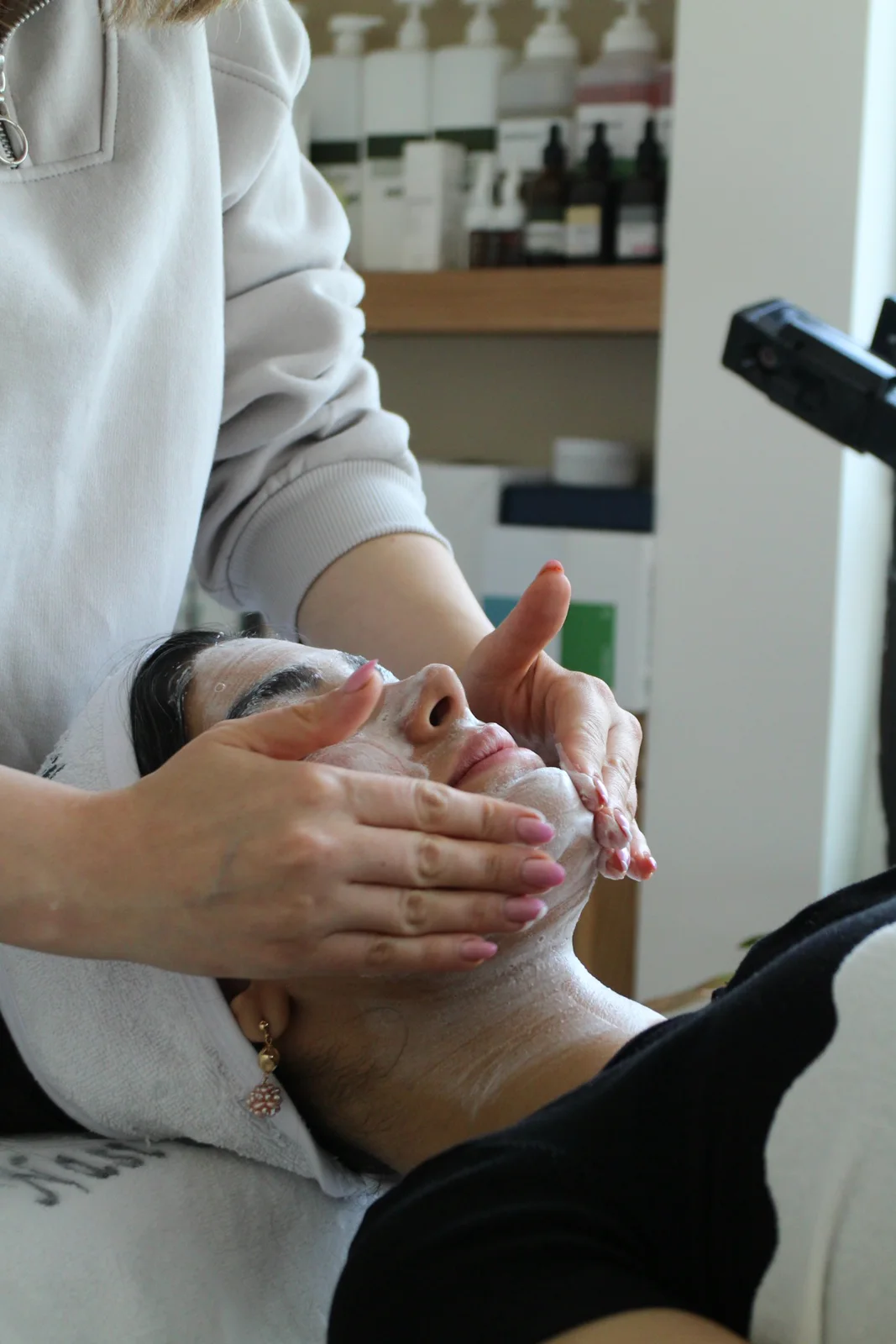
Hydrafacial
Hydrafacial is a treatment considered in line with the person's needs and expectations. At Kaya Clinique it is assessed with an understanding of vitality…
Explore the Technology →
HIFU Face Lifting
HIFU Face Lifting is a treatment considered in line with the person's needs and expectations. At Kaya Clinique it is assessed with an understanding of…
Explore the Technology →Frequently asked questions
How are Vivace / Microneedling prices determined in 2026?
Vivace / Microneedling prices are among the first things people ask about, yet we cannot publish the figure here; regulation does not grant healthcare institutions that permission.
What can be shared is how the plan for Vivace / Microneedling is formed. The decisive headings are:
- The number of sessions and the interval between them
- The region addressed and how large it is
- Parameters adjusted to skin type
- Revision of the plan at interim assessments
Even giving a range for Vivace / Microneedling would mislead, because the combination of items differs in everyone. The whole plan is set out at the consultation after examination.
Treatments considered alongside this one
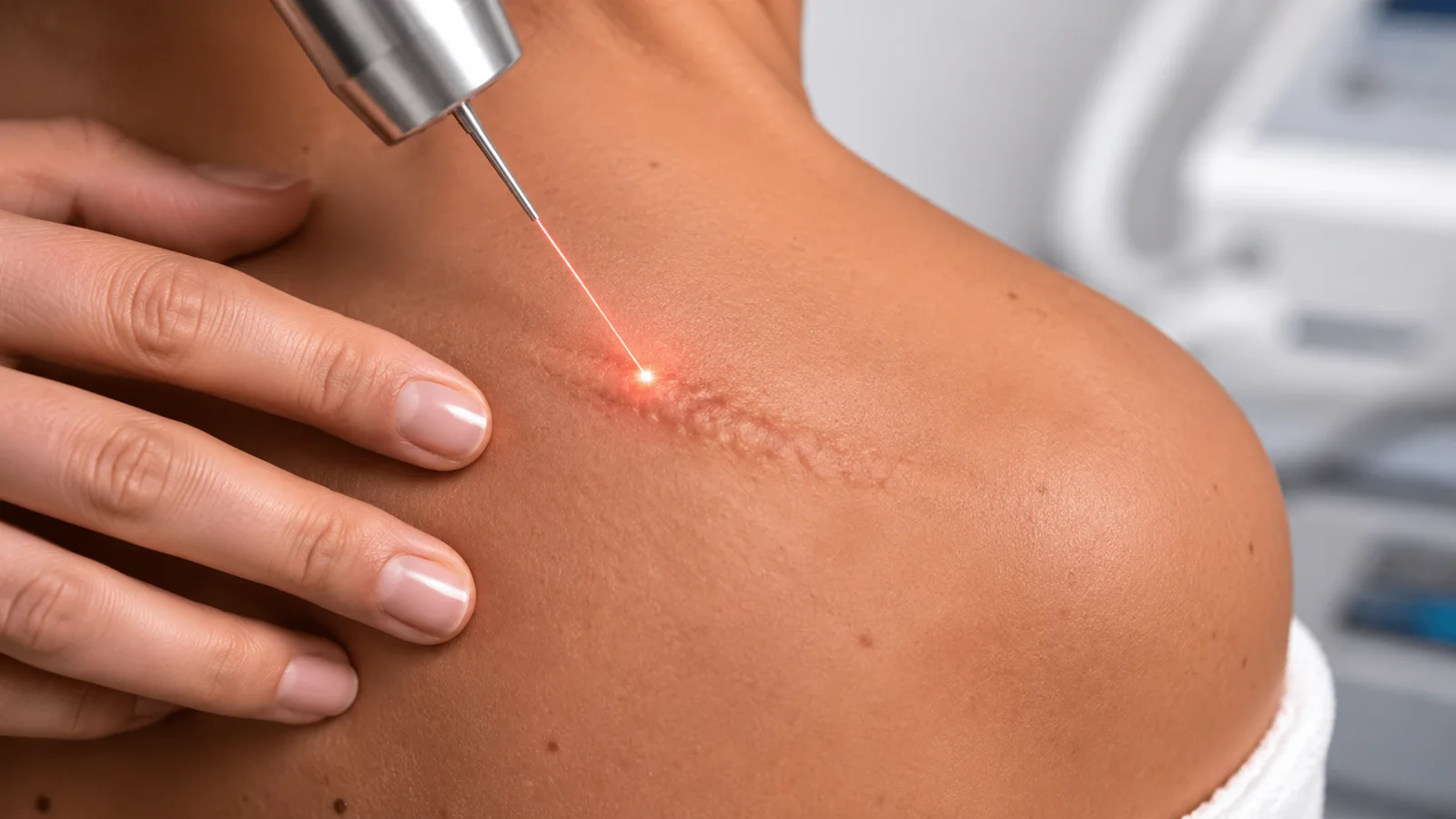
Whether they can be planned together is decided at examination; this is not a recommendation list.