Leg and Calf Implants
A balanced leg contour
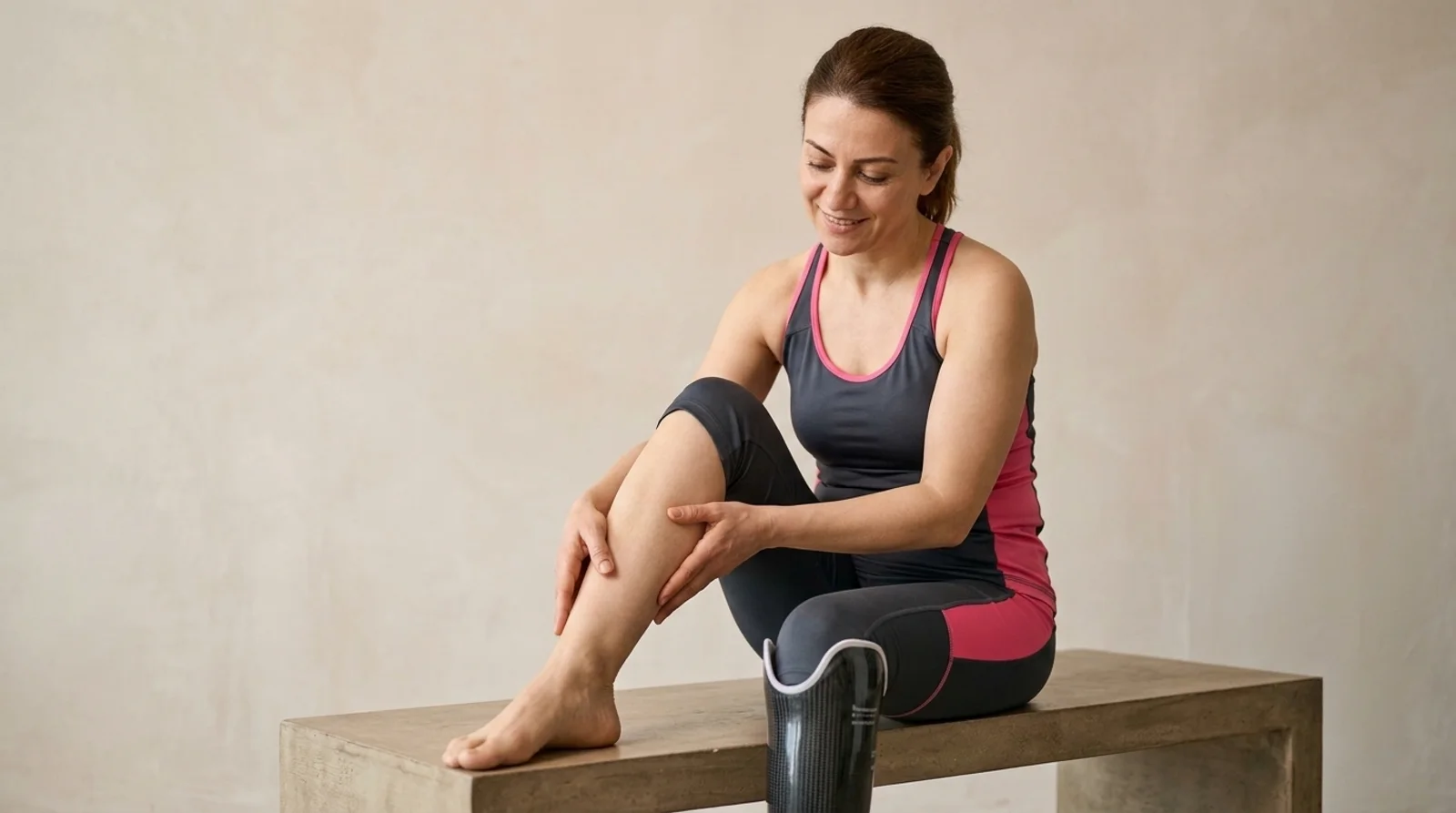
Leg and Calf Implants is a treatment considered in line with the person's needs and expectations. At Kaya Clinique it is assessed with an understanding of comfort and balance in body proportions, and with individual planning.
Arrange a Specialist ConsultationCalf implants are among the least discussed procedures in aesthetic surgery and among the most specific in the questions they attract. People arriving to discuss them have usually been thinking about one thing for a long time: that the calf stays slim regardless of what they do. The sections below cover what the procedure involves, how natural the result reads and a recovery period that affects walking directly.
What are calf implants?
The procedure involves placing a silicone implant to alter the contour of the calf. The purpose is not to add muscle mass but to complete the outline of the area.
The lower leg is one of the regions most directly seen when standing and walking, which is why a calf that stays slim can affect clothing choices and everyday comfort enough to matter. The procedure is intended to address that specific complaint.
Planning is particular to the region. The length of the leg, the existing muscle structure, the thickness of the skin and soft tissue and the difference between the two legs are assessed together, and without that assessment the appropriate degree of change cannot be established. Because leg contour is read alongside overall body proportion, buttock aesthetics may be assessed as a separate heading in the same consultation.
The outer line of the calf and the overall proportion of the leg are the starting point.
The thickness of the skin and the tissue beneath it affects how placement is planned.
Any existing difference between the legs is measured separately and built into the plan.
Time spent standing and general activity level bear on the recovery plan.
Who are calf implants for?
Enquiries fall into a few groups, and separating them matters for setting the expectation correctly.
The first group is people in whom the desired outline has not developed despite consistent training. The regional limit of muscle development varies between individuals, and it is not always a limit that training can move.
The second group is people with a marked difference between the two legs. That difference may be present from birth or may follow a health problem earlier in life; here the aim is less about adding volume than about bringing the two sides closer together.
The third group is people troubled by the general proportion of the leg. In that case the assessment is not confined to the calf, and the transitions along the whole leg are considered together.
There is also a fourth pattern of enquiry: arriving without a specific complaint about the area, on the basis of a general dissatisfaction. Where that happens, the first task of the consultation is to make the complaint concrete; what situation, what clothing or what posture produces the discomfort has to be identified before a plan can be built.
What all of these share is that the decision is not made on the size of the area but on the discomfort the person describes and on the examination findings. General health is inseparable from this assessment, and any known circulatory problem is a heading that directly affects planning.
Can calf implants be felt, and do they look natural?
These are the two questions asked most often, and the answer to both depends on how carefully the plan is made.
A natural appearance is largely a matter of the decisions on size and placement. Where planning is proportionate to the existing structure of the region, the outline creates a transition consistent with the rest of the leg. An expectation out of proportion can make the result conspicuous, which is why the expectation is made concrete at the consultation.
On the question of touch a direct answer is needed. There is an implant in the area, and it can be detected by hand, particularly where the soft tissue is thin. Knowing that in advance is a better position than discovering it afterwards.
A natural result here does not come from a large change. It comes from a plan that respects the proportions the leg already has.
How is the size decided?
Size follows from the proportion the leg can carry rather than from a figure the person has in mind. The width of the region, the thickness of the soft tissue and the length of the leg are measured together at examination; where the planned volume does not match those measurements, both the appearance and the recovery are affected. This makes size one of the most discussed subjects in the consultation, and the expectation is compared openly against the existing structure.
What if training has not produced the shape?
This question comes up in almost every consultation, and answering it well means separating two situations.
- There is no consistent training history for the region yet.
- The muscle structure appears open to development.
- The change being sought is limited in scale.
- Surgery is not the priority option in this situation.
- A regional limit has been reached despite consistent training.
- There is a structural difference between the two legs.
- The complaint concerns the outline rather than volume.
- Calf implants are assessed in this situation.
What does recovery after calf implants involve?
Recovery from this procedure affects walking directly, which makes its impact on daily life more noticeable than the operation itself suggests.
First days
Swelling and a feeling of tightness are present. Restricted walking is the defining feature of this period and elevating the leg is advised.
Early period
Walking is opened up in stages. Increases in distance and duration follow the surgeon's instructions rather than personal judgement.
Intermediate period
Return to a normal routine is assessed here, with prolonged standing and stairs considered separately.
6 to 8 weeks
Return to sport generally arises within this range and proceeds gradually, on the surgeon's recommendation.
Why is walking restricted?
The calf takes load continuously during walking. Limiting that load early on is asked for both to allow the tissue to settle and to keep healing on the expected course. How long the restriction lasts varies between individuals, so no fixed number of days is quoted; the movement plan is opened up in stages at follow-up appointments.
How is return to work planned?
Where the work involves standing, the return timetable is planned differently from a desk-based role. Working patterns are therefore discussed before surgery and leave arranged accordingly. Planning this in advance is a practical step that reduces strain during recovery.
How long does the calf implant result last?
Because the volume provided by an implant is not subject to an absorption process, no marked reduction is expected after the early period. That is not the same as the result never changing.
The leg changes over time like the rest of the body. Weight change, the natural changes in skin and soft tissue with age and differences in activity level can all affect the appearance. For that reason no undertaking of permanence is given.
Follow-up continues, as it does with any procedure involving an implant. The condition of the area is assessed at review appointments; no fixed schedule of intervention at a given number of years is set out, because assessment is based on examination findings. Where excess skin is present elsewhere on the torso those are separate headings: the abdomen under abdominoplasty, the arms under arm lift, and the breast region under breast augmentation on its own criteria. Because the incision here sits in an area under load when walking, how it matures is discussed under scar revision. Any new swelling, pain or change in shape in the area should prompt contact without waiting for the next appointment.
What are the risks of calf implant surgery?
This is a surgical procedure and the risk assessment is made on that basis. Bleeding, infection and anaesthesia-related considerations apply as in any operation.
Headings specific to implant procedures are discussed separately: formation of a capsule around the implant and displacement of the implant from its position are recognised considerations. Specific to this region are the effect of the load the leg carries during walking, differences in symmetry between the two legs, changes in sensation in the area and swelling lasting longer than expected.
Smoking has its own place here, since it reduces the blood reaching tissue and makes wound closure more difficult; stopping is requested for that reason. Preparation reviews general health, regularly used medications and any known circulatory problems in detail, since these can influence the plan directly.
At the decision stage the main subject is the recovery period. Whether the person understands the restriction on walking, that return to sport is gradual and that it generally arises within six to eight weeks is established before a plan is made. Where an intensive sporting calendar or a period demanding prolonged standing is approaching, the timing is reassessed.
All of this is recorded in a written informed consent document covering the technique to be used, the known risks, the movement restriction during recovery and the limits of the result. The procedure is planned and carried out by the physician responsible, in a facility equipped to the standards it requires; our involvement covers assessment, information and the appointments that follow.
This content is provided for general information only and does not constitute medical advice. Calf implant surgery is a surgical procedure and carries risks including bleeding, infection, anaesthesia-related risks, differences in symmetry between the two legs, changes in sensation and prolonged swelling. Specific to implant procedures, capsule formation and displacement of the implant are recognised headings. During recovery there is a restriction on walking; return to sport is gradual and generally arises within six to eight weeks, on the surgeon's recommendation. Because there is an implant in the area it can be detected by hand, and this is more likely where the soft tissue is thin. Results can change with weight change, ageing and differences in activity level; no undertaking is given that the result will remain unchanged. The decision to proceed is made together with the physician after a detailed examination and a written informed consent process.
Content overseen by Aysun Kaya, Founder · Kaya Clinique · on Bağdat Avenue since 2019. Our publishing standards are set out in our editorial principles.
From consultation to care, the process

Beklentilerinizi dinleyerek, kişiye özel bir yol haritası oluşturuyoruz.

Modern, hijyenik ve mahremiyeti önceleyen bir klinik ortamı.

Konforunuz gözetilerek, ölçülü ve kontrollü bir yaklaşım.

Süreç sonrası bilgilendirme ve takip ile yanınızdayız.
Related technology

Cryolipolysis
Cryolipolysis is a treatment considered in line with the person's needs and expectations. At Kaya Clinique it is assessed with an understanding of…
Explore the Technology →
Laser Hair Removal
Laser Hair Removal is a treatment considered in line with the person's needs and expectations. At Kaya Clinique it is assessed with an understanding of…
Explore the Technology →Frequently asked questions
How are Leg and Calf Implants prices determined in 2026?
We cannot answer the question of Leg and Calf Implants prices with a number here: health regulations expressly prohibit publishing procedure fees or making price announcements.
We can still explain how the decision on Leg and Calf Implants is built. These are the headings that shape the plan:
- Whether one side or both are addressed
- The implant size the leg can carry
- The length of the operation and the anaesthesia choice
- Reviews planned through the gradual return to walking
Because these headings change at once, no fixed amount forms for Leg and Calf Implants. The picture becomes clear at examination, after which plan and process are discussed in detail.
Treatments considered alongside this one
Whether they can be planned together is decided at examination; this is not a recommendation list.