Cheekbone Filler
Definition and balance
Cheekbone Filler is a treatment considered in line with the person's needs and expectations. At Kaya Clinique it is assessed with an understanding of a measured, natural look in facial expression, and with individual planning.
Arrange a Specialist ConsultationCheekbone filler is among the most talked about treatments of recent years, and that popularity has brought a misunderstanding with it: the idea that the treatment lifts the face. The sections below draw that boundary first, then explain what the treatment actually does, how it separates from its neighbour and what it does not address.
What is cheekbone filler?
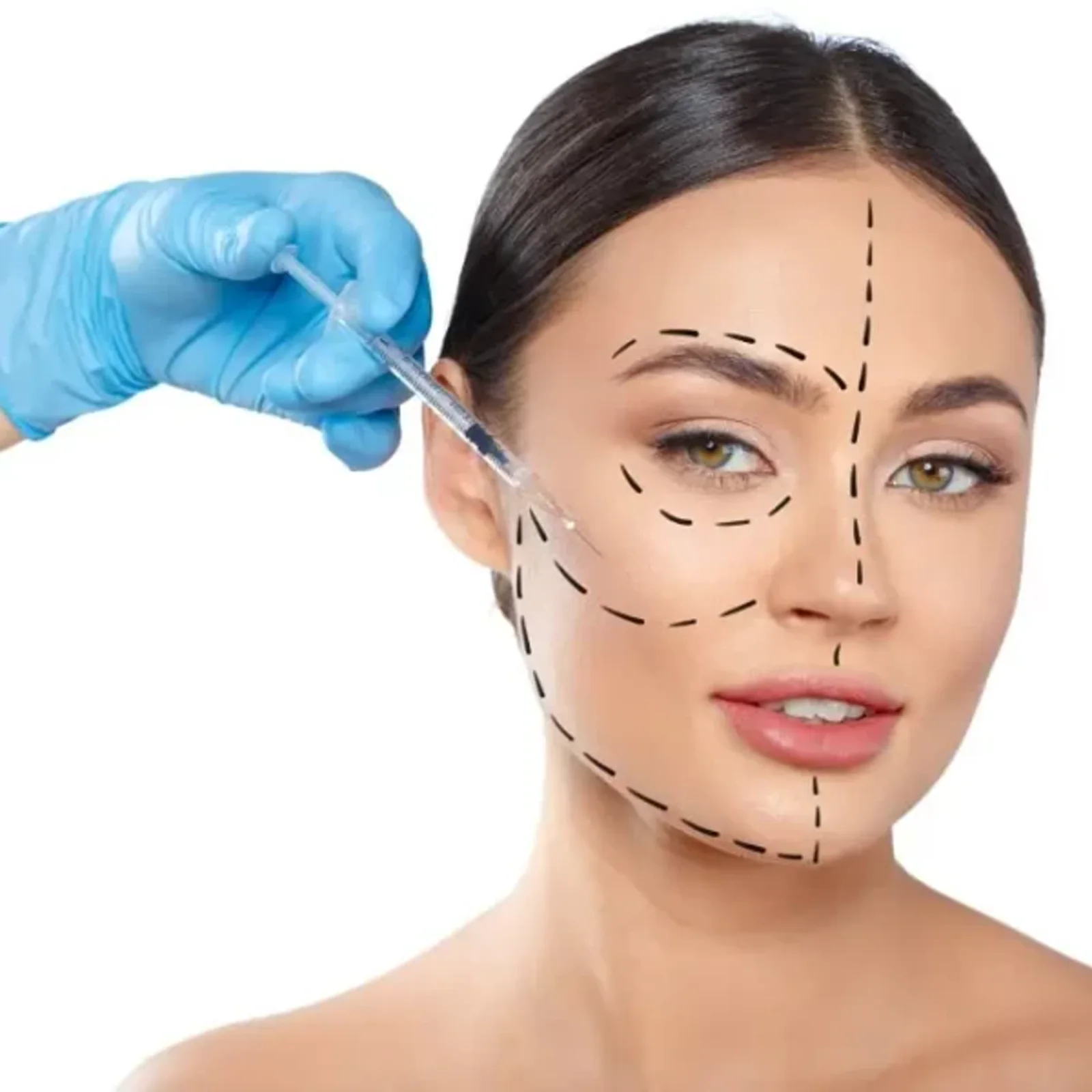
In this treatment a hyaluronic acid based product is used to define the contour of the cheekbone region. The material is the cross-linked gel form of hyaluronic acid, a substance the body already contains.
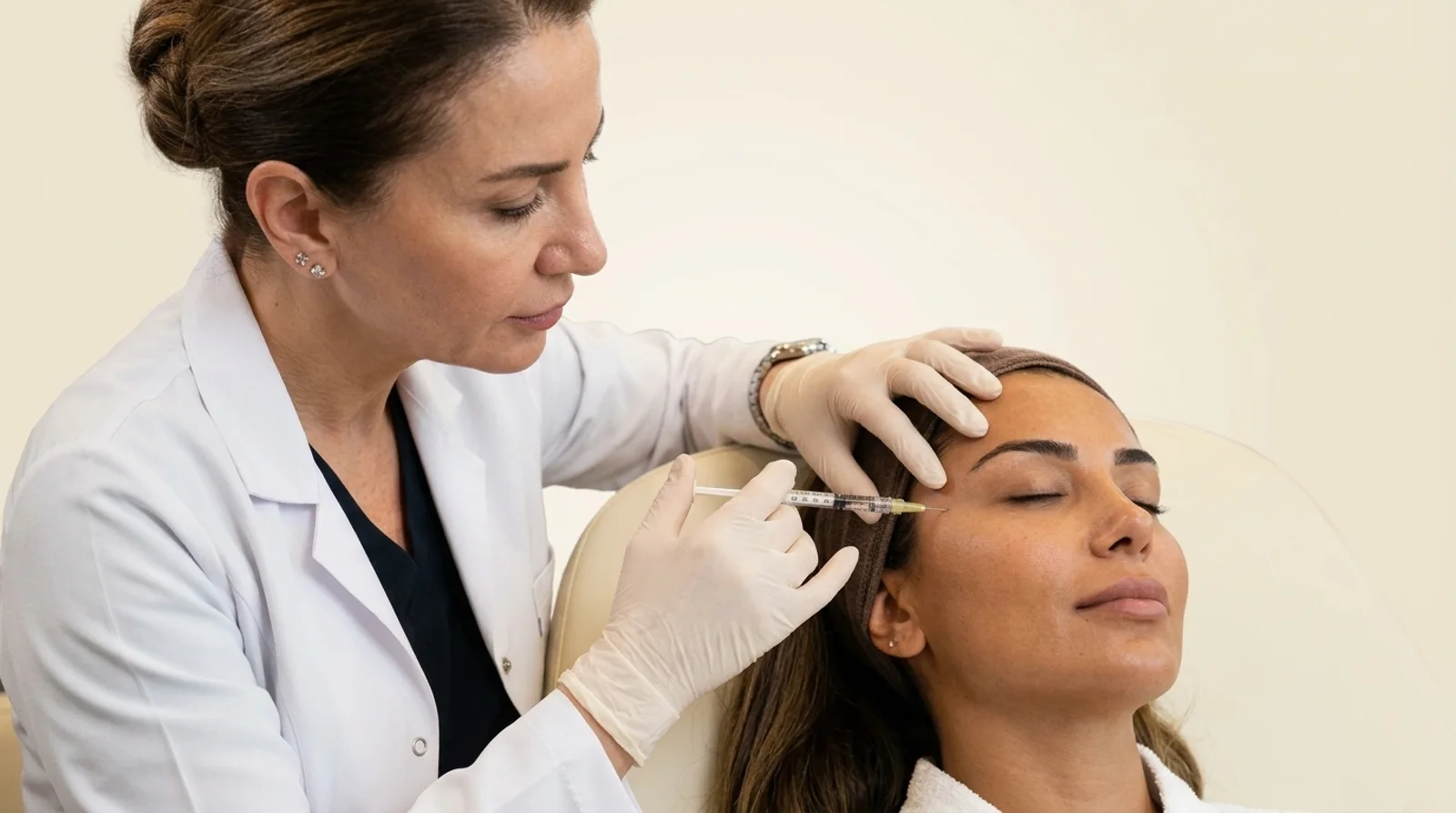
What separates this treatment from others is the depth of the plan. Cheekbone filler is applied in a deep plane over the bone; the product is placed not immediately beneath the skin but in a deeper layer. The reason is that what is being sought is a structural line rather than surface fullness.
That distinction matters in practice. Working in different layers with the same product produces markedly different results, so which layer is targeted can be more decisive than how much product is used.
Product selection follows the same plan. A product expected to provide support in a deep layer is chosen for different characteristics than one used in a mobile, soft region. That choice affects both how defined the result is and how the region preserves its natural movement.
Does cheekbone filler lift the face?
This is the most asked question about the treatment and the honest answer contains a boundary: filler is not a lifting procedure.
What a filler does is add volume. Tissue is not taken from where it sits and moved higher; it is supported where it is. That can create definition in the upper region and contribute to the overall appearance, and by changing how light falls it can reduce shadowing. None of that is the same as repositioning tissue.
Where there is marked descent the distinction becomes sharper still. Adding volume to loosened tissue can weigh the region down rather than produce the expected result. In that situation the subject belongs elsewhere and is covered within facial aesthetics.
A filler adds volume; it does not move tissue. Treating those two as the same thing is the most common expectation error in this region.
Does this treatment change the shape of the face?
Descriptions of face shapes circulating on social media can inflate the expectation. The general shape of a face is largely determined by its bone structure, and that structure is not altered by a filler treatment. The frame of the upper face contributes to the same impression: hollowing at the temple is assessed under temple filler, and irregularity across the forehead surface under forehead filler. What can be done in this region is to support the line of the existing structure rather than to create a different facial form. The expectation is discussed against that boundary at consultation.
Knowing that boundary prevents most of the dissatisfaction that appears afterwards. Someone expecting a lifting effect can find a result achieved by adding volume insufficient; the problem there is not the treatment but the way the goal was described at the outset. That part of the consultation is therefore not skipped.
Cheekbone filler or cheek filler?
The two regions are adjacent and their names are often confused; the distinction is built on the result being sought.
- A defined line is wanted in the upper part of the face.
- The treatment is carried out in a deep plane.
- What is expected is definition rather than fullness.
- This is where cheekbone filler comes into the conversation.
- Volume that has reduced in the region is the issue.
- The treatment is considered in a more superficial plane.
- The aim is a softer fullness, not a sharpened edge.
- Cheek filler is the option discussed.
Quantity is part of the same distinction. There is a fine line between the support needed to create a defined edge and simply filling the region; crossing it produces an appearance at odds with the proportions of the face. The plan is therefore built on the existing proportions rather than on the largest change achievable.
Does it help a loss of definition along the jawline?
Softening of the jawline is a frequently raised complaint. The cheekbone region has a part in that picture, but presenting it as a solution on its own would not be accurate.
Reduced support in the upper part of the face affects how the lower part appears, so planning directed at the upper region can contribute to the overall look. Where looseness in the lower face is pronounced, however, the source of that finding is below rather than above. Where the tissue has clearly changed position, the discussion moves from adding volume to mid-face lift; where the width of the lower face comes from the chewing muscle, the heading is masseter treatment.
With mild softening, support in the upper region can contribute to the appearance.
Where looseness in the lower face predominates, filler does not answer the picture.
Skin elasticity is a variable affecting which approach is meaningful.
The size of the change expected determines whether a surgical heading is required.
A decision made without that distinction neither meets the expectation nor serves the region well. The task of the examination is to establish the level of the finding.
Is jawline definition part of this subject?
Defining the jawline is a separate heading covered on its own page, though the relationship is worth explaining since the question is asked so often. The cheekbone region and the jawline are different areas of the face that influence one another visually: when the upper line becomes more defined the overall proportion changes, which affects how the lower region is perceived. That is an indirect effect, and a request concerning the jawline needs to be assessed on its own terms.
How long does cheekbone filler last?
In the cheekbone region duration is reported on average in the range of twelve to eighteen months. The relative immobility of the area is one of the factors extending that period, though the range still varies with product, individual and technique.
First hours
Tenderness and mild fullness are expected in the region; this appearance is not yet the result. Where the concern is the texture of the skin rather than its contour, that sits on a separate axis and is discussed under skin booster.
First days
Swelling and bruising may be observed. Findings can follow a different course when work is done in a deep plane.
Up to 2 weeks
A marked reduction in the findings is generally complete within this period.
Assessment
How the line has settled is judged once swelling has resolved and the product has taken its position.
How is a repeat treatment decided?
Rather than counting months, the moment for another treatment is judged from how the region looks on the day. Repeating too soon in this area can build up unwanted volume over time, so the call is made during examination and what the person has noticed themselves is part of it.
When can the result be judged?
The definition seen in the early period includes swelling alongside the product placed, so a comment made in the first days usually shows more than is there. How the line has actually settled is looked at once the findings have receded and the tissue has settled, and the plan is reviewed against that assessment if necessary.
What are the risks of cheekbone filler?
Swelling and bruising are the most common side effects in this treatment as elsewhere, both receding within days to two weeks. Less commonly reported are nodules, movement of the product from its position and inflammatory reactions arising at a later stage; that last group requires physician follow-up.
Uncommon though it is, the most serious heading is injection of the product into a blood vessel. In that event the blood reaching the skin can be disrupted, and treatment cannot wait. The approaches reducing that risk are known: familiarity with the vascular anatomy of the region, use of a cannula where appropriate and working slowly at low pressure, with an emergency hyaluronidase protocol available should such a situation arise.
That hyaluronic acid can be dissolved with an enzyme is a safety element here too, providing a route back both where an unexpected appearance results and in an urgent situation. For these reasons the treatment needs to be carried out in a clinical setting by a physician able to manage this complication.
In some situations treatment is not carried out or is left to a more suitable time. Pregnancy and breastfeeding are the first of these, since no safety data exists for those periods. Treatment is likewise not performed where an infection is under way, where there is an unhealed lesion in the region, or where an allergy to the product has previously been identified.
At the decision stage the main subject is the boundary of the expectation. Whether the person understands that this is not a lifting procedure, that facial shape is largely determined by bone structure, that duration is limited and when to make contact is established before a treatment is planned. The procedure is then performed by the physician once the medical assessment is complete.
This content is provided for general information only and does not constitute medical advice. The hyaluronic acid fillers used in cheekbone treatment are medical products; treatment is carried out by a physician in a clinical setting following a medical assessment, and this content is not a product promotion. This treatment is not a lifting procedure; tissue is not repositioned, volume is added. The general shape of the face is largely determined by bone structure and is not altered by a filler treatment. Swelling and bruising are the most common side effects, receding within days to two weeks; nodules, product migration and delayed inflammatory reaction are reported less often and require physician follow-up. The uncommon but most serious complication is injection of product into a blood vessel, which can compromise the blood supply to skin tissue and requires an emergency hyaluronidase protocol. In the cheekbone region duration is reported on average in the range of twelve to eighteen months, varying with product, individual and technique. Treatment is not advised during pregnancy or breastfeeding, and is not performed where an infection is under way, where there is an unhealed lesion in the region or where an allergy to the product has been identified.
Content overseen by Aysun Kaya, Founder · Kaya Clinique · on Bağdat Avenue since 2019. Our publishing standards are set out in our editorial principles.
From consultation to care, the process

Beklentilerinizi dinleyerek, kişiye özel bir yol haritası oluşturuyoruz.

Modern, hijyenik ve mahremiyeti önceleyen bir klinik ortamı.

Konforunuz gözetilerek, ölçülü ve kontrollü bir yaklaşım.

Süreç sonrası bilgilendirme ve takip ile yanınızdayız.
Frequently asked questions
How are Cheekbone Filler prices determined in 2026?
Our pages carry no figure for Cheekbone Filler prices, and that is a legal limit rather than an oversight: healthcare institutions may not announce procedure fees.
Although no figure is given, we can say plainly what varies in Cheekbone Filler. The determining items are:
- The quantity determined by bone structure
- Working in the deep supraperiosteal plane and selecting the product accordingly
- How the difference between the two sides is reflected in the plan
- The review planned to assess the result
The weight of each item differs in every person, so no common amount can be quoted for Cheekbone Filler. How the process will unfold is set out in detail after examination.
Treatments considered alongside this one

Whether they can be planned together is decided at examination; this is not a recommendation list.