Laser Hair Removal
Care for unwanted hair
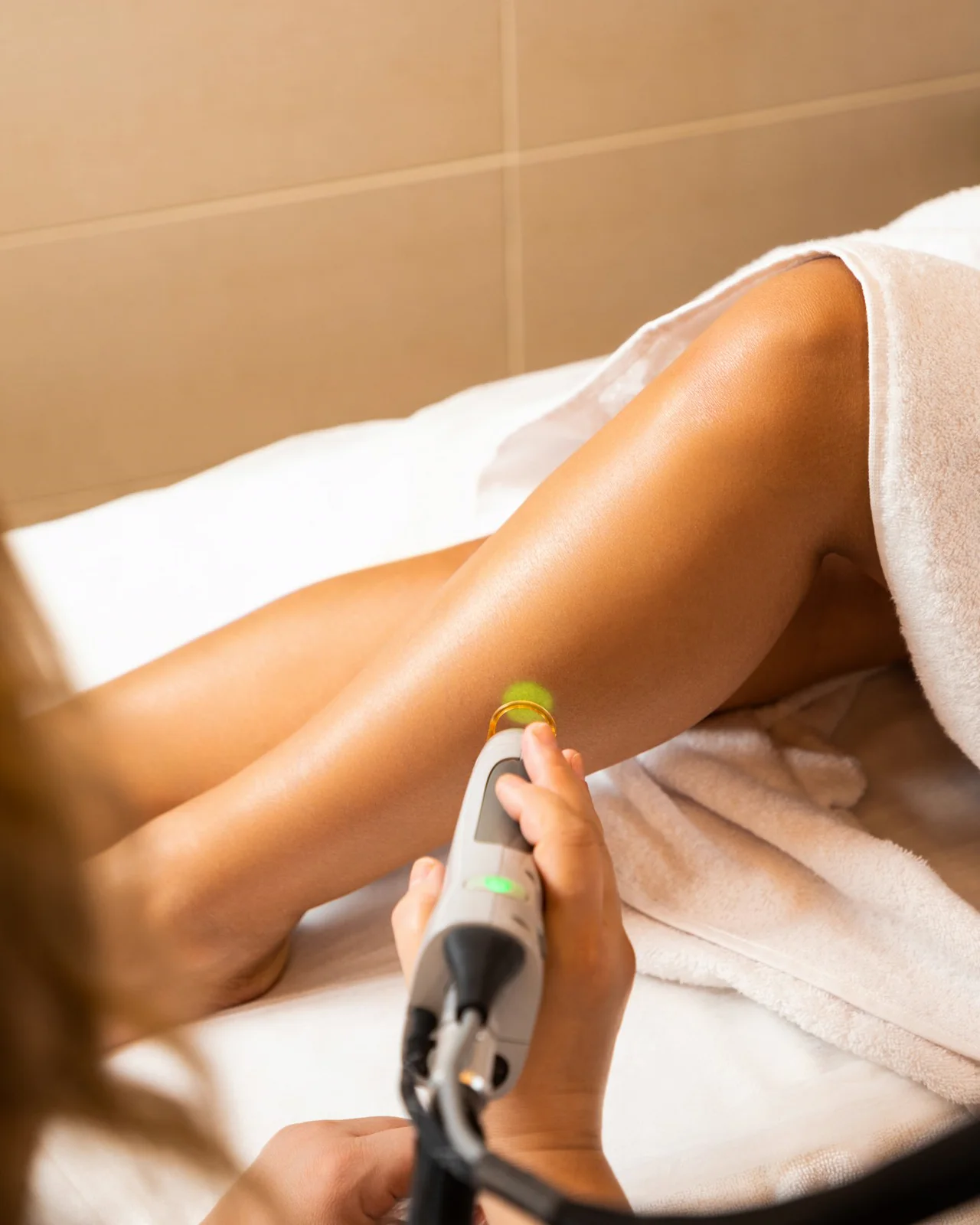
Laser Hair Removal is a treatment considered in line with the person's needs and expectations. At Kaya Clinique it is assessed with an understanding of technology-supported improvement in body contours, and with individual planning.
Arrange a Specialist ConsultationLaser hair removal is one of the most requested treatments in aesthetic medicine and also one of the most inaccurately described. The single most useful thing to understand before booking is what the result is actually called, because the correct term sets a realistic expectation and the popular one does not.
Is laser hair removal permanent?
The accurate term for what this treatment achieves is permanent hair reduction. That is the wording used by regulators, and the difference from "permanent removal" is not a technicality.
What happens over a course of treatment is that hair becomes finer, sparser and lighter in the treated area. What does not happen is the complete and lasting elimination of every hair; no method can guarantee that outcome, and any description promising it is inaccurate.
There is also a reason the result can change later. Hormonal influences can activate new hair growth over time, which is why occasional maintenance sessions may be needed in the years that follow a completed course.
The honest description is reduction, not removal. Everything else about planning this treatment follows from getting that word right.
How does laser hair removal work?
The mechanism is called selective photothermolysis, and it depends entirely on pigment.
Melanin in the hair follicle absorbs the laser energy, which allows the follicle to be targeted while the surrounding tissue is affected far less. The energy absorbed is converted to heat, and it is this that acts on the follicle.
Two consequences follow from that mechanism, and they explain almost everything else on this page. Firstly, the treatment depends on the contrast between hair and skin, which is why device selection is a clinical decision. Secondly, it only works where there is pigment in the hair itself.
How many laser hair removal sessions are needed?
An initial course of six to eight sessions is typical for most areas, and the interval between sessions is generally four to eight weeks depending on the area treated.
The spacing is not administrative. Hair grows in cycles and only follicles in a particular phase respond to treatment, so sessions are timed to catch different hairs at the responsive stage. Treating too frequently does not accelerate the result.
Annual reminder sessions may be needed after the initial course. This is part of the plan rather than a sign that the course did not work, and it follows from the same hormonal influences described above. Where expectations about the skin surface in the same area also arise, those are separate headings: Hydrafacial covers the cleansing layer and mesotherapy the components delivered into the skin.
Different areas have different growth cycles, which affects the interval between sessions.
The colour and thickness of the hair influence how it responds to treatment.
Skin type determines which device and which parameters are appropriate.
Hormonal influences can affect both the number of sessions and the need for maintenance.
Which laser is used for which skin type?
There is no single device suitable for everyone, and matching the wavelength to the skin type is a safety decision as much as an effectiveness one.
- Alexandrite at 755 nm offers high effectiveness in lighter skin.
- Diode at 810 nm is versatile across a wide range of skin types.
- Nd:YAG at 1064 nm is the safest option in darker skin types.
- Diode and Nd:YAG hold regulatory approval for darker phototypes.
- Skin type and hair colour are assessed together.
- The device is selected by the physician, not by request.
- Parameters are adjusted to the individual, not preset.
- Recent sun exposure changes what is appropriate on the day.
One further practical point follows from the cycle. Hair in the treated area is not removed by plucking or waxing between sessions, since those methods take out the very structure the laser needs to target; shaving is used instead. This is explained at the first appointment because it directly affects how well the next session works.
Does laser work on blonde, grey or white hair?
No, or only to a very limited degree, and this follows directly from the mechanism.
The treatment relies on melanin in the hair absorbing the energy. Where there is little or no pigment, as in white, grey, very light blonde and fine vellus hair, there is nothing for the laser to target effectively.
This is worth establishing before a course is planned rather than after several sessions. An honest assessment at the start prevents a course that cannot deliver what is expected of it, Where surgery on the same area is planned in the same period the two schedules are set together, since sessions are deferred while the area heals after arm lift or leg and calf implants. Where the hair is unsuitable, saying so is more useful than proceeding.
Does PCOS affect laser hair removal results?
Yes, and this should be said plainly rather than glossed over.
In hormonal conditions such as polycystic ovary syndrome, more sessions may be needed and ongoing maintenance is more likely. The reason is that the hormonal drive producing the hair growth continues, so new follicles can be activated after treatment.
This does not mean the treatment is inappropriate. It means the plan is described differently from the outset, with maintenance built into the expectation rather than presented as a disappointment later. Where a hormonal condition has not been investigated, that assessment is a separate medical subject and is raised as such.
What are the side effects?
Temporary redness and swelling around the follicles are the usual findings after a session, generally settling within less than a week.
Less commonly, temporary changes in pigmentation, either darker or lighter than the surrounding skin, can occur. A superficial burn is also possible, though this is uncommon when the device and parameters are correctly selected.
What reduces the risk?
Correct device selection for the skin type, appropriate parameters and an honest account of recent sun exposure are the three factors that matter most. Active tanning or recent significant sun exposure changes the risk profile, which is why sessions are deferred in that situation rather than adjusted around it.
What is asked before each session?
Sun exposure since the last session, any new medications, changes in skin condition and how the previous session was tolerated are reviewed each time. This is not repetition for its own sake; the answers can change the settings used or postpone the session altogether.
Who should not have laser hair removal?
Certain situations mean the treatment is not carried out or is postponed until circumstances change.
It is not recommended during pregnancy, as safety data is insufficient. Active tanning or recent sun exposure means the session is deferred. An active infection or cold sore in the treatment area also postpones treatment until it has resolved.
Medications that increase photosensitivity require a physician's assessment before treatment, and a tendency to form keloid scars is also assessed individually. None of these are administrative questions; each one can change whether a session goes ahead. Skin firmness and contour are not the subject of this heading: those are assessed under Vivace microneedling and Zionic, while localised fat is addressed under cryolipolysis.
This content is provided for general information only and does not constitute medical advice. The accurate term for the outcome of this treatment is permanent hair reduction; hair becomes finer, sparser and lighter, and complete, lasting elimination of hair cannot be guaranteed by any method. Hormonal influences can activate new hair growth over time, so maintenance sessions may be needed. The treatment works through selective photothermolysis and depends on melanin in the hair; it is not effective on white, grey, very light blonde or fine vellus hair. An initial course of six to eight sessions is typical for most areas, with intervals of four to eight weeks depending on the area. Device selection is made by the physician according to skin type and hair colour: Alexandrite 755 nm offers high effectiveness in lighter skin, Diode 810 nm is versatile across a wide range of skin types and Nd:YAG 1064 nm is the safest option in darker skin types. In hormonal conditions such as polycystic ovary syndrome more sessions and ongoing maintenance may be required. Temporary redness and swelling around the follicles usually settle within less than a week; temporary pigmentation changes and superficial burns are uncommon. The treatment is not recommended during pregnancy and is deferred in cases of active tanning or recent sun exposure, active infection or cold sore in the area; photosensitising medications and a tendency to keloid scarring require a physician's assessment.
Content overseen by Aysun Kaya, Founder · Kaya Clinique · on Bağdat Avenue since 2019. Our publishing standards are set out in our editorial principles.
From consultation to care, the process

Beklentilerinizi dinleyerek, kişiye özel bir yol haritası oluşturuyoruz.

Modern, hijyenik ve mahremiyeti önceleyen bir klinik ortamı.

Konforunuz gözetilerek, ölçülü ve kontrollü bir yaklaşım.

Süreç sonrası bilgilendirme ve takip ile yanınızdayız.
Related technology
Hydrafacial
Hydrafacial is a treatment considered in line with the person's needs and expectations. At Kaya Clinique it is assessed with an understanding of vitality…
Explore the Technology →
Vivace / Microneedling
Vivace / Microneedling is a treatment considered in line with the person's needs and expectations. At Kaya Clinique it is assessed with an understanding…
Explore the Technology →Frequently asked questions
How are Laser Hair Removal prices determined in 2026?
You will not find a figure for Laser Hair Removal prices on our pages; health regulations do not permit healthcare institutions to share procedure fees or advertise on price.
What we can share is what shapes the planning of Laser Hair Removal. The following items determine the process:
- The region addressed and how many regions are included
- The number and spacing of sessions in the course
- Parameters adjusted to hair type and skin type
- Whether annual reminder sessions form part of the plan
Once these variables come together, no figure for Laser Hair Removal holds for everyone. The individual plan is explained at the consultation following examination.
Treatments considered alongside this one
Whether they can be planned together is decided at examination; this is not a recommendation list.
Further reading on this topic

Aesthetic Treatments During Pregnancy: What Waits, and Why
Most treatments are routinely deferred in pregnancy and breastfeeding. Which heading waits on what grounds, and which calls for a separate assessment.
Read the article
Laser Hair Removal During Pregnancy: The Safe Frame
Not advised in pregnancy, and the reason is missing safety data rather than proven harm. Breastfeeding, returning after birth and course planning explained.
Read the article
Laser Hair Removal: How Many Sessions Does It Take?
Most areas need an initial course of 6 to 8 sessions, spaced 4 to 8 weeks apart. What shifts that number, and why maintenance sessions may follow it.
Read the article
How to Prepare for Laser Hair Removal: The Full List
Shaving timing, why waxing and tweezing are out, the sun rule and disclosing medication: the preparation list that decides how much a session achieves.
Read the articlePre-Wedding Beauty Timeline: 12 Months to the Last Week
How far ahead is each treatment planned, what is kept out of the final month and which three rules set the timetable? A time axis built on each treatment.
Read the article