HIFU and surgical facelift answer two different questions rather than the same one. In mild to moderate skin laxity, HIFU provides tightening and a degree of lifting. Where there is excess skin and advanced sagging, surgical facelift is assessed. The choice follows the degree of laxity and the expectation, confirmed by specialist assessment.
What HIFU does, and what it cannot do
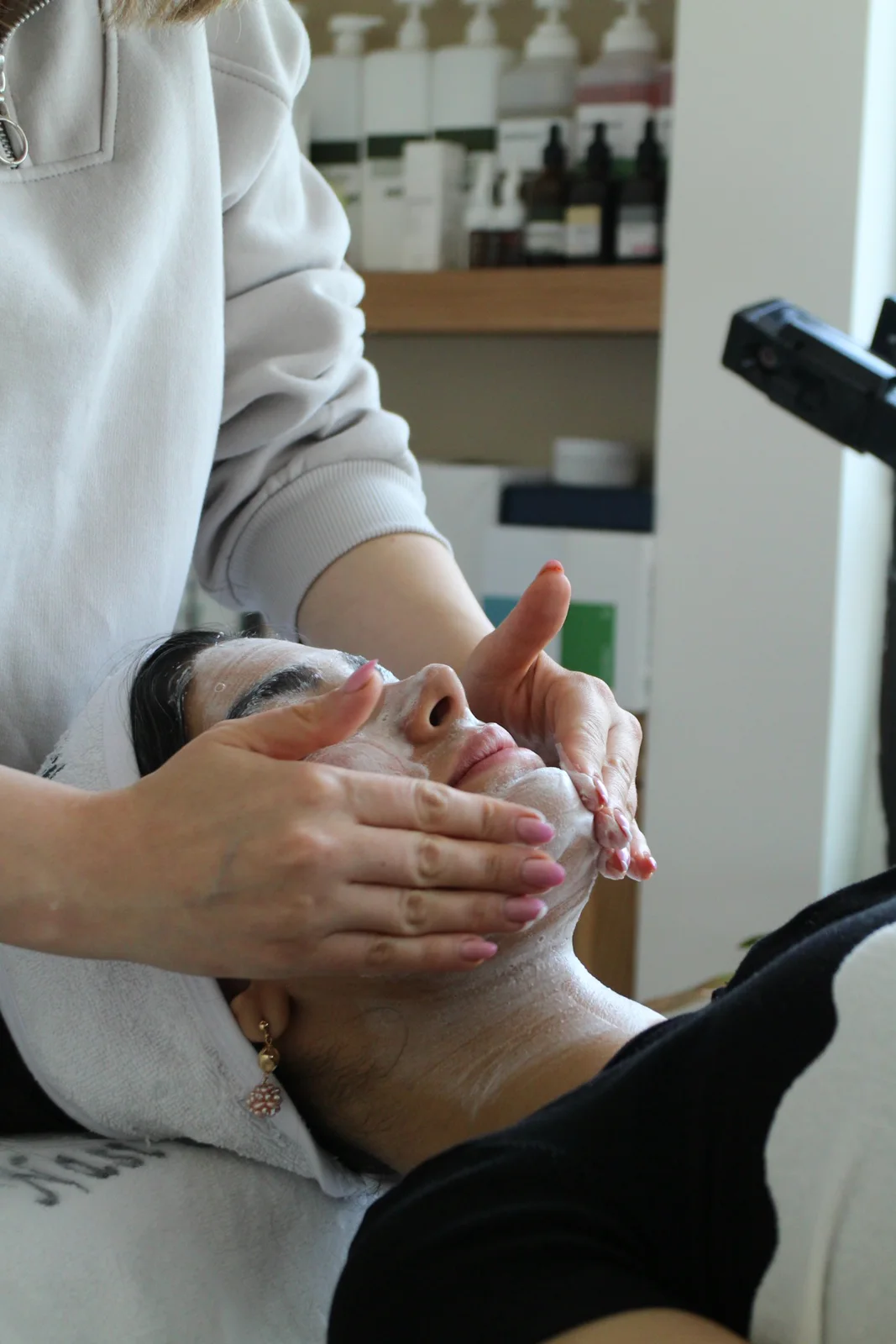
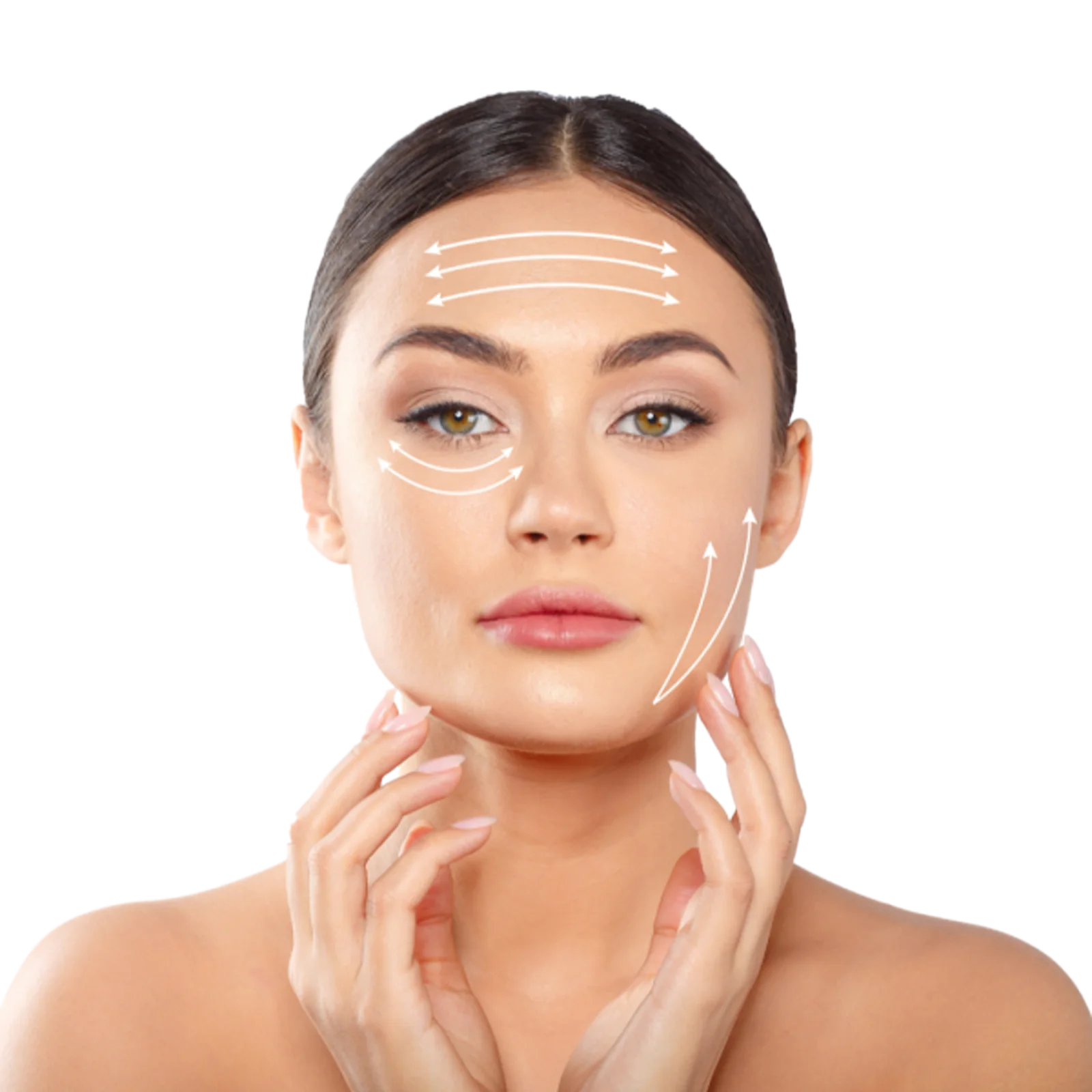
HIFU stands for high-intensity focused ultrasound. The device passes ultrasound energy through the surface of the skin and focuses it at a set depth, creating controlled points of heat. The layers targeted include the SMAS, which is the same deep supporting tissue surgery works on. Those heat points stimulate collagen production, and the tissue firms gradually over the following weeks.
One sentence sets the frame for everything else. Known colloquially as a "non-surgical facelift", HIFU is not an alternative or an equivalent to surgical facelift; it provides tightening and firming in mild to moderate skin laxity. That is not a disclaimer added at the end. It is the definition of the treatment.
Regulatory clearance keeps to the same scale. Ultherapy-type devices are cleared for lifting of the brow, the neck and the area under the chin, and for reducing the appearance of lines on the décolletage. The word "lifting" in that clearance describes a millimetric repositioning of tissue, not the structural repositioning that surgery performs.
The character of the result follows from the mechanism. What is expected is gradual, natural and comparatively subtle. Nobody describes looking in the mirror and finding a different face. What is described is a firmer jaw contour that the person notices themselves, and the impression among people around them that they look rested.
What HIFU cannot do is equally clear. It cannot remove excess skin. It cannot correct advanced sagging, a pronounced double chin or banding in the neck. All three of those share one cause, which is surplus tissue, and surplus tissue is resolved only by removing it. That is where the reach of a heat-based device ends.
Session planning should not be stated with certainty either. Most people start with a single session, but there is no rule that one will be enough for everyone. Tissue response, the starting degree of laxity and the area being treated all change whether a repeat is needed, and that decision is made after the result of the first session is seen.

When does surgical facelift become the option?
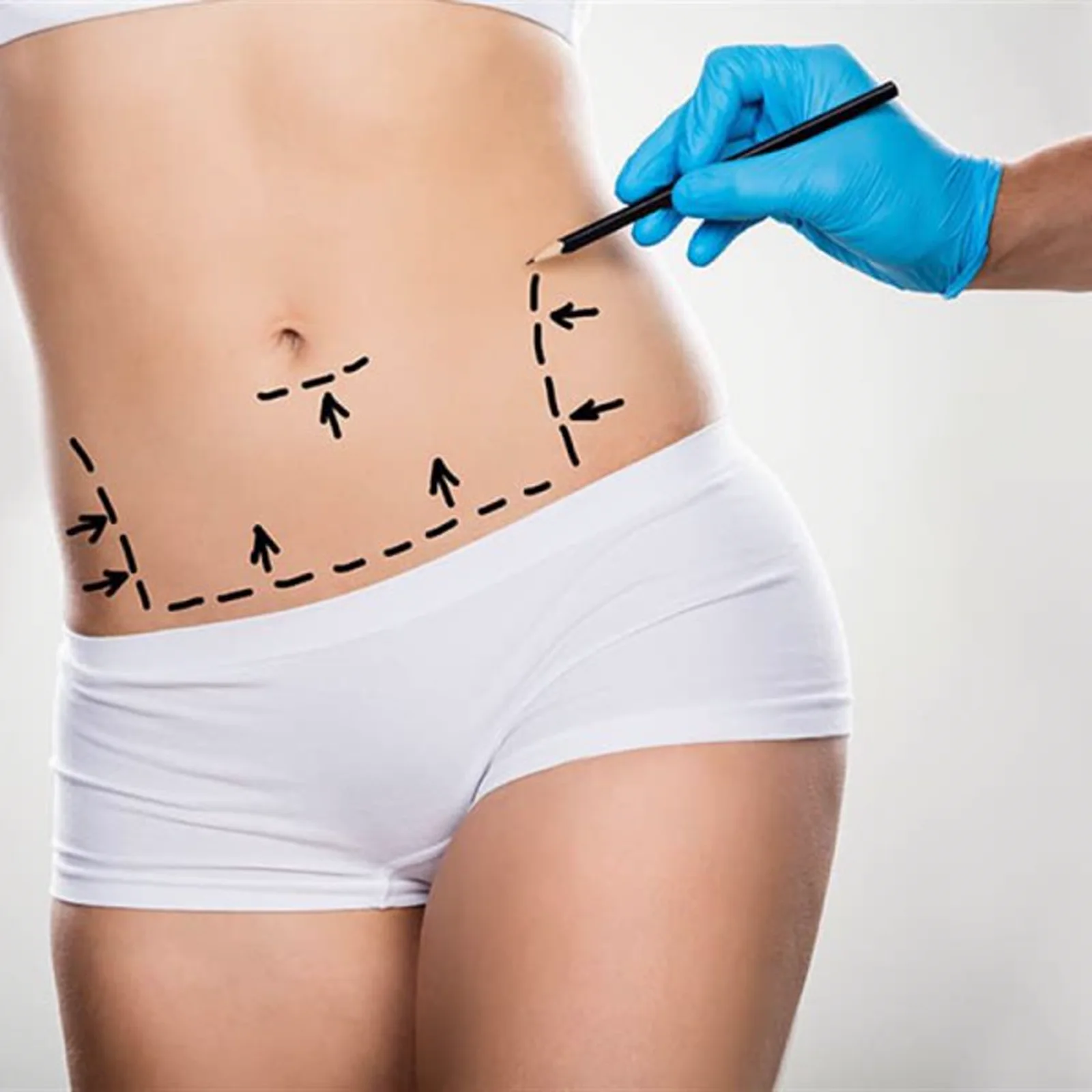
The medical name for a surgical facelift is rhytidectomy. The procedure is not limited to tightening skin. Sagging skin and the deeper tissues beneath it, the SMAS included, are repositioned. Temple lift, brow lift and mid-face lift belong to the same family and work on the same principle across a narrower area.
The difference lies exactly there. In advanced laxity, surgery achieves a correction that device treatments cannot reach, because it removes surplus tissue and rebuilds the supporting structure. This is not a question of a stronger device. It is a different category of intervention.
Results are long-lasting and are described in years. Ageing, meanwhile, carries on. The accurate frame is that a surgical facelift turns the clock back rather than stopping it. There is no number of years that can be attached to the result, because no such unit of measurement exists, and figures of that kind belong to marketing language rather than to clinical data.
The scope is not a single fixed option either. Where heaviness in the upper face is the main concern, temple lift and brow lift are discussed; where mid-face volume loss and descent are pronounced, mid-face lift comes into the conversation. These variants are not a smaller version of a full facelift. They are separate plans targeting different areas, and examination determines which one applies.
The surgical decision is not reached in a single consultation. General health, smoking, medication history and the realism of the expectation are each assessed, and the scope and technique of the procedure are set according to the surgeon's plan.
Side by side: mechanism, longevity, recovery
Reading the same five criteria separately for each option is the cleanest way to compare them without turning the comparison into a ranking. The two cards below answer the same questions in the same order.
HIFU
- Mechanism: focused ultrasound creates controlled heat points in the deeper layers and stimulates collagen. No tissue is removed.
- Longevity: the range reported is generally 12 to 18 months. Because ageing continues, maintenance sessions come into the plan.
- Sessions: most people start with a single session; a repeat is often planned every 6 to 12 months according to medical assessment.
- Recovery: no recovery period is required. Temporary redness and mild swelling settle within hours to days.
- Who it suits: people with mild to moderate laxity and relatively good skin quality; the age range usually cited is 30 to 55.
Surgical facelift
- Mechanism: excess skin is removed and the deeper tissues, the SMAS included, are repositioned.
- Longevity: results are described in years; ageing continues, so the appearance keeps changing over time.
- Sessions: a single surgical procedure. Scope, technique and any additional variants follow the surgeon's plan.
- Recovery: social visibility is mostly 2 to 4 weeks; scar maturation and the final result progress over months.
- Who it suits: people with advanced laxity, clear excess skin and neck banding whose general health is suitable for surgery.
The two do not exclude one another. In the same person, HIFU face lifting may be enough today while the picture changes over a few years and facial aesthetic surgery enters the conversation. That is not a failure of the earlier treatment; it is the degree of laxity moving on. The reverse also holds: after surgery, device treatments aimed at skin quality can be discussed later, with the timing set by the surgeon's recovery plan.
Which degree of laxity points to which option?
The deciding factor is the state of the tissue rather than age. Two people of the same age can differ widely in skin quality and degree of laxity, which is why no rule of the "after forty do this, after fifty do that" kind holds up.
The contour is still defined and there is no excess skin. Device treatments can be assessed in this picture.
Softening along the jaw has begun but excess skin is limited. This is the borderline zone, and the decision follows the expectation.
The double chin is pronounced and there is banding in the neck. A device treatment does not meet the expectation here.
Gradual and subtle firming, or a visible structural change? This question alone often settles the decision.
Managing the expectation is half the outcome in this subject. A device treatment can be carried out on someone with advanced laxity, but the result will fall short of what they hoped for. The reason is not that the treatment is ineffective; it is that it was applied to the wrong picture. That is also the most common misunderstanding corrected during consultation.
When results appear: two different timelines
The two timelines differ not only in length but in how they behave. One builds slowly upward; the other goes backwards first and then forwards.
HIFU: first 2 to 4 weeks
An early sense of firmness is described in this period. It is felt in the tissue rather than seen as a visible change.
HIFU: 2 to 3 months
The clear result settles with collagen formation, at roughly 60 to 90 days. Assessment is not made before that point.
HIFU: 12 to 18 months
This is the reported range of effect. A maintenance session then comes into the plan, at a frequency set by medical assessment.
Surgery: first 2 to 4 weeks
Swelling and bruising are pronounced. Social visibility is usually reached within this window, though it varies with the scope.
Surgery: the months that follow
Scar maturation and the settling of the final appearance progress over months, on a schedule set by the surgeon's plan.
Placing these two timelines side by side is really placing two life plans side by side. One asks for no gap in the calendar, but the result arrives slowly and stays within limits. The other asks for a few weeks of visible recovery, and in return the change is broader in scope.
Risks and who each option is not suitable for
Both options carry known side effects, and a comparison that leaves them out is incomplete.
On the HIFU side, temporary redness, mild swelling and tenderness in the treated area are regarded as expected. Temporary numbness or tingling is reported less often. Most of these settle within hours to days. The treatment is not advised during pregnancy, and medical assessment is required where there is an open wound or infection in the area, severe cystic acne, a metal implant or a cardiac pacemaker.
On the surgical side, haematoma, nerve effects that are mostly temporary, scarring, changes to the hairline and asymmetry are among the known risks. Added to these are the general risks that apply to any operation, including anaesthesia, bleeding and infection. The decision to operate is made together with the surgeon after detailed examination, review of medical history and an informed consent process.
The mistake made when comparing the two lists is assuming that a device treatment is free of any effect worth mentioning. The accurate reading is that the weight and type of risk differ, while on both sides suitability is determined by examination, and that step cannot be skipped.
There is a further difference, and it concerns reversibility. The effect of a device treatment fades over time and the person returns towards their earlier appearance. In surgery the change is structural, and a result that disappoints can only be addressed through a further surgical plan. This is said not to cast one option in a poor light, but to place the weight of the decision where it belongs.
HIFU or facelift surgery: how the decision becomes clear
The decision comes down to three questions. Is there excess skin? Is the expectation gradual firming or a visible structural change? And which timeline can the person actually accommodate?
When those three are discussed together at examination, the choice usually emerges on its own. The difficult cases are the ones where laxity is moderate and the expectation is set high; there the decision stops being a choice between methods and becomes a matter of bringing the expectation to a realistic level.
Since 2019 the most common misdirection we have observed in the clinic is a decision built on a result seen online. The change in someone else's photograph belongs to their skin thickness, their bone support and their degree of laxity. There is no reason for the same treatment to produce the same picture in different tissue. That is why a consultation starts by listening to the expectation, and only then moves to which treatment is worth discussing.
Frequently asked questions
Can HIFU replace a surgical facelift?
No. Known colloquially as a 'non-surgical facelift', HIFU is not an alternative or an equivalent to surgical facelift; it provides tightening and firming in mild to moderate skin laxity. It cannot remove excess skin, and it cannot correct advanced sagging or neck banding.
How long does HIFU last?
The range reported is generally 12 to 18 months. Because ageing continues, maintaining the result depends on maintenance sessions; a repeat is often planned every 6 to 12 months according to medical assessment.
When do HIFU results become visible?
An early sense of firmness is described at 2 to 4 weeks. The clear result settles with collagen formation at roughly 60 to 90 days, which is 2 to 3 months. Assessment is not made before that point.
When is a facelift needed instead?
Surgery is assessed where there is advanced skin laxity, clear excess skin, a pronounced double chin or banding in the neck. Device treatments fall short in those pictures, because surplus tissue is resolved only by removing it.
How long is recovery after facelift surgery?
Social visibility is mostly reached within 2 to 4 weeks, the period in which swelling and bruising are pronounced. Scar maturation and the settling of the final result progress over months, on a schedule set by the surgeon's plan.
What age is HIFU suitable for?
The deciding factor is the state of the tissue rather than age. The range usually cited is 30 to 55, for people with mild to moderate laxity and relatively good skin quality; suitability is determined by medical examination.
Who should not have HIFU?
It is not advised during pregnancy. Medical assessment is required where there is an open wound or infection in the treatment area, severe cystic acne, a metal implant or a cardiac pacemaker. Suitability is determined by examination in every case.
Can HIFU and facelift surgery be planned together?
They do not exclude one another. After surgery, device treatments aimed at skin quality can be discussed later, with timing set by the surgeon's recovery plan. Equally, a device treatment may be enough for a period before surgery enters the conversation.
This content is provided for general information only and does not constitute medical advice. Known colloquially as a "non-surgical facelift", HIFU is not an alternative or an equivalent to surgical facelift; it provides tightening and firming in mild to moderate skin laxity. The reported range of effect is generally 12 to 18 months, and the clear result settles at roughly 2 to 3 months. Surgical facelift is assessed in advanced laxity and where there is excess skin; social visibility is mostly reached within 2 to 4 weeks, while the final result matures over months. All surgical procedures carry medical risks including anaesthesia, bleeding, infection and scar formation. The decision to operate is made together with your surgeon after detailed examination, review of medical history and an informed consent process. Whether either treatment is suitable for you is determined only after specialist assessment.
Content overseen by Aysun Kaya, Founder · Kaya Clinique · on Bağdat Avenue since 2019. Our publishing standards are set out in our editorial principles.